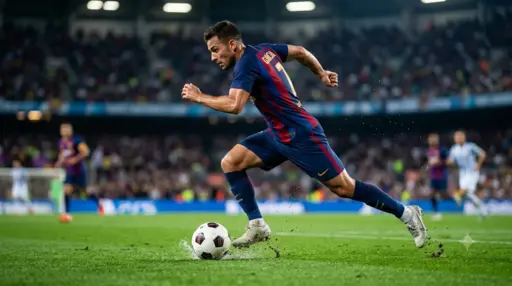
At first glance, football seems like a sport with minimal rules: eleven against eleven and a ball that must cross the goal line. However, behind that apparent simplicity lies a complex structure.
Anyone can enjoy a match, but understanding what happens in each controlled touch or in the vision behind a through pass requires understanding football. In essence, it is a school of life, where learning is built step by step (FIFA, 2011).
What we often perceive as innate talent is, in reality, the result of a solid foundation of fundamentals developed from childhood, under the premise that the game is the best way to learn (FIFA, 2011).
What are football fundamentals?
Fundamentals are technically defined as the core foundations of the game itself. They represent the essential tools that allow any player, regardless of their condition, to develop both physical and mental skills through sports practice (FIFA, 2011).
According to FIFA’s philosophy, the primary objective is not to immediately produce professionals, but to allow as many people as possible to discover football in their own environment.
Why they matter beyond individual talent
Fundamentals are the pillar on which a young player learns to interact with the ball and with teammates. Their importance goes beyond individual technical ability for several key reasons:
- Holistic development: Football acts as a tool to transmit human and social values such as respect, solidarity, and mutual support.
- Psychomotor development: Practising these fundamentals allows children to overcome fears, take initiative, assume risks, and be creative.
- Inclusion: Since not all young players will become stars, fundamentals ensure the game remains an enjoyable and recreational experience for everyone.
- Autonomy: Mastering these basics gives players greater freedom of expression with the ball at their feet.
Technical vs tactical fundamentals: they are not the same
It is crucial to distinguish between the execution of the action and the intelligence behind it. Although closely linked, they represent different dimensions in player development (FIFA, 2011):

Technical football fundamentals: ball actions
They refer to the direct physical relationship with the ball and are classified into three main families:
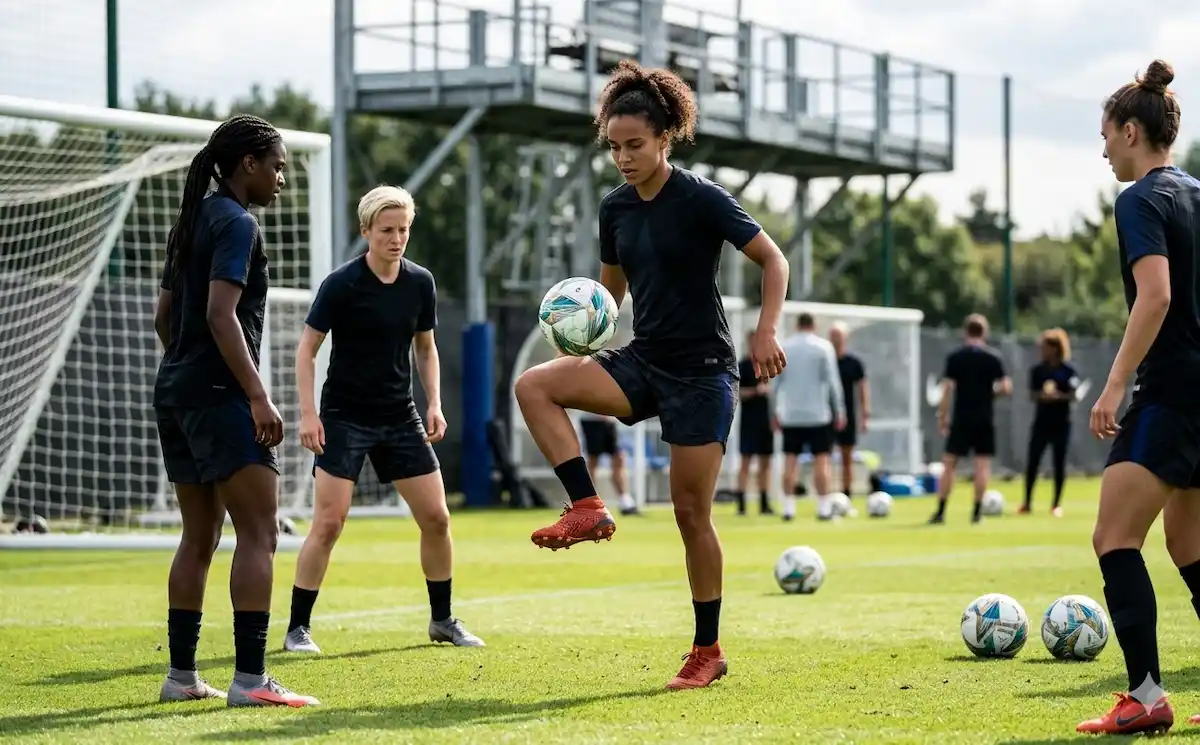
Ball control
It involves gaining control of the ball to ensure the success of the next action.
Ball carrying (dribbling with progression)
It is the means of individual progression in open space (carrying) or against opponents (dribbling).
Passing: the language of collective play
Includes the pass (the fundamental element of collective play).
Dribbling
It is defined as the means of individual progression past opponents. This tool allows a player to eliminate one or more opponents to initiate an action, gain time, find support from teammates, or deceive the opponent through feints.
Shooting (finishing)
It is the technical action that aims to send the ball toward the opponent’s goal. It is considered the logical conclusion and culmination of an attack, being the ultimate purpose of the game (FIFA, 2011). Its successful execution requires a combination of technical precision, physical power, and mental determination.

Tactical fundamentals: what you don’t see but decides matches
They are linked to game intelligence and decision-making. While technique answers the how, tactics answer the when and where:
Game vision:
The ability to perceive the environment in order to execute the correct action required by the game.
Decision-making:
The ability to choose between keeping possession or passing, fostering creativity and solving changing situations. It is developed through repeated experiences in small-sided games, where the player learns to read the game under opponent pressure, making quick decisions adapted to each context.
Positioning and space occupation
It refers to the placement of players in positions and zones in a rational way to ensure balance between the team’s lines (FIFA, 2011). Effective space occupation facilitates both ball circulation in attack and defensive organisation. If you are interested in this topic, we recommend reading our article on football formations.
Pressing, transitions and off-ball play
It is the coordinated defensive action that uses pressure on opponents to disrupt possession, force errors and facilitate ball recovery. It is based on individual duels and the ability to prevent the opponent from progressing comfortably.
Transitions:
They represent the change in collective and individual behaviour at the moment the team regains or loses possession. These phases require adapted responses to quickly switch from defensive retreat to counterattack, or vice versa, exploiting the spaces created by the opponent’s temporary disorganisation.
The 4 pillars of football development
In the teaching-learning process, football is broken down into four fundamental areas that do not act in isolation, but are interconnected to allow proper player development from an early age. These pillars ensure that training is not limited to ball mastery alone, but also includes physical preparation, tactical intelligence, and mental strength.
Physical
It optimises the player’s natural abilities through systematic and progressive training to achieve maximum sporting performance (Poveda & Casamichana, 2017).
Technical
It is defined as the execution of efficient and functional movements that use the body and the ball to solve specific game tasks (Martin et al., 2007).
Tactical and regulatory
It involves the use of intelligence and strategies to overcome the opponent, together with a strict understanding of the rules of the sport (Guardiola, 2010).
Psychological
It manages the emotional state, concentration and mindset of the footballer, key factors for performing successfully in competition (Guardiola, 2010).
How fundamentals are taught: training methodologies
Football teaching has evolved from rigid models to more integrated approaches. The choice of method is decisive, as it directly influences player motivation and their ability to transfer learning into match situations (Pascual Verdú et al., 2015).
Analytical method: repetition and isolated technique
This method is characterised by isolated tasks, outside the real game context and without opposition (defenders). Its main focus is technical perfection through mechanical repetition of movements. Although it allows a high number of ball contacts, it is criticised for its low transfer to real match situations due to the absence of decision-making (Pascual Verdú et al., 2015).
Global method: real game situations
Unlike the previous one, the global method introduces all football variables: the ball, teammates, opponents and a tactical objective. It presents situations with real uncertainty, forcing players to carry out simultaneous perception, decision-making and execution processes. According to research, it is the preferred method among modern coaches due to its high transfer to real play (Pascual Verdú et al., 2015).
Mixed method: what professional coaches use today
In professional practice and advanced training, a single method is not used exclusively. The mixed method combines both approaches: analytical tasks are used to correct specific technical details, while global tasks integrate those details into team dynamics. It is considered the most suitable way to teach football, as it balances technical precision with tactical intelligence (Pascual Verdú et al., 2015).
From player to analyst: how fundamentals are the basis of modern tactical analysis
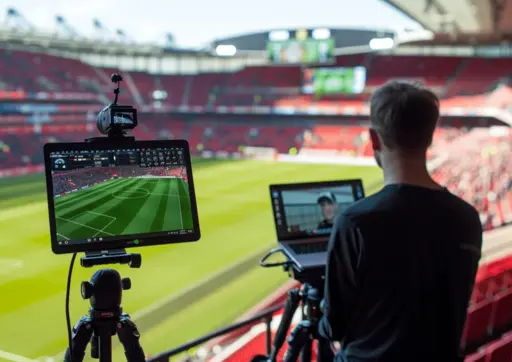
Tactical analysis is nothing more than the observation of how individual fundamentals become collective behaviours. For an analyst, the game is not chaos, but a sequence of technical decisions and positioning patterns that can be measured and corrected (FIFA, 2011).
Why understanding fundamentals is key to analysing a match
Understanding fundamentals allows the analyst to identify the origin of an error or success. If a team struggles in build-up play, the analyst must determine whether it is due to a technical fundamental deficit (poor first touch or passing) or a tactical fundamental error (poor spacing or lack of support) (Chasipanta-Chasipanta, 2021). Without this foundation, analysis remains superficial, seeing the what without understanding the why.
What a tactical analyst does with this knowledge
The analyst breaks the match down into small units of information based on fundamentals:
- Identifies patterns: Detects whether a player uses dribbling to create superiority or whether the opponent struggles against coordinated pressing.
- Evaluates decision-making: Analyses whether the player chooses the correct option (tactical fundamental) beyond whether the technical execution was perfect.
- Proposes solutions: Translates data into instructions that the coach uses to improve the physical, technical and psychological pillars of the group.
Frequently asked questions
What are the basic fundamentals of football?
The basic fundamentals of football are ball control, dribbling, passing, dribbling skills, and shooting. These five technical actions form the essential vocabulary of any player, regardless of level or position. They are complemented by tactical fundamentals such as positioning, game vision and decision-making, which determine when and where each technical action should be applied.
What is the difference between technique and tactics in football?
Technique answers the how: the correct execution of a pass, a controlled touch or a shot. Tactics answer the when and where: choosing the right moment to pass, occupying the correct space or pressing an opponent. A player may have flawless technique yet make poor tactical decisions, and vice versa. Complete training develops both dimensions in an integrated way.
How are football fundamentals learned?
Fundamentals are learned through progressive practice adapted to each age group. FIFA recommends that learning should mainly take place through play, as it is the environment where players face real situations with teammates and opponents. Professional coaches combine analytical tasks (technical repetition) with global tasks (real game situations) through the mixed method, which is the most effective for transferring learning into matches.
At what age should fundamentals be trained?
Scientific evidence shows that early ages, between 6 and 12 years old, represent the most sensitive period for acquiring technical and tactical fundamentals. At this stage, the goal is not competitive performance but building a solid foundation of motor skills and ball interaction. However, fundamentals are refined throughout a player’s entire career: no professional player stops working on them.