

































Master in High Performance Football Coaching

Prepare yourself as a high performance football coach and professionalise your passion

Train through a programme endorsed by more than 40 partner clubs, featuring a leading selection of experts and industry references, with international recognition and including guaranteed internships at elite football clubs worldwide.

Duration

16 months

Format

Online programme with on-site internships

Places

Applications Open

Languages

EN / ES

€245

or €3,645 + VAT (save 7%)

Pagos seguros con Stripe

Forget Basic Courses – This Is the Definitive Education in High Performance Football Coaching

To become a coach in professional football, you must master the specific knowledge and skills demanded by elite clubs. This Master’s in High Performance Football Coaching, designed in close collaboration with elite clubs, integrates the ideal combination of theory, academic education and practical experience, with access to real-world opportunities in high-level teams. Furthermore, the content is continuously updated.

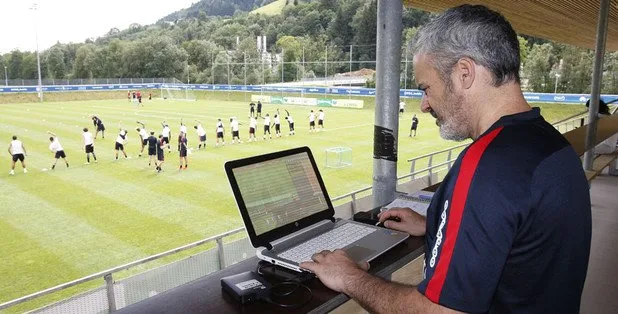
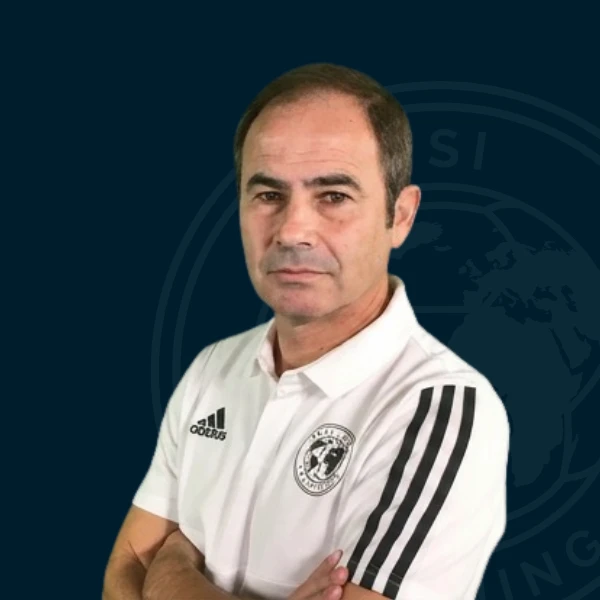
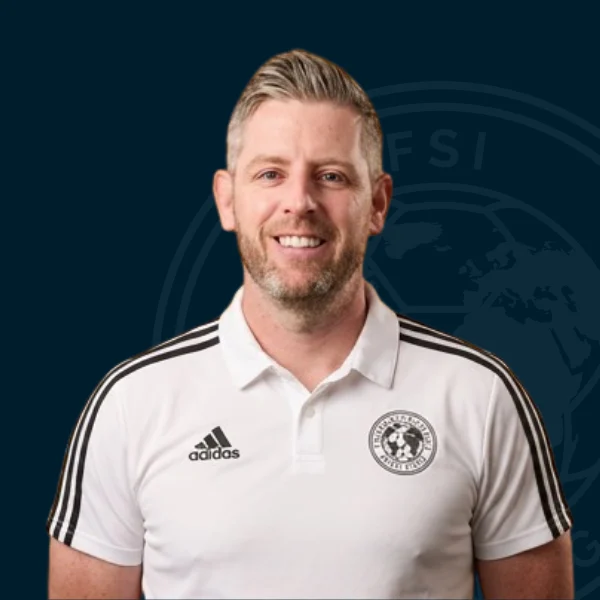
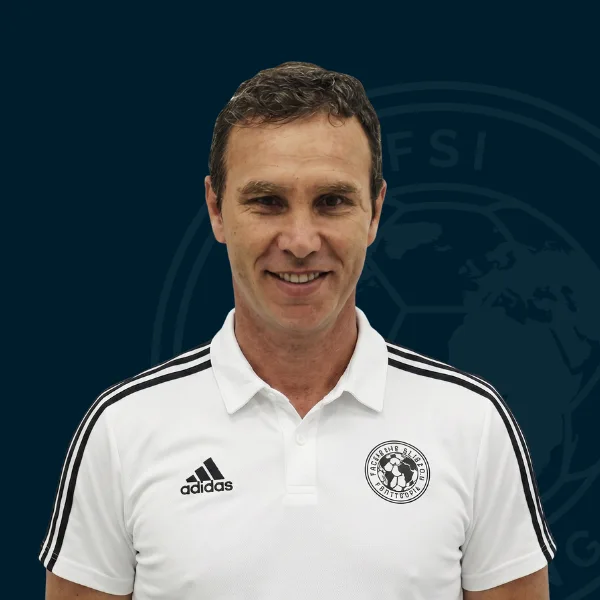
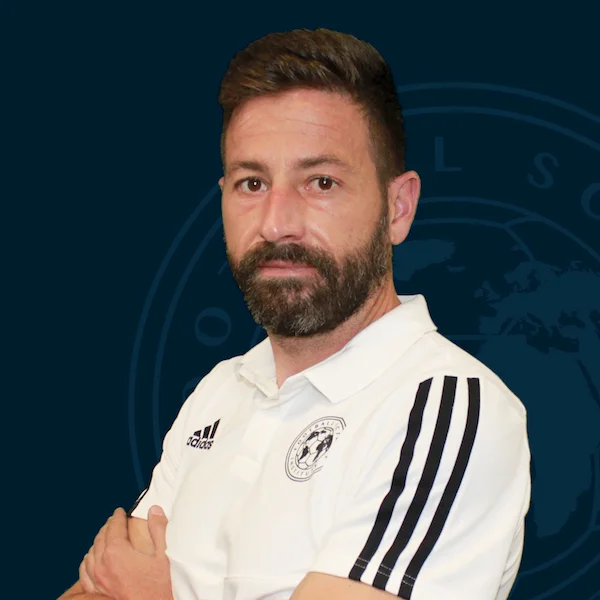
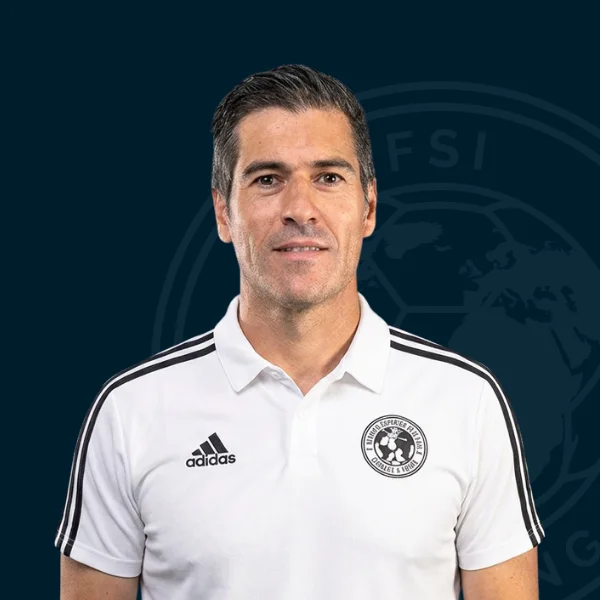
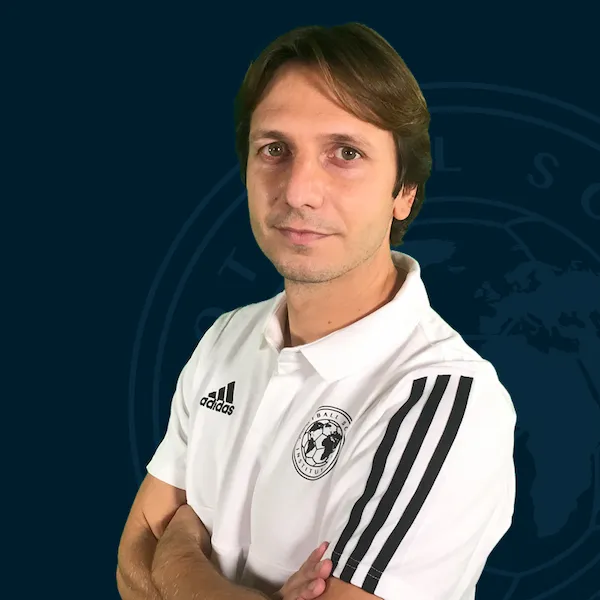
Discover with Víctor Sánchez, Master’s Director and UEFA PRO professional football coach with experience at clubs such as R.C.D. Espanyol, F.C. Barcelona, A.C. Fiorentina and F.C. Basel, why this is the Master’s you need to fully focus on professional football.

This Master’s, designed to prepare you as a high performance football coach, is built on two key pillars that will provide you with the tools required to work in a highly demanding and competitive industry.

Specialised Education

Through this Master’s, you will acquire the fundamental knowledge required to stand out as a football coach in professional teams. You will be guided by a world-class faculty recognised for academic research and their work within elite club technical staff internationally.

Real Experiences in Elite Clubs

This Master’s gives you access to career opportunities within elite clubs that would otherwise be out of reach. During internships, you can showcase your talent within an elite football environment while learning from leading professionals in the game.

Who Is the Professional Football Coaching Master’s Designed For?

Professional coaches and assistants holding an official UEFA coaching licence.

The FSI Coaching Master’s was created to complement official football coaching qualifications by addressing aspects that are often left outside regulated programmes.

It is a private education programme focused on applied knowledge and decision-making in real contexts, whereas official qualifications primarily fulfil an administrative licensing function.

Sports professionals with backgrounds in tactical analysis, coaching or related areas.

The Master’s in High Performance Football Coaching is one of the most comprehensive and advanced options for professionals seeking to deepen their existing knowledge and gain greater confidence in their practice.

The programme is designed for individuals who already have a foundation and aim to take a qualitative step forward in their understanding of the game and performance.

Other profiles with a strong interest in football

Even if you are not currently working as a coach or football professional, the programme is structured in a clear and progressive way for individuals with a solid interest in the sport.

It can also serve as an excellent specialisation pathway or complement for professionals in areas such as media, strength and conditioning, health or performance optimisation.

What Will You Learn in Our Master’s in High Performance Football Coaching?

Upon completing the Master’s, you will be able to perform the following responsibilities as a high performance coach in clubs and other professional environments:

  • Understand tactical systems, roles and game dynamics
    Analysis of different football tactical systems and strategies to protect vulnerable areas within the playing model.
  • Develop leadership and team management skills
    Team self-regulation management, effective leadership, emotional control, resilience and confidence building.
  • Understand the process of the game
    Analysis of game phases, spatial dynamics, identification of behavioural patterns and development of a coherent strategy.
  • Master key phases and styles of play
    Definition of a cohesive playing style in both attack and defence, adapted to the team’s characteristics.
  • Train collective game strategies
    Design of attacking strategies, transitions, set pieces, counter-pressing, organised defence and overall tactical organisation.
  • Analyse offensive and defensive set pieces
    Goal-scoring fundamentals, scoring patterns and individual performance analysis in set-piece situations.
  • Understand individual foundations by position
    Interpretation of the individual role within the team and adaptation of each player’s profile to the playing style and physical demands of their position.
  • Design specific training simulations and tasks
    Application of possession games, positional exercises and structured training simulations.
  • Organise training session structures
    Optimisation of warm-up routines and effective management of training sessions.
  • Enhance individual technical-tactical skills
    Application of personalised training approaches for individual player development.
  • Plan and execute pre-season programmes
    Design and implementation of pre-season preparation programmes adapted to competitive demands.
  • Manage a national team environment
    Efficient organisation of training camps and international call-ups.
  • Collaborate with technical staff and club structures
    Coordinated work with assistant coaches, analysts, strength and conditioning coaches, medical departments, scouting, sporting direction and communication areas.
  • Use technology for performance analysis
    Monitoring physical loads, evaluating fatigue and recovery, technical-tactical analysis and learning best practices from other sports.

Career Opportunities After the Master’s, Compared to High Performance Football Coaching Courses

After completing the Master’s, you will be able to work in different roles within high performance football:

Head Coach of a Professional Football Team

Head Coach of a Professional Football Team

Responsible for leading and managing the team, establishing the vision and playing philosophy. The role includes planning and delivering training sessions, making tactical decisions during matches, and managing high performance football coaching from both a technical and psychological perspective. The Head Coach is also responsible for communication with the club’s board and for building a competitive squad.
Assistant Coach in a Professional Football Club

Assistant Coach in a Professional Football Club

Supports the Head Coach in the preparation and delivery of training sessions and matches. The role involves contributing to tactical and technical planning, analysing team and player performance, and assisting in managing group dynamics. Assistant coaches may also specialise in areas such as defence, attack or physical conditioning, providing additional expertise to enhance team development.

Complementary Knowledge for Sporting Direction

Complementary Knowledge for Sporting Direction

This pathway provides an understanding of team needs, resource management, communication between coaches and players, and contribution to decision-making related to recruitment and talent development. It also includes participation in the club’s long-term planning, aligning sporting objectives with commercial goals.

Complementary Knowledge for Tactical Analysts

Complementary Knowledge for Tactical Analysts

Knowledge that enhances the work of a football tactical analyst, focused on evaluating and analysing team performance and opponents. It includes collecting and interpreting match and training data, identifying playing patterns and tactical trends, and delivering detailed reports to support match preparation.

Master’s in High Performance Football Coaching – Programme Content

An advanced video-based programme that provides you with the tools required to excel in high performance football coaching, delivering the skills and knowledge demanded by elite clubs today.

Module 1: Hidden Connections. A Different Perspective on Our Game I

This module introduces students to a deep understanding of the game, addressing tactical systems and spatial analysis as fundamental pillars. Participants will learn to identify behavioural patterns in players and teams, enabling them to develop their own playing philosophy. This approach connects individual and collective dynamics to build a coherent style of play.

Module 2: Hidden Connections. A Different Perspective on Our Game II

In this module, students explore transitions and pressing as key elements of modern football. It covers how to structure effective transitions to regain possession and launch quick attacks, as well as the importance of pressing immediately after losing the ball. The module also examines how to balance team organisation in terms of width and depth, adapting the playing style to the squad’s characteristics and competitive context.

Module 3: Analysing the Game by Phases (In Possession) I

This module focuses on the offensive phase, teaching students how to design and coach effective possession structures and positional play. Strategies to improve decision-making in attack and maximise efficiency in key areas are analysed. It also includes the study and training of attacking set pieces, emphasising creativity and precise execution during matches.
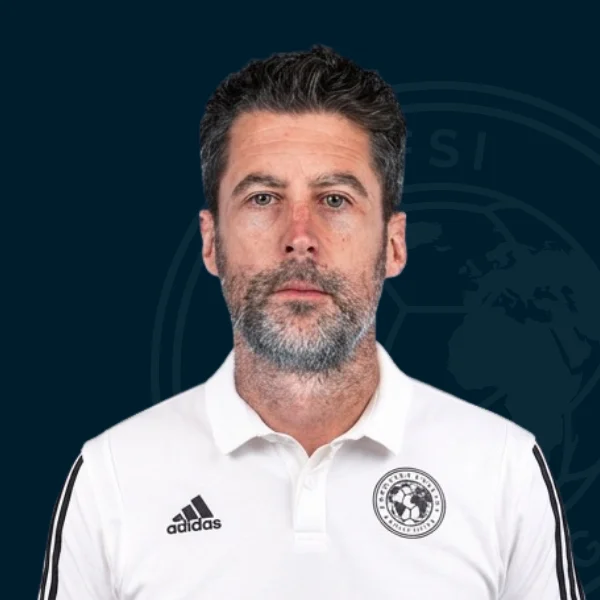
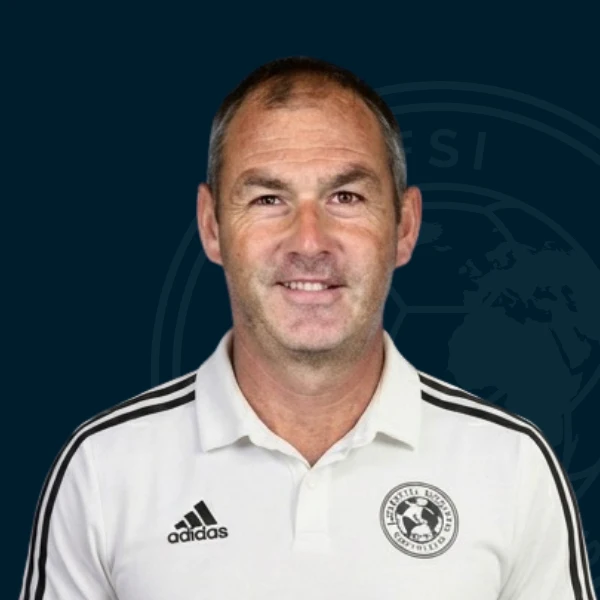
Module 4: Analysing the Game by Phases (In Possession) II

This module continues exploring offensive phases, with a deeper focus on structured attacking play and finishing. Students learn to analyse attacking situations from both tactical and technical perspectives, adapting solutions to the team’s strengths and weaknesses. Special emphasis is placed on the goalkeeper’s role in build-up play and their contribution in key offensive situations.

Module 5: Analysing the Game by Phases (Defensive Recovery Phase)

This module addresses the recovery phase and how the team can reorganise efficiently to regain possession. Students will learn to coach defensive pressing and organised defending, maintaining balance between intensity and tactical structure. Techniques for identifying and protecting weak areas of the system are also explored, reducing risks during opponents’ fast transitions.

Module 6: Individual Aspects

This module explores the individual foundations of the game from each positional perspective. Students acquire tools to analyse players both collectively and individually. It covers the specific characteristics of each position, from centre-back to striker, and how to train their conditional demands. The module also focuses on identifying and developing leadership roles on the pitch, including captains, as well as the goalkeeper’s contribution in both attack and defence.

Module 7: Playing Positions

This module provides a detailed view of different football positions and their relationship with playing styles. Students learn to develop players according to their specific roles, with an emphasis on personalised technical-tactical training. Methods for organising the squad and designing preferential simulation scenarios are also covered, adapting sessions to positional demands and competitive context.

Module 8: Training Situations I

This module introduces the design and management of training sessions based on possession games and 5v2 exercises. Participants learn to structure sessions that enhance both individual and collective technical-tactical abilities. Weekly microcycle planning is addressed through analysis of elite team workloads, alongside strategies for efficient session management to maximise performance outcomes.

Module 9: Training Situations II

This module complements the previous one with a focus on attacking exercises and finishing, designing advanced positional games and specific activities to develop offensive phases. It explores how to structure an effective pre-season from planning to implementation. Tactical periodisation is introduced as a framework for organising weekly and monthly team work according to competitive demands.

Module 10: How Far Should I Plan?

This module reflects on the scope of planning in professional football. Students learn to design microcycles for both men’s and women’s teams and to plan long-term development strategies. It also analyses factors that influence strategic coaching decisions, enabling clear and achievable objectives based on available resources.

Module 11: Why and What Am I Hired For?

This module analyses the role of the coach within a football club, examining recruitment processes and expectations. It discusses board, player and supporter expectations, along with the skills required to meet these demands. It also addresses how to create and sustain a playing identity that represents both the club and the coach.

Module 12: Those Around Us – The Staff

This module focuses on teamwork within the technical staff. Students learn how to collaborate effectively with assistant coaches, tactical analysts, strength and conditioning coaches and other staff members. The importance of communication and coordination with the Medical Department, Analysis Department and Scouting Department is also addressed to optimise team performance.

Module 13: Who Else Do I Work With?

This module broadens the coach’s perspective by exploring interactions with the Board of Directors, Marketing Director, Media Director and player agents. It discusses professional relationship management in these areas to benefit both coach and club. Strategies for handling communication and social media to strengthen the coach’s professional image are also covered.

Module 14: What They Do NOT Teach Us

This module addresses essential aspects often overlooked in coaching education. Students learn about legal foundations related to their role, officiating processes and how to manage ethical and contractual situations within the club. It also covers how to use social media strategically to build a strong and professional personal brand.

Module 15: Technology – What For?

This module introduces the use of technology in football to monitor physical load, analyse technical-tactical behaviour and assess player recovery status. Students learn to implement technological tools that optimise team performance and explore how other sports disciplines can contribute innovative training perspectives.

Module 16: Performance Psychology

This final module focuses on emotional management, resilience and decision-making under pressure. Students develop skills to handle stressful situations and foster confidence within their team. It also highlights the importance of active listening, problem-solving and building effective leadership that inspires both players and technical staff.

Testimonials from Students Who Have Trained with FSI Training

Behind every individual there is a story of hard work, perseverance and countless hours of study in pursuit of one goal: working in professional football. At FSI Training, we are proud to be part of that journey. More than 2,000 professionals have advanced their careers through our Master’s programmes and over 60% of those who complete internships remain within professional clubs.

“Most of our professionals are taking this Master’s and we are clearly benefiting from it”

Adrián Cruz · Coach

“The course shows you the daily reality of a professional club”

David Arellano · Coach

“I joined as an intern and experienced professional football from the inside”

Pablo Fernández · Tactical Analyst

“I was looking for a Master’s that would make me more professional, and FSI exceeded all expectations”

Dani Lorenzo · Strength and Conditioning Coach

A Faculty of International Leaders Who Will Guide You Throughout Your High Performance Football Coaching Education

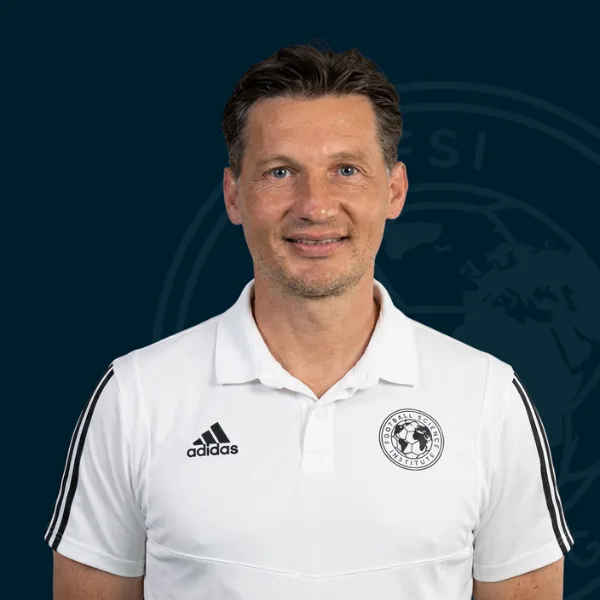
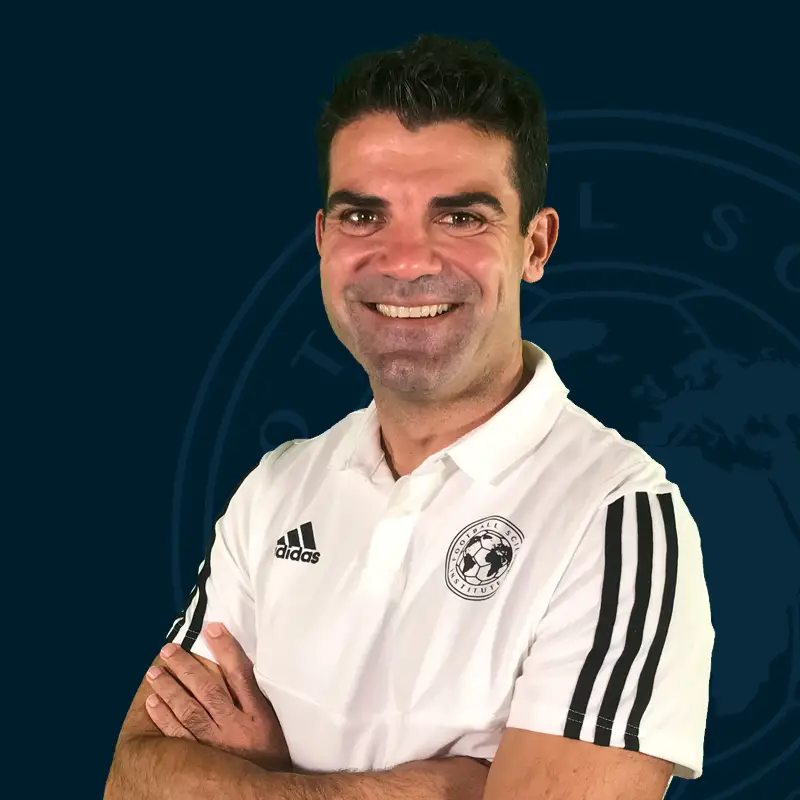
You will be trained by leading voices in each area of the programme. We have brought together a global community of top-level professionals who research and work in football to provide the theoretical and practical perspective you are looking for. They are among the very best in their respective fields — and you will only find them together here.

Leading experts share their views on FSI

Internships with Access to Unique Opportunities in Professional Football Clubs – Unlimited and Voluntary

If you would like to apply everything you learn during the Master’s, FSI Training offers the opportunity to access elite club environments. We have agreements with more than 40 football clubs worldwide, providing you with a unique opportunity: to train directly within their internal structures and work side by side with their technical staff.

Internships can be completed as professional staff members or as research profiles (through our FSI Labs division). In all cases, our internship programme is completely voluntary and always available to FSI Training students. You may choose to complete an internship at a specific club and, if you wish, pursue additional placements at different clubs in the future.

If internships do not align with your preferences, there is no obligation. Participation is entirely optional, and you are free to decline. Your Master’s education remains fully valid, and you will receive your certificate in the same way.

Clubs participantes

  • Aek Athens logo
    Aek Athens
  • Al Ittihad logo
    Al Ittihad
  • Besiktas logo
    Besiktas
  • Boavista Fc logo
    Boavista Fc
  • Ca Guadalajara logo
    Ca Guadalajara
  • Ca Osasuna logo
    Ca Osasuna
  • Ca Paranaense logo
    Ca Paranaense
  • Ca Talleres logo
    Ca Talleres
  • Cadiz Cf logo
    Cadiz Cf
  • Cd Leganes logo
    Cd Leganes
  • Cd Santa Clara logo
    Cd Santa Clara
  • Cercle Brugge logo
    Cercle Brugge
  • Chicago Fire logo
    Chicago Fire
  • Club Tigres logo
    Club Tigres
  • Colo Colo logo
    Colo Colo
  • Coritiba logo
    Coritiba
  • Cruzeiro logo
    Cruzeiro
  • Estoril logo
    Estoril
  • Fc Cincinatti logo
    Fc Cincinatti
  • Fc Famalicao logo
    Fc Famalicao
  • Federacion Mexicana Futbol logo
    Federacion Mexicana Futbol
  • Ferencvaros logo
    Ferencvaros
  • Hammarby logo
    Hammarby
  • If Elfsborg logo
    If Elfsborg
  • Inter Miami logo
    Inter Miami
  • Legia Warszawa logo
    Legia Warszawa
  • Liverpool Uruguay logo
    Liverpool Uruguay
  • Los Angeles Fc logo
    Los Angeles Fc
  • Mainz 05 logo
    Mainz 05
  • Mallorca Fc logo
    Mallorca Fc
  • Necaxa Fc logo
    Necaxa Fc
  • Olympique Marseille logo
    Olympique Marseille
  • Pogon logo
    Pogon
  • Psv Eindhoven logo
    Psv Eindhoven
  • Queretaro Fc logo
    Queretaro Fc
  • Rayados Monterrey logo
    Rayados Monterrey
  • Rc Deportivo logo
    Rc Deportivo
  • Real Betis logo
    Real Betis
  • Sevilla Fc logo
    Sevilla Fc
  • Slavia Praha logo
    Slavia Praha
  • Sporting Braga logo
    Sporting Braga
  • Sporting Costa Rica logo
    Sporting Costa Rica
  • Swedish Football Federation logo
    Swedish Football Federation
  • Torreense logo
    Torreense
  • Tsg Hoffenheim logo
    Tsg Hoffenheim
  • Valencia Cf logo
    Valencia Cf
  • Valladolid Cf logo
    Valladolid Cf
  • Villarreal Cf logo
    Villarreal Cf
  • Vissel Kobe logo
    Vissel Kobe
  • Vitoria Sc logo
    Vitoria Sc

Admission Process

  • Application Submission

    Complete the application form at the bottom of the page. If you are browsing on mobile, use the button below to go directly to the form. Our team is available to answer any questions you may have.

  • Choose Your Plan

    Select the payment option and plan that best suits your needs. Secure card payment via Stripe. We accept Visa, Mastercard, American Express and UnionPay.

  • Complete the Process

    After payment, you will receive your enrolment confirmation by email. If you cannot find it, please check your spam or Promotions folder. If the issue persists, contact us.

  • Start Your Programme

    Access the campus and complete the welcome module. The remaining modules will be unlocked automatically each month according to the selected modality.

Questions?

Contact us via WhatsApp, , email or schedule a meeting.

Frequently Asked Questions - FAQ

What is FSI Training?
FSI Training is a global platform of professionals, research leaders and expert voices dedicated to advancing sports science applied to football. It also offers online educational programmes and scientific and practical content designed for professionals and students interested in football performance.
Can I access the programme from any country?
Yes. FSI Training programmes are available worldwide. You can access our Master’s and courses from anywhere with an internet connection.
In which languages is the programme available?
Classes are delivered in English or Spanish, and as a student you may choose your preferred language. English-language videos include Spanish subtitles, and vice versa.
What format is the programme delivered in?
All programmes are delivered 100% online, with 24/7 access to video-based classes organised into modules.
Do I need any academic requirements to enrol?
Each application is reviewed by the Academic Team. FSI Training is a higher education platform offering professional certifications, and certain academic requirements must be met for enrolment. Each applicant’s CV will be assessed by the Academic Department.
Can I enrol in more than one Master’s at the same time?
Yes. You may enrol in as many programmes as you wish simultaneously.
Can I enrol before the programme officially opens?
You may enrol once the registration period opens. If you would like to receive information beforehand, you can register your interest on our website.
How long do I have to complete the Master’s?
The duration depends on the number of modules. However, FSI Training extends the completion period by up to an additional 8 months, allowing you to finish your studies without difficulty.
Does FSI Training have agreements with public universities?
FSI Training is a private institution specialised in football science that certifies its programmes through its prestigious faculty. The objective is to provide immediately applicable professional skills for the football industry.

Our certifications are currently recognised by the Mexican Football Federation and the Swedish Football Association. We are working with international universities to further expand this recognition.
Will I receive a certificate after completing the Master’s?
Yes. Upon completion, you will receive an official certificate issued by FSI Training. It will also be available for download from your personal account.
Are internships included in each Master’s?
Yes. Students who wish to gain real experience within a professional club may apply for internship opportunities periodically launched through the FSI Membership programme.

Internships may take place as part of the technical staff or as research personnel within the club (through FSI Labs).
Are internships mandatory to obtain the certificate?
No. You may obtain your certificate without completing an internship. However, internships provide an excellent opportunity to enter professional clubs, apply what you have learned, and gain access to a competitive environment even without prior contacts.
Who forms part of the FSI Training faculty?
The faculty is composed of international professionals and leading figures in sports science applied to football. Their combination of academic and practical expertise allows us to deliver a programme that is advanced, rigorous and relevant to real-world football.

Their scientific output exceeds 2,500 articles in specialised journals, with an average h-index ranging from 15 to 40. Many are recognised thought leaders at international congresses and events.

Please visit the “Faculty” section on our website for further information.
How can I contact you if I have another question?
You can email us at info@fsi.training or contact us via WhatsApp.