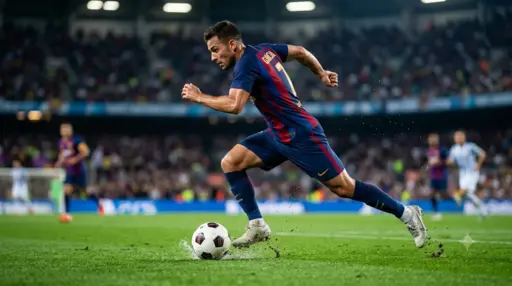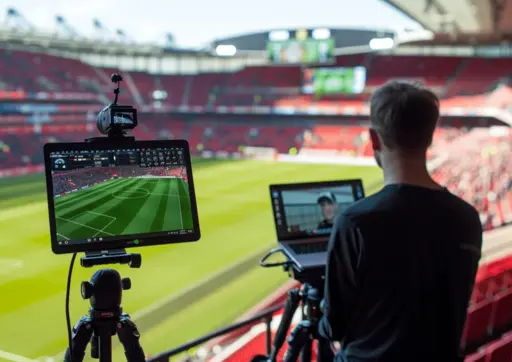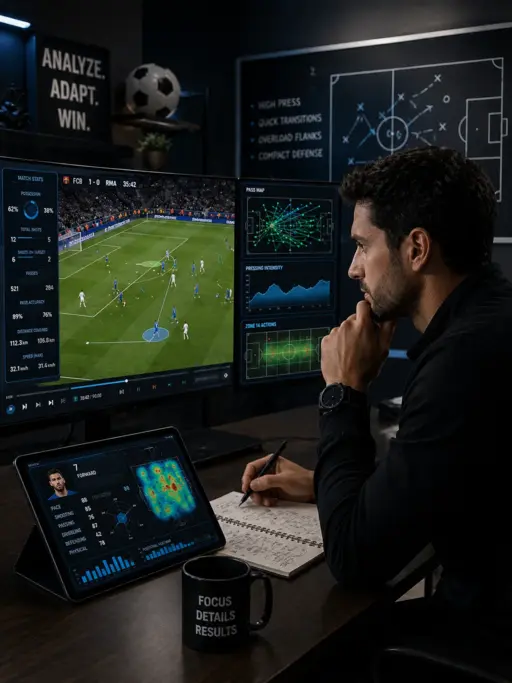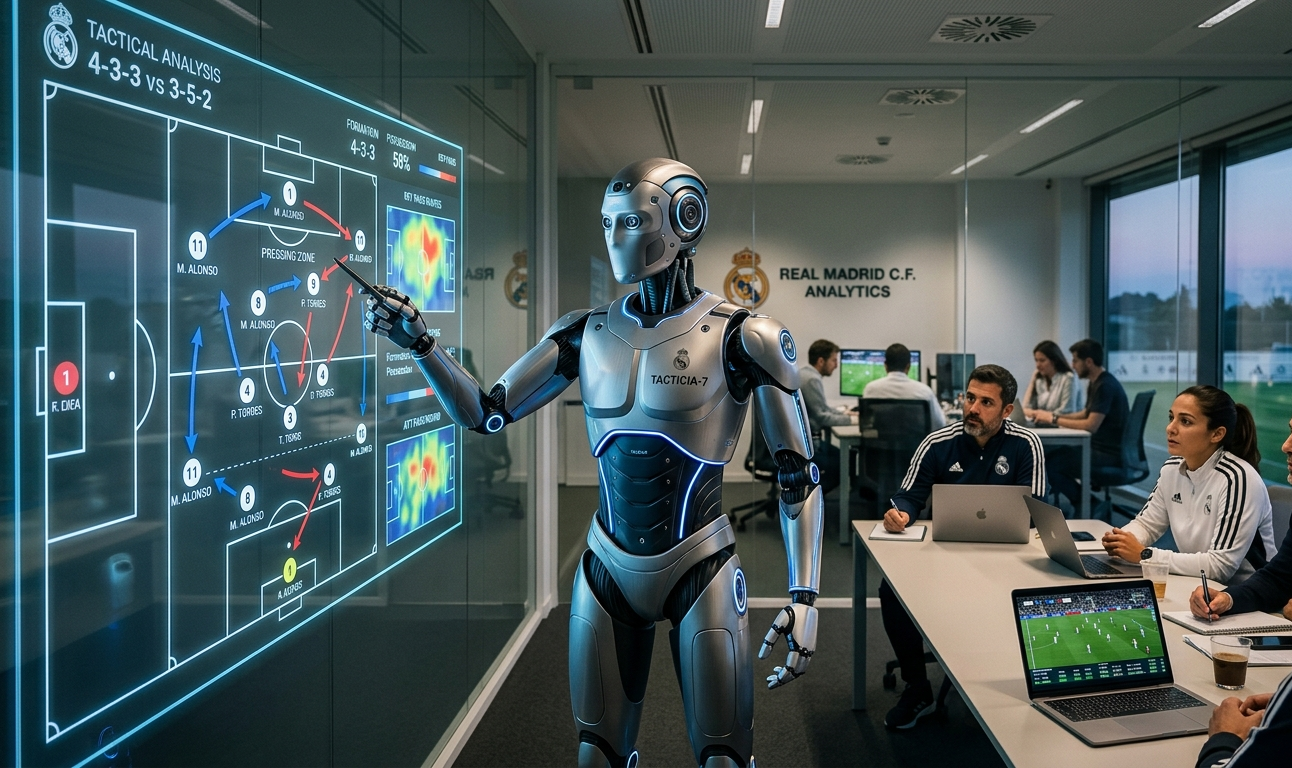
Artificial intelligence is transforming modern football in a silent but deeply disruptive way. Behind every tactical analysis, every lineup decision, and every training adjustment, there is a constant flow of data that simply did not exist before. One of the pillars of this revolution is player tracking, a technology that allows the game to be understood with unprecedented precision.
In essence, football has shifted from being interpreted to being measured. What once depended exclusively on the human eye is now supported by systems capable of recording every movement in real time. This evolution has not only changed how the game is analyzed, but also how it is trained, how injuries are prevented, and how strategic decisions are made.
The main idea is clear: tracking turns football into structured data, and artificial intelligence transforms that data into actionable knowledge.
What player tracking is in football
From manual statistics to real-time positional data
For decades, football analysis was based on basic statistics such as possession, shots, or completed passes. However, these metrics barely captured the complexity of the game.
Tracking introduces a radical change: it records the exact position of every player (and the ball) multiple times per second, allowing the match to be reconstructed in a three-dimensional digital environment.
What information a tracking system collects
A tracking system can capture:
- Exact position of each player
- Speed and acceleration
- Distance covered
- Player interactions
- Contextual events (pressure, space, lines)
This turns every match into a massive dataset ready for analysis.
How tracking technology works: systems and tools
GPS in football: operation and key metrics
GPS devices, integrated into vests worn by players, record movement and physical load. They are especially useful in training sessions.
Key metrics:
- Total distance
- High-intensity distance
- Accelerations and decelerations
- Metabolic load
Multi-camera optical tracking: TRACAB, Hawk-Eye and Second Spectrum
These systems use multiple cameras around the stadium to automatically track players.
- High positional accuracy
- Real-time capture
- Use in official competitions
Computer vision applied to football
Computer vision allows players, the ball, and actions to be identified without human intervention, using deep learning models trained on thousands of hours of video.
SkillCorner and tracking from standard broadcast video
One of the latest innovations is the ability to generate tracking data from TV broadcasts, removing the need for specialized stadium hardware.
What data tracking generates and how it is interpreted
Physical metrics: distance covered, top speed and workload
These metrics help evaluate player performance and fatigue.
Positional data: heatmaps, zones of influence and coverage
They help understand how a team occupies space and organizes itself in different phases of the game.
- Individual and collective heatmaps
- Control zones
- Defensive coverage
Tactical metrics: pressing lines, defensive block and transitions
From positioning data, complex tactical behaviors can be inferred such as:
- Height of the defensive block
- Pressing intensity
- Attack-to-defense transition speed
Applications of artificial intelligence on tracking data
Automated detection of tactical patterns
AI algorithms can identify repetitive patterns, such as pressing systems or attacking automatisms, without human intervention.
xG and predictive models: how AI calculates goal probability
The expected goals (xG) model estimates the probability that a shot will result in a goal based on multiple variables: position, angle, type of assist, defensive pressure, etc.
A relevant scientific study (Carey et al., 2023, PLOS ONE) applied advanced machine learning techniques incorporating factors such as player quality and match context. The results showed that xG is a significantly more reliable predictor of future performance than traditional statistics such as possession or number of shots.
Injury prevention through load analysis
Tracking is not only used to analyze performance but also to protect player health.
A study based on FC Barcelona players (Guitart et al., 2022, PLOS ONE) analyzed the relationship between external load measured by GPS and muscle injuries. The results showed that:
- There is a direct relationship between physical load and injury risk
- Match days and the three days prior concentrate the highest peaks
- Variables such as high-intensity distance and metabolic load are key factors
Semi-automated offside system in LaLiga and the Premier League
AI is also applied to refereeing, enabling millimeter-accurate offside detection using models that combine tracking and computer vision.
Tactical analysis platforms using AI tracking
Hudl, Wyscout and integrated analysis systems
- Visualize tracking alongside video
- Generate automated reports
- Analyze opponents in depth
AI scouting: from data to report
Scouting has evolved into data-driven models where AI filters players based on performance patterns and tactical needs.
Limitations and current challenges of tracking in football
Cost and accessibility: gap between elite and semi-professional football
The implementation of these systems remains expensive, limiting their adoption outside professional football.
Data quality: errors, noise and validation
Not all systems have the same accuracy, and errors can significantly affect analysis.
The debate between data and intuition in coaching staff
There is a constant tension between data-driven analysis and the coach’s experience.
xG and predictive models: how AI calculates goal probability
Although xG is a powerful tool, it is not without criticism. Its accuracy depends on the model and the variables used.
Intermediate summary section
Player tracking has transformed football into a measurable environment, where every action can be analyzed in detail. Artificial intelligence amplifies this impact by turning data into strategic decisions.
Advanced section
The true power of tracking emerges when it is analyzed from a systemic perspective, combining multiple variables and layers of information.
Factor 1 → Integration of physical and tactical data
The combination of physical and positional metrics allows us to understand not only what a player does, but why they do it.
Factor 2 → Advanced predictive models
Algorithms can anticipate future behaviors, such as attacking patterns or injury risks.
Factor 3 → Contextualization of performance
Performance is no longer absolute and is interpreted according to match context.
Factor 4 → Automation of analysis
AI reduces the time needed to analyze entire matches, generating insights almost in real time.
Factor 5 → Training personalization
Each player can have training plans adapted to their physical and tactical profile.
Factor 6 → Scalability of analysis
Clubs can analyze multiple competitions and players simultaneously.
Conclusion
Player tracking represents one of the greatest technological advances in the history of football. Thanks to artificial intelligence, data is no longer just numbers but becomes a strategic tool.
The key idea is that modern football cannot be understood without data. And whoever interprets it best will have a competitive advantage.
If you are interested in understanding how to apply these technologies in real match analysis, dive deeper into artificial intelligence models, or work with professional tracking data, now is the time to take the next step. Advanced Master in Football Tactical Analysis