Anterior cruciate ligament (ACL) injuries are among the most serious and persistent injuries in football. Their impact on performance, time away from competition, and reinjury risk makes prevention a key priority for clubs and performance staff.
In this episode of FSI Talks, experts from elite football and sports science environments discuss how to identify players at risk through biomechanical assessment, neuromuscular control and tools such as C-MAS and MAT.
This FSI Talk features three professionals with extensive experience in this field: Filippo Piccinini, Head of Advanced Rehabilitation and Sport Science at Isokinetic Medical Group in London; Tom Dos Santos, Senior Lecturer in Strength and Conditioning and Sports Biomechanics at Manchester Metropolitan University; and Alberto Fílter, moderator and coordinator of FSI Lab.
The experts provide complementary perspectives on ACL injury incidence and evidence-based strategies that can help reduce their occurrence in football.
Why ACL Injuries Are Still Common in Football
Despite advances in sports science, the incidence of ACL injuries remains high. The experts noted that completely eliminating these injuries is unrealistic because high-risk movements such as cutting, decelerations and rapid direction changes are essential actions in football.
However, the risk can be reduced by identifying modifiable risk factors, particularly those related to biomechanics, strength and movement control.
Among the most relevant factors are knee and hip positioning during high-intensity movements, neuromuscular activation strategies, and a player's ability to interpret the game and regulate effort in demanding situations.
ACL Injury Risk Factors in Football Players
The risk of ACL injury does not depend on a single factor but on the interaction of multiple physical and cognitive elements. Movement mechanics, braking capacity, cutting technique and decision-making all influence a player's exposure to injury risk.
The experts highlighted that many injury mechanisms occur in defensive situations, particularly when players react quickly, press aggressively or challenge for the ball without adequate body control.
Understanding the real context of the game is therefore just as important as evaluating the physical capacities of players in isolation.
Tools to Assess ACL Injury Risk
Assessing injury risk requires tools capable of identifying potentially dangerous movement patterns. A key part of the discussion focused on methods such as C-MAS and MAT, which analyze movement quality during football-specific actions.
The C-MAS (Cutting Movement Assessment Score) evaluates actions such as changes of direction and landings in order to detect high-risk positions like dynamic knee valgus or excessive trunk rotation.
The MAT (Movement Analysis Testing) provides a score based on six fundamental movements: single-leg squat, drop landing, deceleration, lateral stop, change of direction and single-leg stance.
These tools allow practitioners to identify biomechanical deficits and better guide preventive interventions, particularly in players who have not yet suffered an injury but display risky movement patterns.
Training Strategies to Reduce ACL Injury Risk
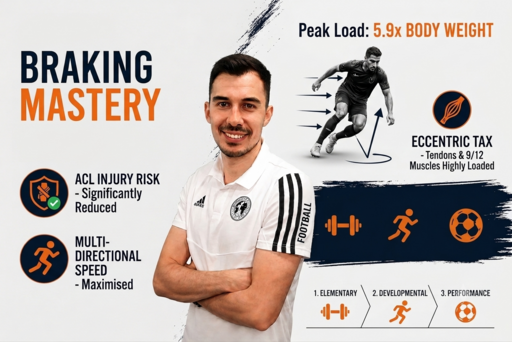
ACL injury prevention must go beyond general physical training. Experts recommended integrating training strategies that improve deceleration ability, postural control and movement technique in football-specific scenarios.
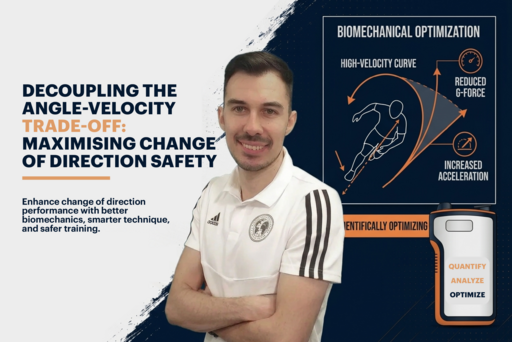
Proposed approaches include deceleration training to distribute mechanical loads more effectively, technical modifications to promote safer movement patterns and defensive scenario simulations that help players better interpret game situations.
This approach addresses not only strength and stability but also the player's ability to respond safely and efficiently in high-intensity contexts.
Contextualized Prevention and Decision-Making in Football
Many ACL injuries occur in situations where tactical context strongly influences player movement. For this reason, the most effective prevention programs should integrate real-game scenarios rather than relying solely on isolated exercises.
The experts explained that teaching players when to slow down, how to decelerate properly or how to defend a situation without unnecessary risk can significantly reduce injury likelihood.
Decision-making, perception and effort regulation are therefore key elements of a modern and holistic approach to injury prevention in football.
Technology and the Future of ACL Injury Prevention
The future of ACL injury prevention lies in combining technology, education and individualized interventions. Wearable sensors, high-speed cameras and artificial intelligence-based analysis promise to provide more detailed insights into biomechanics and mechanical loads in real time.
In addition, virtual reality may offer new possibilities by recreating tactical scenarios that help players improve game perception and decision-making in environments closer to real competition.
Beyond technology, the experts emphasized that the key remains a better understanding of the game and the design of interventions adapted to the real needs of each player.
Key Takeaways for Football Performance Professionals
Preventing ACL injuries requires a multidisciplinary and contextualized approach. Biomechanical assessment, neuromuscular training, tactical understanding and intelligent use of technology must work together to reduce injury risk.
This FSI Talks episode highlights that injury prevention is not only about improving physical variables but also about teaching players to move, decide and respond more effectively within the real context of football.
If you want to learn more about this topic, we recommend exploring our Football Injury Rehabilitation Master’s Program.