What a Tactical Analyst Really Does in a Professional Team
The work of a tactical analyst in professional football goes far beyond watching matches. Their main role is to transform information — video, data, observation — into useful knowledge for the coaching staff. They do not make decisions, but they provide the objective foundation on which the coach makes them.
The main responsibilities of a tactical analyst in a professional team can be grouped into three major areas:
- Analyzing both their own team and opponents to identify collective and individual behavioral patterns
- Generating and managing information that helps the coaching staff prepare matches and training sessions
- Supporting the sporting department in scouting and player evaluation processes
The analyst is, essentially, a second pair of qualified eyes within the coaching staff. A coach has to simultaneously manage many different responsibilities such as communication with players, session design, dressing room management and press conferences, and the analyst helps reduce part of that workload by providing processed, clear and actionable information.
If you want to learn in depth about all the functions and responsibilities of this role, we explain it in detail in our article What Does a Football Tactical Analyst Do: Functions and Professional Role.
The Working Week of a Tactical Analyst: Day-to-Day Life in a Club
The week of a tactical analyst in professional football is structured around the match. Everything revolves around two main areas: analyzing the upcoming opponent and analyzing the match that has just been played. Depending on the fixture congestion, these two processes can overlap and require very efficient time management.
Pre-Match Analysis: Preparing the Opponent Report
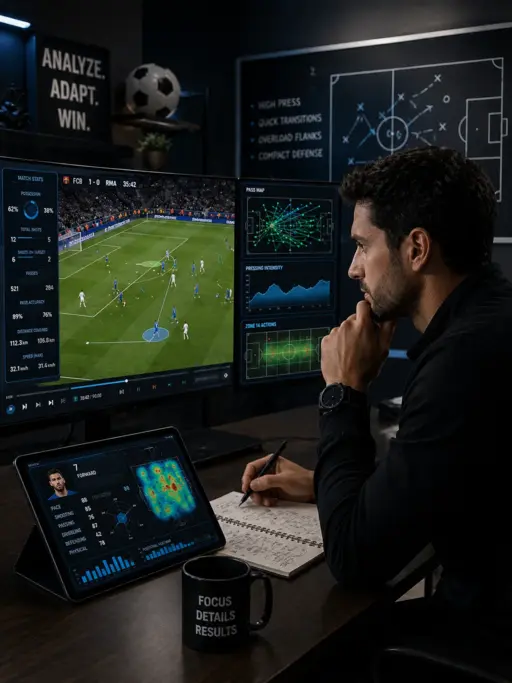
During the days leading up to the match, usually between Monday and Wednesday, the analyst focuses on studying the opponent. This process involves watching between three and five recent matches, identifying their offensive and defensive patterns, analyzing set-piece situations and extracting the most relevant trends the coach needs to know.
The result is an opponent report that combines video clips with tactical explanations. This report is not a generic document; it is designed specifically for the coach the analyst works with, adapted to their language, playing model and the decisions they need to make that week.
In professional clubs with more congested schedules and more than two matches per week, analysts may end up watching three or four matches per day over several consecutive days.
Live Analysis During the Match
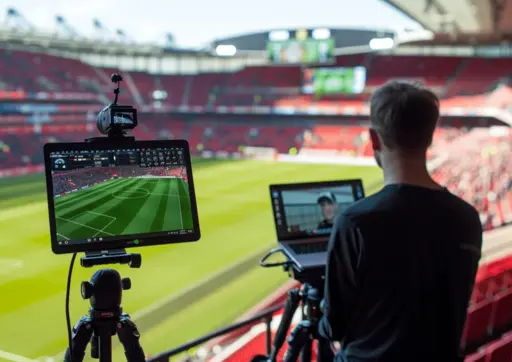
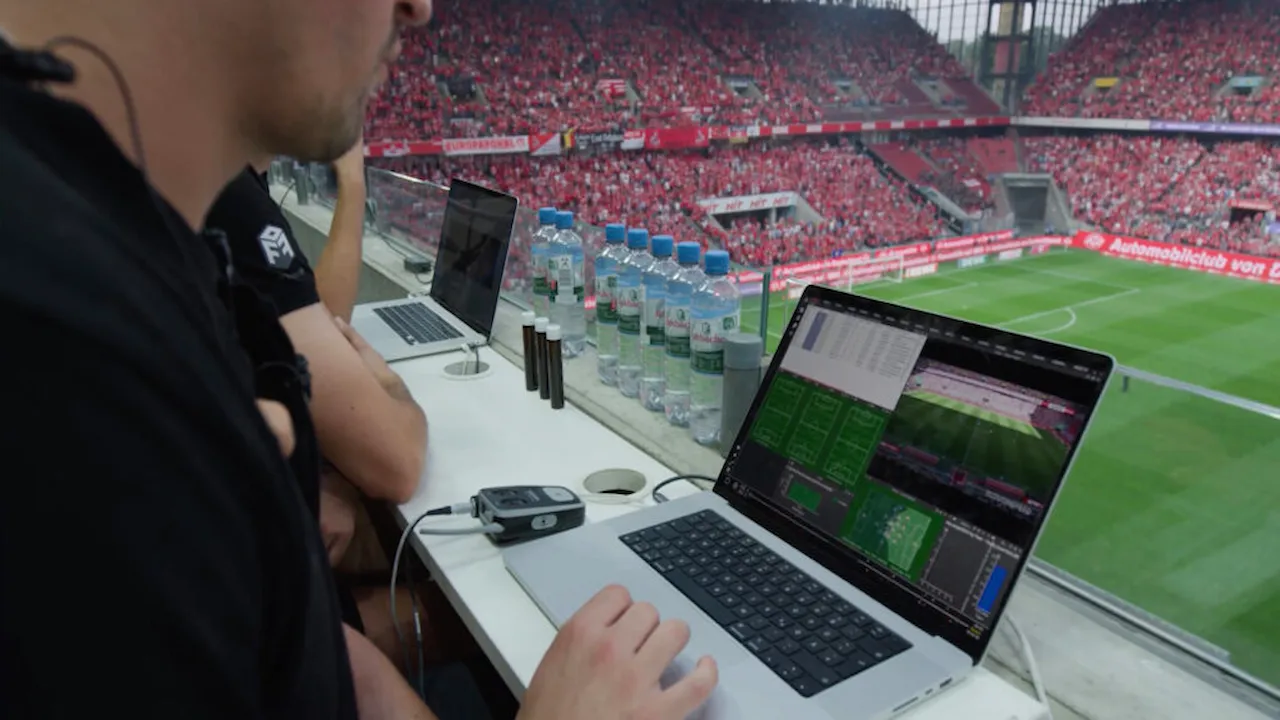
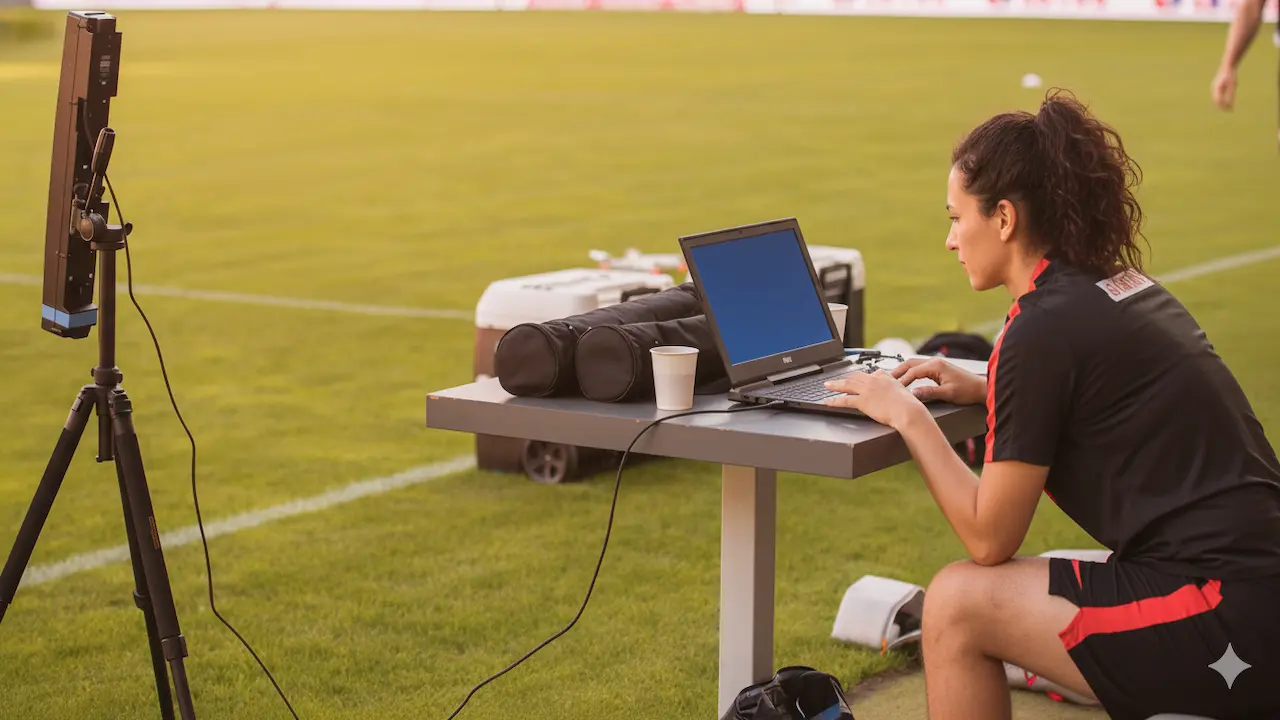
During the match, the analyst works from the stands or from an elevated position that allows them to have a global view of the game. Their role at this stage is to record behaviors in real time: how their own team is responding to the opponent’s approach, which adjustments are working and which are not, and what information could be useful for halftime or the second half.
In the most technologically advanced clubs, analysts communicate live with the bench through connected devices, sending clips and data that the coaching staff can review immediately. In clubs with fewer resources, this process is more manual, but the goal is the same: to provide useful information at the moment it is most needed.
Post-Match Analysis: The Foundation for the Following Week
After the match, the analyst prepares the post-match report. This document includes an objective review of the team’s collective and individual performance: what worked, what did not, where problems appeared and how they were solved. It serves as the foundation on which the coach will design the following week’s training sessions.
The post-match report is not only an internal document. In many clubs, part of that analysis is shared directly with the players through individual videos or collective review sessions so that each player understands through concrete images what they did well and what they can improve.
How Tactical Analysts Work with the Coaching Staff
The relationship between the tactical analyst and the coach is one of the factors that most determines the real effectiveness of analysis work. A brilliant report that is not understood or not used is useless. That is why one of the most important aspects of the analyst profile is communication skills and the ability to adapt to each coach’s style.
In most cases, the analyst does not communicate directly with the players — that is the coach’s responsibility. Their main point of contact is the coaching staff, and their job is to ensure that information is delivered in a clear, fast and actionable way. Every coach processes information differently: some prefer many video clips, others prefer statistical summaries, and others want specific data on set-piece situations. The analyst must understand these preferences and adapt their work accordingly.
In elite clubs with established analysis departments, analysts also work closely with the recruitment department during scouting processes. Tactical analysis provides an objective evaluation of how a player fits within the team’s playing model, reducing the risk involved in transfer decisions.
Tools Used by Tactical Analysts in Professional Football
Mastering technological tools is now just as important for a tactical analyst as understanding the game itself. The software ecosystem available for football analysis has grown enormously in recent years, and elite clubs expect their analysts to work fluently with the industry-standard platforms.
- Video analysis software: Hudl Sportscode, Nacsport and LongoMatch are the most widely used in European football. They allow analysts to tag actions, build clip databases and create visual presentations for coaches and players
- Statistical data platforms: Wyscout, InStat, Opta and StatsBomb provide quantitative data on matches, players and teams. Their use is increasingly common in first and second division analysis departments
- Tactical visualization tools: applications such as Klipdraw and similar platforms allow analysts to draw and explain tactical movements visually, improving communication with the coaching staff
- Programming and data analysis: Python and R are becoming increasingly valued in more advanced analyst profiles, especially in clubs with established data departments
Differences Between Working as an Analyst in Elite Football and Lower Divisions
The work of a tactical analyst changes significantly depending on the level of the club and the competition. It is not only about resources or tools; the depth of the analysis, the speed of execution and the type of information produced are different in each context.
In elite football, analysis departments may include between three and ten professionals specialized in different areas: own-team analysis, opponent analysis, scouting, set-piece analysis or advanced data analysis. Each analyst has a defined role and works in parallel with the others. The number of matches to analyze is extremely high, especially in teams competing simultaneously in league, cup and European competitions, and report delivery deadlines are very tight.
In lower divisions or clubs with fewer resources, the analyst is usually a more versatile profile responsible for all functions: own-team analysis, opponent analysis, scouting and support for the coaching staff. The workload may be smaller, but autonomy is much greater, making these environments ideal for learning and developing independent judgment.
Many analysts currently working in professional football began precisely in lower divisions or even working remotely for teams in different leagues, building experience and creating a portfolio of reports before moving into more demanding environments.
How to Train to Work as a Tactical Analyst in a Professional Team
Getting a position as a tactical analyst in professional football requires a combination of specialized education, mastery of industry tools and practical experience in real environments. The market is competitive and clubs look for profiles with strong tactical knowledge, communication skills and fluent use of analysis platforms.
If you want to know exactly which steps to take to build a career in tactical analysis — what to study, how to get your first opportunities and how to progress in the industry — we explain it in detail in our article How to Become a Football Tactical Analyst from Scratch.
At FSI Training, our Football Tactical Analyst Master’s Degree is designed by professionals with club experience. A program focused on giving you the tools, practical experience and contacts you need to enter and progress in the professional tactical analysis job market.