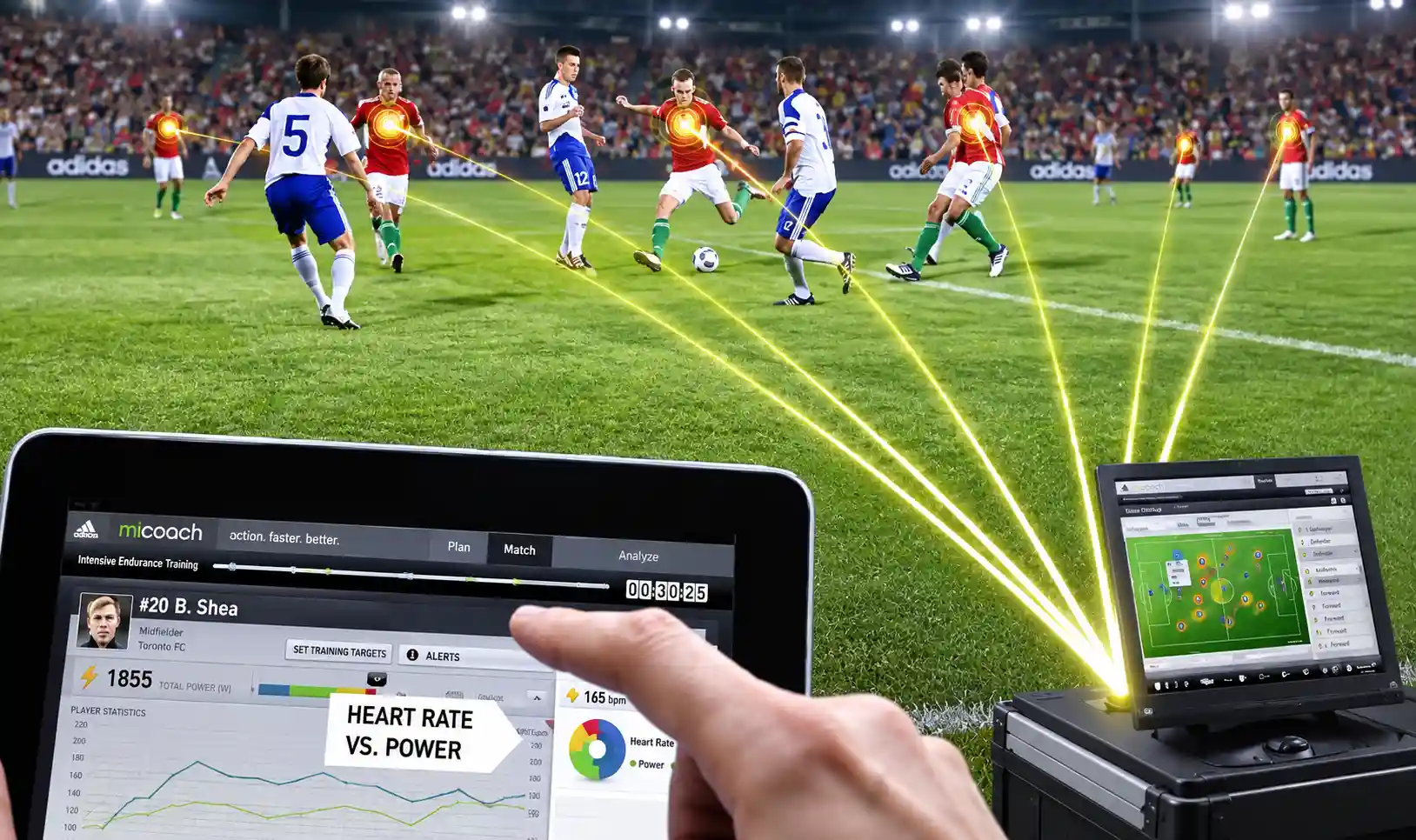
Professional football has evolved enormously in recent years. Analysis no longer relies solely on match observation or the experience of coaches and analysts. Increasingly, data is being used to study performance, identify patterns, and support decision-making.
In this context, Big Data in football has become a fundamental tool. Clubs can work with large amounts of information from matches, players, competitions, tracking systems, video, and other sources.
However, having a large amount of data is not enough. For data to be truly useful, it needs to be properly organized, processed, analyzed, and interpreted. The ultimate goal is to transform data into information and, subsequently, into knowledge that can help support better decisions.
What is Big Data in football?
Big Data in football refers to the use and processing of large amounts of data related to players, teams, matches, and competitions.
This data can be used to analyze different aspects of the game, from individual player performance to specific tactical behaviors of a team.
The importance of Big Data is not only related to the amount of information available, but also to the ability to process it and identify patterns that may be useful.
What is data and how is it used in football?
Data can be understood as a representation of a characteristic, fact, or result that can be recorded and subsequently analyzed.
In football, we can find data related to teams, players, results, competitions, or different events that occur during a match.
For example, a match can be recorded by specifying the participating teams, competition, season, date, stadium, and final score.
This data can then be used to perform different analyses and comparisons.
Raw data and processed data: what is the difference?
Raw data is data that has not yet been transformed or prepared for analysis. It can come from different sources and be presented in different formats.
Before analyzing it, it is common to carry out different processes, such as combining information from several sources, extracting specific fields, transforming variables, or correcting formatting issues.
For example, a score such as 2-1 may be useful to a person, but for certain analyses it may be more practical to store the number of goals scored by the home and away teams in separate fields.
Data processing makes it possible to create a structure that is more suitable for subsequent analysis.
What is football data analysis used for?
Football data analysis makes it possible to study large amounts of information and identify patterns that may be difficult to detect through isolated observation.
Data can be used to analyze performance, study behaviors, compare situations, and support different decision-making processes.
In professional football, data analysis can complement the work of coaches, analysts, performance staff, and other club professionals.
What is data science and how is it related to Big Data?
Data science combines different disciplines related to the processing and analysis of information. These include statistics, mathematics, programming, data analysis, and machine learning.
Big Data focuses on working with large amounts of data, while data science encompasses methods and techniques for transforming that data into information and knowledge.
This process also includes concepts such as data mining and machine learning.
Data science, data analysis, and Big Data: what are the differences?
Although these concepts are related, they do not mean exactly the same thing.
Data analysis focuses on studying available information to answer specific questions and draw conclusions.
Data science has a broader approach and may include model development, process automation, analytical system development, and the search for new patterns.
Big Data, on the other hand, is related to processing large volumes of information and the technologies required to store, process, and analyze it.
What does a data scientist do?
A data scientist works with information to identify patterns, analyze trends, and generate knowledge that can be used to answer questions or support decisions.
Their work may begin with raw data and continue through different stages of cleaning, transformation, analysis, modeling, and evaluation.
An important difference compared with traditional data analysis is that a data scientist does not only answer existing questions, but can also formulate new questions based on patterns found in the data.
In a sports environment, this makes it possible to analyze historical and current information to study trends and develop models that help understand specific behaviors.
What skills does a data scientist need?
Data science in football requires a combination of different areas of knowledge.
Programming makes it possible to work with large amounts of information and automate processes. Mathematics and statistics help select appropriate methods for analyzing data. In addition, professionals need knowledge of the field in which they work.
In football, understanding the sport is particularly important because it makes it possible to ask relevant questions and correctly interpret the results obtained.
How is football match data processed?
Before analyzing match data, it is necessary to ensure that the information is correctly structured.
Data can come from different sources and contain information in different formats. Therefore, cleaning, transformation, and integration processes are required.
For example, team information may be stored in one source, while result-related data may be found in another. To analyze them together, it is necessary to link both sources.
In addition, the processes performed on the data should be documented and consistent so that the results can be reproduced correctly.
How is football match data organized?
A common way of organizing information is through databases structured into rows and columns.
Each row can represent a record and each column a specific field. For example, a match table could contain information such as:
- Home team.
- Away team.
- City.
- Match date.
- Competition.
- Season.
- Home team goals.
- Away team goals.
Proper structure makes subsequent queries, transformations, and analyses easier.
What data can be used to analyze a football match?
Football data can include many different types of information. The usefulness of each type of data will depend on the question being addressed.
Team and player data
Data can be used to identify teams and players and organize information related to their performances.
This information can later be combined with match, competition, or other data sources.
Match and competition data
Matches can include information about the competition, season, date, participating teams, and different characteristics of the game.
Properly separating these elements makes it possible to perform more accurate analyses and compare matches from different seasons or competitions.
Score and result
The result should also be properly structured. Instead of storing a score as a single text string, it may be more efficient to store the home team's goals and the away team's goals separately.
This allows these variables to be used directly in mathematical operations and statistical analyses.
Why is it important to structure data correctly?
The quality of an analysis depends to a large extent on the quality of the data used.
An incorrect structure can make queries more difficult, generate errors, and complicate subsequent analyses.
Therefore, data processing and organization are fundamental parts of any Big Data project applied to football.
How is Big Data used for tactical analysis in football?
One of the most interesting applications of data analysis is the study of teams' tactical behavior.
Tracking systems can provide information about the position and movement of players during a match. This data makes it possible to study spatial and temporal aspects of the game.
Analyzing this type of information can help identify collective patterns and study how players and teams behave in different situations.
Data and sports performance analysis
Data analysis makes it possible to study different variables related to sports performance.
Data can be combined to analyze trends, compare situations, and study specific behaviors during matches or throughout a season.
The information obtained can complement the analysis carried out by sports professionals.
Big Data as a decision-making support tool
The goal of Big Data in football is not to replace the experience of coaches or professionals, but to provide additional information that can help support decision-making.
Data provides a broader and more objective view of certain aspects of the game, although it must always be interpreted within the sporting context.
Can data analysis complement tactical analysis?
Yes. Data can complement traditional observation by providing quantitative information about specific behaviors.
For example, positional data can be used to study movements, space occupation, and relationships between players.
This makes it possible to combine professional experience with information derived from data.
What tools are used in Big Data and data science?
Working with data requires different tools depending on the size of the information and the objective of the analysis.
Python and R
Python and R are two programming languages used in data analysis and data science.
They allow professionals to manipulate information, perform statistical analyses, build models, and create different types of visualizations.
SQL and databases
SQL is a language used to query and work with relational databases.
It allows users to select information, filter it, combine different tables, and perform operations on data.
In football analysis projects, databases are fundamental for storing and linking large amounts of information.
Hadoop and Spark
Big Data environments also include technologies such as Hadoop and Spark, which are used to work with large volumes of information and perform distributed processing.
These tools are part of the technological ecosystem used to manage and process data at scale.
Excel and other tools
Excel can also be useful for certain data analysis and manipulation tasks, especially when the datasets do not require more complex infrastructures.
The choice of a tool depends on the volume of data, the type of analysis, and the specific requirements of the project.
What role do databases play in football analysis?
Databases allow information to be stored and organized so that it can be accessed later.
In a football analysis project, they can contain information about matches, players, teams, competitions, and different events.
What is a database?
A database is an organized system for storing and querying information.
In a relational database, information is usually organized into tables consisting of rows and columns.
How is data organized into rows and columns?
Each row can represent a specific record, while each column represents a characteristic or variable.
For example, a row can represent a match, while the columns can indicate the teams, date, competition, and result.
Each field should have an appropriate data type. For example, goals can be stored as integers rather than text.
What is a primary key?
A primary key is a unique identifier that allows one record to be distinguished from the others.
In a football database, each match can have a unique identifier that allows it to be linked to other information.
How are different tables related?
Information does not have to be stored in a single table.
For example, one table can contain general match information while another can store information related to the result. Both can be linked through a unique match identifier.
This organization helps avoid duplication and makes information easier to maintain.
What is the difference between a data analyst and a data scientist?
Although both profiles work with data, their roles may be different.
| Data Analyst | Data Scientist |
|---|---|
| Analyzes available information. | May work from raw data. |
| Answers specific questions. | Can also formulate new questions. |
| Can create reports and dashboards. | Can develop statistical and machine learning models. |
| Usually works with prepared data. | Can build data pipelines. |
| Normally finishes with conclusions and recommendations. | Can deploy, maintain, and update models. |
What does a data analyst do?
A data analyst primarily focuses on studying available information to answer specific questions.
Their tasks may include creating reports, dashboards, visualizations, and analyses that help provide a better understanding of the data.
What does a data scientist do?
A data scientist may participate in a broader process that begins with obtaining and preparing data and continues with analysis, model development, and evaluation of results.
They can also work on process automation and model maintenance to ensure that models remain useful as new data becomes available.
How is data science applied to professional football?
Data science in football has applications across different areas of professional clubs.
Data can be used to analyze performance, study playing patterns, support decision-making processes, and develop tools that assist different departments.
Big Data in football clubs
Professional clubs generate and use large amounts of information.
Data can come from matches, tracking systems, internal databases, analysis tools, video, and different external sources.
Integrating these sources makes it possible to build a more complete view of the available information.
What role do analysts and data scientists play in football clubs?
Data professionals can be responsible for different tasks, from preparing information to developing analyses and models.
Their work requires a combination of technical knowledge and an understanding of the sport to ensure that the results are relevant.
How do clubs use data to make decisions?
Data can support different decision-making processes within a club.
The value lies in transforming large amounts of information into understandable results that can be used by professionals responsible for each area.
What benefits does Big Data bring to football?
The appropriate use of data can provide different advantages to professional football.
Improving performance analysis
Data makes it possible to study performance from a quantitative perspective and compare different situations.
Finding patterns
Data analysis and machine learning techniques can help identify patterns and relationships that are not always evident through traditional observation.
Supporting decision-making
The information obtained through analysis can be used to support decisions based on a greater amount of evidence.
Automating processes
Programming and data science tools make it possible to automate certain tasks related to the collection, transformation, and analysis of information.
Turning data into knowledge
The ultimate goal of the entire process is to transform data into useful knowledge.
To achieve this, simply collecting information is not enough. It must be properly processed, analyzed, and understood within the context of football.
What are the limitations of Big Data and artificial intelligence in football?
Although Big Data applied to football offers many possibilities, it also has limitations.
Does more data mean better decisions?
Not necessarily. Having a large amount of data does not guarantee that the conclusions will be better.
Data quality, structure, and relevance are essential. A very large but poorly structured dataset can produce analyses that are not useful.
Can machine learning predict football perfectly?
No. Football is a complex sport involving numerous factors and situations that are difficult to predict.
Machine learning models can identify patterns and make estimates, but their results depend on the data used, the methodology, and the context.
Why is data quality so important?
Errors present in the data can affect the conclusions obtained later.
For this reason, data cleaning, transformation, documentation, and validation are essential parts of any data science project.
Frequently asked questions about Big Data in football
What is Big Data in football?
It is the use and processing of large amounts of data related to players, teams, matches, and competitions to obtain useful information and support analysis and decision-making.
What is Big Data used for in football?
It can be used to analyze performance, identify patterns, study tactical behaviors, automate processes, and support different decisions within football clubs.
What is data science in football?
It is the application of analysis methods, statistics, programming, machine learning, and other techniques to transform football-related data into information and knowledge.
What data is used in football?
Data from players, teams, matches, competitions, results, and tracking systems can be used, among other sources.
What tools are used to analyze football data?
Tools used in data analysis and data science include Python, R, SQL, Excel, Hadoop, and Spark.
What is a data scientist?
A data scientist is a professional who uses programming, mathematics, statistics, and knowledge of the relevant field to analyze data, identify patterns, and develop models and solutions.
What is the difference between Big Data and data science?
Big Data is mainly related to processing large amounts of information, while data science encompasses different methods and techniques for analyzing data and obtaining knowledge.
How does data analysis help professional football?
It can provide additional information to study performance, understand playing patterns, and support decision-making by different professionals within a football club.
Can Big Data replace coaches?
No. Data should be understood as a supporting tool. Experience, knowledge of the sport, and human interpretation remain essential for understanding the context of the game.
Is programming necessary to work with football data?
For specialized data science roles, programming is an important skill because it allows professionals to manipulate large amounts of information and automate processes. However, the required knowledge depends on the professional profile and the functions being performed.
Conclusion: The future of Big Data in football
Big Data in football is transforming the way professional sport is analyzed. The amount of information available makes it possible to study the game from increasingly detailed perspectives.
However, the real value does not simply lie in accumulating data. The process begins with correctly structured data and continues with its transformation, analysis, visualization, and interpretation.
The combination of Big Data, data science, machine learning, and football knowledge makes it possible to turn large amounts of information into knowledge that can help us better understand the game and support decision-making.
The challenge for clubs is not simply to have more data, but to know which questions to ask, which information to use, and how to transform the results into useful decisions.
About the information used
This content is based on knowledge and materials developed by Susana Ferreras, Data Analytics Lead at Arsenal F.C., where she leads the Research and Insights team, supporting management, the first team, women's football, and the academy through models, reports, and analytical tools. To become an expert in football tactical analysis, enroll in the FSI Master's Degree - Football Tactical Analyst.