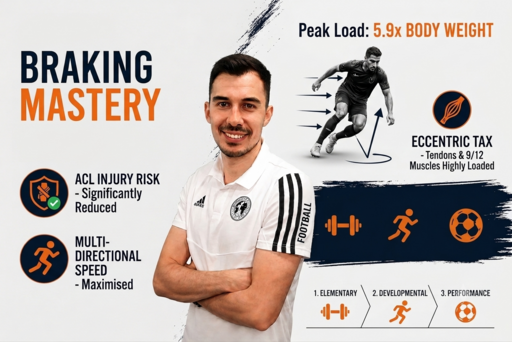
Strength training plays a fundamental role in the development of young football players. When implemented correctly, it can enhance physical performance, reduce injury risk and support the long-term athletic progression of academy players.
In episode 12 of FSI Talks, Alberto Fílter, coordinator of FSI Lab, speaks with Hugo Correia, Head of Injury Prevention and Rehabilitation at the Olympique de Marseille Academy.
Together they discuss how strength training should be introduced in youth football, how it contributes to athletic development and how academies can integrate evidence-based methodologies into their training systems.
Why Strength Training Is Essential for Young Football Players
A solid strength foundation is essential for the physical development of young athletes. According to Correia, strength training supports key qualities required in football such as speed, explosiveness and agility.
Beyond performance, strength development also plays a major role in injury prevention. Stronger muscles and connective tissues allow young players to better tolerate the physical demands of football.
“Strength training is not only about improving performance; it is also about building resilient athletes,” explains Hugo Correia.
Developing strength early in a player’s career helps prepare them for the increasing physical demands they will face as they progress through elite football pathways.
Individualization in Youth Strength Training
One of the most important principles highlighted in the conversation is individualizing strength programs according to the biological and developmental stage of each athlete.
Young players of the same chronological age may present very different levels of physical maturation. For this reason, strength programs should not be standardized across entire squads.
Instead, academies should adapt training loads and exercises based on:
- Biological maturation and growth stage
- Movement quality and motor control
- Previous training experience
- Injury history
This individualized approach ensures that players progress safely while maximizing their athletic potential.
Methodologies for Strength Training in Football Academies
The episode also explores practical methodologies used to integrate strength development into youth football training.
Correia highlights the concept of integrated periodization, which connects gym-based strength training with the technical and tactical demands of football.
This model ensures that physical preparation complements on-field training rather than existing as an isolated component.
Some key strategies discussed include:
- Regular strength assessments to monitor development and identify weaknesses
- Exercises designed to correct bilateral asymmetries that may increase injury risk
- Progressive neuromuscular strength programs adapted to each athlete
By integrating these methods, academies can build stronger and more resilient players while maintaining alignment with the demands of football performance.
Injury Prevention in Youth Football Academies
Injury prevention is a critical component of youth athlete development. According to Correia, academies must adopt a proactive approach that combines strength training with monitoring and collaboration between departments.
Effective injury prevention programs often include:
- Micro-dosing preventive exercises targeting vulnerable muscle groups such as hamstrings and adductors
- Continuous physical assessments to detect muscular imbalances or asymmetries
- Progressive rehabilitation protocols that allow injured players to safely return to play
This collaborative process typically involves coaches, strength and conditioning staff and medical professionals working together.
The Role of Data and Normative Values
Another important topic addressed in the episode is the use of normative values in football academies.
By establishing reference benchmarks based on real data, academies can better evaluate player development and monitor physical progress over time.
These benchmarks help practitioners answer important questions such as:
- Is a player progressing as expected for their age group?
- Are there physical deficits that require targeted intervention?
- How does a player compare to academy performance standards?
Correia emphasizes that reliable data collection requires controlled testing environments to ensure accurate and meaningful results.
Building Stronger and More Resilient Players
The discussion concludes by highlighting the importance of evidence-based strength training within youth football development.
When academies adopt structured strength programs and interdisciplinary collaboration, they create environments that support both performance and player health.
With practitioners such as Hugo Correia applying these methods in elite academies, strength training continues to play an increasingly important role in preparing young footballers for the demands of professional football.