What is a football tactical analyst?
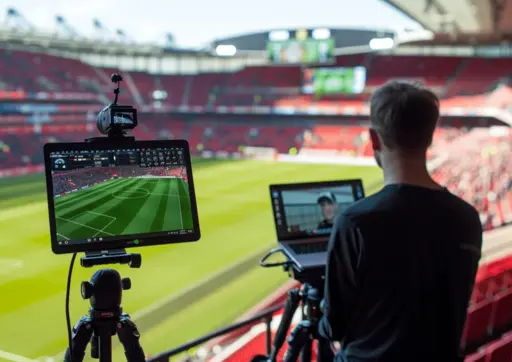
A football tactical analyst is the professional responsible for observing, studying and understanding collective and individual behaviour within the game. Their work consists of transforming what happens on the pitch into useful, clear and actionable information for the coaching staff.
Unlike the coach, whose focus is on directing and making decisions in real time, the analyst works before and after the match: gathering data, reviewing video, identifying patterns and producing reports that help the team compete with greater precision and preparation.
Tactical analysis is not limited to elite football. More and more semi-professional and even amateur clubs are incorporating this role, which has generated a rapidly expanding job market for professionals specialised in this field.
Main functions of the football tactical analyst
The functions of the tactical analyst can vary depending on the club, its internal structure and available resources. However, there are common responsibilities that define the core of this role in any professional environment.
Analysis of the own team
One of the analyst's fundamental tasks is studying the team's performance across the different phases of play: offensive phase, defensive phase and transitions. This analysis allows collective behaviour patterns to be identified, recurring errors to be detected and aspects that are working well to be reinforced. The result is translated into video clips, graphics and presentations that the coaching staff uses to work on during training sessions.
Opponent analysis
Before each match, the analyst produces a detailed report on the next opponent. This report covers the opposing team's usual tactical structures, their strengths and weaknesses, key players, the set pieces they execute and the behaviour patterns that recur most frequently. The goal is to give the coach and players an information advantage before the match begins.
Production of tactical reports
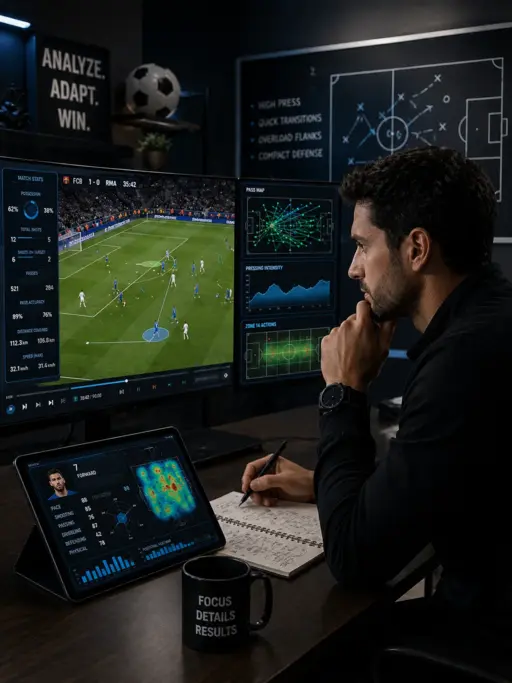
The tactical analyst transforms data and video into reports that are understandable for different audiences: the coaching staff, the players and, in some cases, the sporting director. These reports combine edited clips, statistics, heat maps and tactical annotations that facilitate strategic decision-making within the club.
Individual player monitoring
In addition to collective analysis, the analyst studies the individual behaviour of players, both from their own team and opponents. This monitoring allows the decision-making of each player to be evaluated in different tactical contexts, areas for improvement to be identified and, in the case of opponent analysis, profiles that fit the team's needs to be located for recruitment and scouting processes.
Coordination with the coaching staff
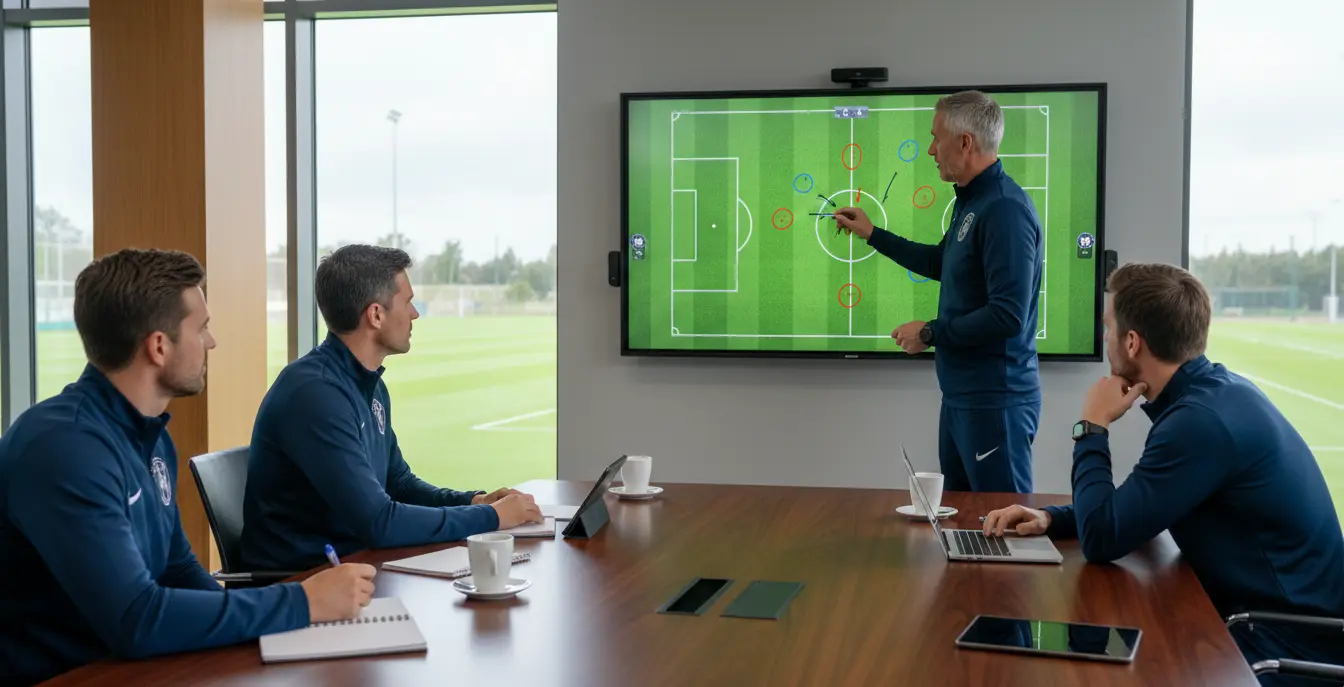
The analyst does not work in isolation. Their work is closely linked to that of the coach and the rest of the technical staff. They adapt the analysis to the team's style of play, participate in pre-match meetings and in many cases actively accompany training sessions by recording sessions, extracting clips and generating immediate evidence-based feedback for the players.
Types of analyst in modern football
As analysis departments have grown within professional clubs, the analyst's role has become increasingly specialised. Today there are different profiles within this same area, each with a different focus.
Tactical analyst
This is the most common profile and the one that focuses its work on studying the game: phases, structures, transitions and set pieces. They work primarily with video and their main output is tactical reports and presentations for the coaching staff.
Data analyst
Their work is based on quantitative metrics: performance statistics, positioning data, GPS metrics and predictive models. They use programming and data visualisation tools to draw conclusions that go beyond what is observable to the naked eye.
Scouting analyst
Their focus is on talent detection and evaluation. They analyse players from other teams to identify profiles that fit the club's style of play, supporting the recruitment area and the sporting director in transfer processes.
Tools used by a football tactical analyst
Mastery of technological tools is one of the most valued competencies in a tactical analyst. In today's professional football, analysis work combines video platforms, databases and specialised software. These are the most widely used in the industry:
Video analysis software
Hudl Sportscode is one of the benchmarks in elite tactical analysis. It allows game actions to be coded, clips to be created and advanced visual presentations to be generated. Nacsport is another widely used option among analysts at professional and semi-professional levels, valued for its flexibility and statistics panels. LongoMatch and Metrica Sports are common alternatives in educational contexts and teams with tighter budgets.
Data and scouting platforms
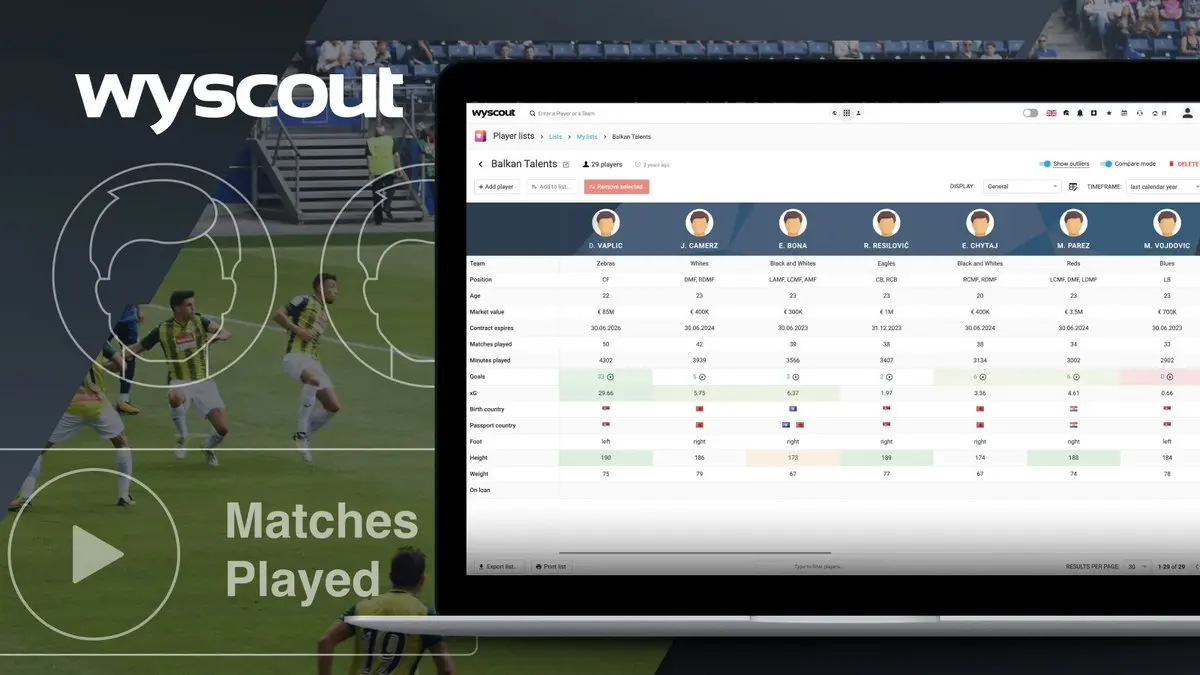
Wyscout is the reference platform for opponent analysis and scouting. It offers access to a global database with actions-tagged clips from more than 200 competitions worldwide. StatsBomb and Opta are advanced statistical data providers used by the highest-level clubs for individual and collective performance analysis.
Tactical presentation tools
Beyond video and data, the analyst needs to communicate their conclusions in a clear and visual way. For this purpose, telestration and tactical drawing tools such as Hudl Studio are used, as well as PowerPoint or Keynote presentations adapted to the language of the coaching staff and players.
Skills and professional profile of the tactical analyst
Beyond technical mastery, the football tactical analyst needs to develop a series of competencies that determine their effectiveness within the club.
Deep knowledge of the game
Analysis only has value when interpreted in the correct context. A tactical analyst must have an in-depth knowledge of playing systems, offensive and defensive tactical principles, positional dynamics and the trends of modern football. Without this foundation, data and video cannot be translated into useful information.
Communication skills
The analyst's work does not end when the report is produced: it ends when the coach and players understand and apply the information. For this reason, knowing how to communicate complex conclusions clearly, concisely and adapted to each audience is a skill just as important as the analysis itself.
Technological proficiency
The modern analyst must be fluent in video analysis software, data platforms and presentation tools. Speed and precision in handling these tools make the difference in professional environments where time is extremely tight.
Adaptability and discretion
Every club has its own culture, its own style of play and its own way of working. The tactical analyst must be able to adapt to very different environments, handle sensitive information with discretion and work under pressure during periods of intense competition.
Salary of a football tactical analyst
The salary of a football tactical analyst varies considerably depending on the level of competition, the size of the club and the professional's experience. In the Spanish First Division, full-time analysts can earn between €1,300 and €3,500 per month, with these figures potentially being exceeded at larger clubs. Part-time contracts, common in lower categories, place earnings between €800 and €1,400 per month.
In the international market, particularly in leagues such as the Premier League or the Bundesliga, the figures are significantly higher, and English language proficiency becomes a key differentiating factor for accessing these opportunities.
The average salary of a sports analyst in Spain exceeds €35,000 gross per year according to the main employment portals, although profiles with greater experience, mastery of advanced tools and a track record at elite clubs can reach significantly higher figures.
Train as a football tactical analyst with FSI Training
Access to this professional role requires a combination of specific training, practical experience and the development of a personal portfolio. There is no single path, but there are a series of steps that make the difference for those who want to work in professional football.
If you want to make the leap into tactical analysis in professional football, the Master's in Football Tactical Analysis at FSI Training is the most specialised programme on the market. Designed in direct collaboration with more than 40 international elite clubs, it integrates theoretical knowledge, real professional tools such as Wyscout and Nacsport, and guaranteed placements at professional clubs around the world.
The master's is co-directed by Victor Mañas, a tactical analyst with experience at clubs including Aston Villa, Villarreal, Arsenal, Paris Saint-Germain and Sevilla, and by Alvaro Reina, Head of Tactical Performance Analysis at Valencia CF's Technical Secretariat. A world-class teaching team that guarantees training connected to the reality of elite football.
With more than 2,000 graduates and a 60% employment rate at professional clubs following placements, FSI Training is the reference platform for those who want to build a real career in football tactical analysis.
Discover the Master's in Football Tactical Analysis at FSI Training →
Frequently asked questions about the football tactical analyst
What is the difference between a tactical analyst and a data analyst?
The tactical analyst works primarily with video and focuses their analysis on the phases of play, collective behaviour and tactical match preparation. The data analyst relies on quantitative metrics and statistical models to draw conclusions about performance. In many modern clubs, both profiles work in a complementary way.
Is it necessary to have played football to be a tactical analyst?
It is not an essential requirement, although having experience as a player can facilitate understanding of the game from the inside. What is fundamental is a deep and demonstrable knowledge of football tactics, which can be acquired through training and the systematic study of the game.
Can you work as a tactical analyst remotely?
Yes. Remote work is an increasingly common arrangement among tactical analysts, particularly in semi-professional categories. Many analysts work simultaneously for several teams from their own facilities, using digital platforms to access video, share reports and communicate with the coaching staff.
What tools should a beginner tactical analyst master?
To start, it is advisable to become familiar with accessible video analysis software such as Nacsport or LongoMatch, and with scouting platforms such as Wyscout. As your career progresses, mastery of Hudl Sportscode or StatsBomb opens doors to higher-level environments.