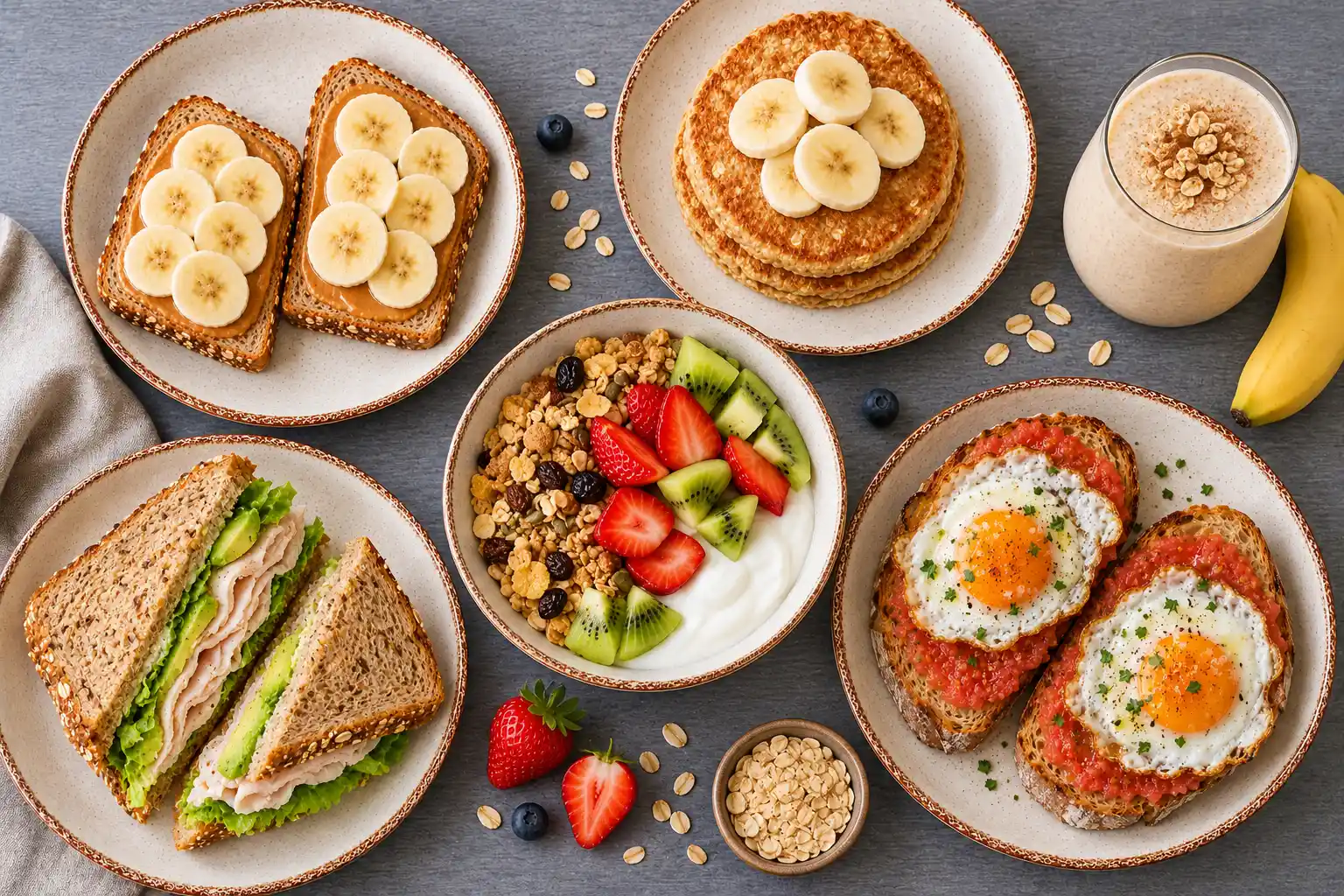
What should a healthy breakfast for footballers include?
A healthy breakfast for a footballer combines carbohydrates, protein, fluids and enough total energy, while keeping fat and fibre at moderate levels so they do not interfere with digestion. These are the four pillars:
- Carbohydrates: the main fuel. Football is an intermittent sport involving many sprints, and muscles rely on glycogen to sustain them. A systematic review published in Nutrients (2024), covering 61 studies, recommends a meal containing 1–3 g of carbohydrate per kilogram of body weight 3–4 hours before playing. For a 70 kg player, that means 70–210 g. Practical staples include oats, wholemeal bread, bananas, fruit and cereals.
- Protein: repair and satiety. A common sports nutrition target is to include around 20–30 g of protein per meal. Eggs, Greek yoghurt, milk, turkey or peanut butter can help you reach this target without having to eat heavy meals.
- Hydration: start the day on the right foot. Have 400–600 ml of water (two or three glasses) with breakfast. If your urine is very dark yellow when you wake up, you need to drink more before training or competing.
- Total energy: make sure you get enough. A study of academy players from English Premier League teams found that energy and carbohydrate intake on match days is often below optimal levels. When the players doubled their breakfast calories (from around 1,100 kJ to around 2,100 kJ, or approximately 260 to 500 kcal) two hours and fifteen minutes before a simulated match, they reported no abdominal discomfort and improved their dribbling speed.
Fat and fibre are not “bad”, but they slow gastric emptying. That is why it is best to reduce them in the breakfast before a match and save them for rest days or light training days.
7 healthy breakfast recipes for footballers
All these recipes are easy to prepare before heading to the pitch, use inexpensive foods and are designed to provide 50–70 g of carbohydrates alongside a useful amount of protein. Nutritional values are approximate and vary depending on brands and portion sizes.
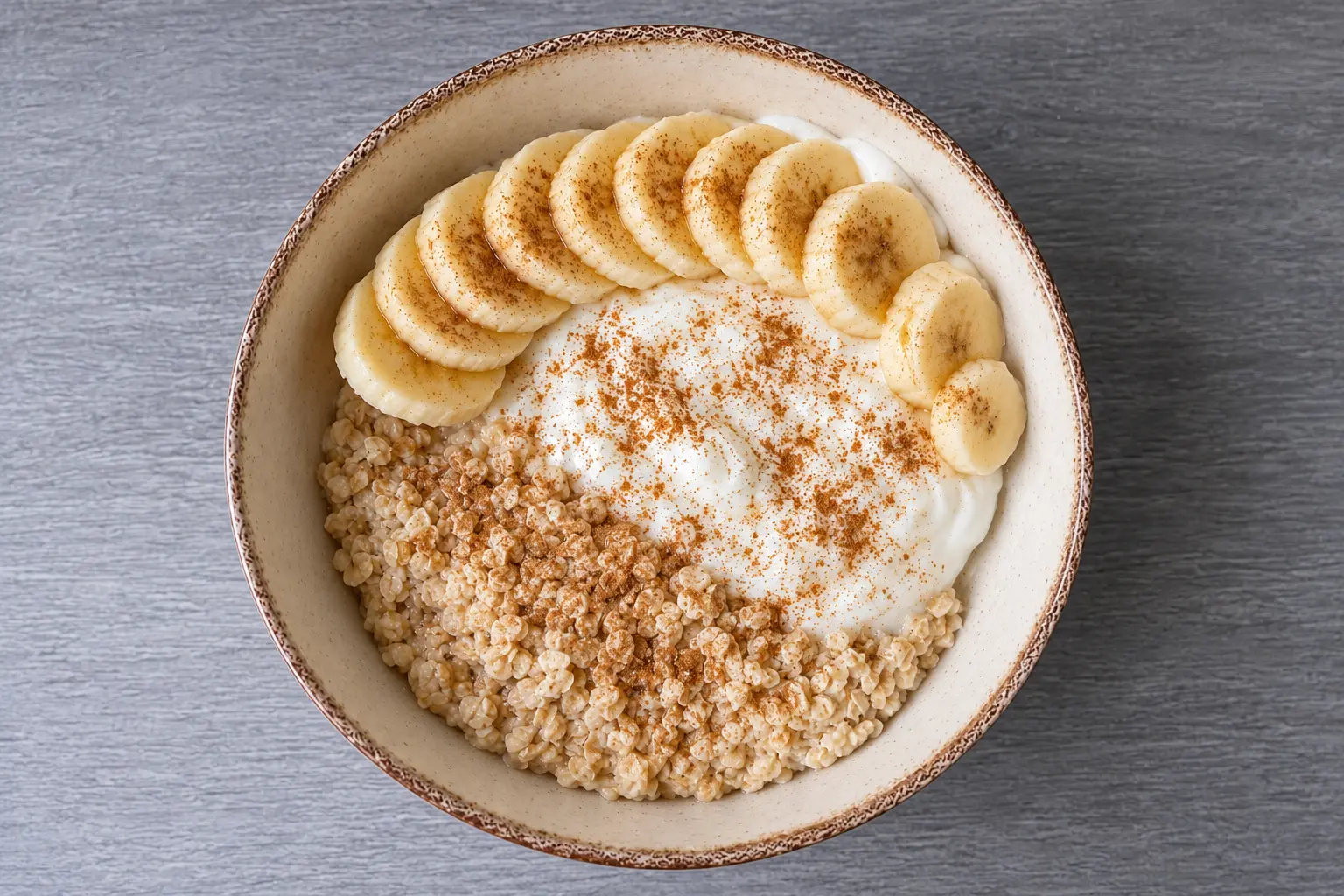
1. Oats with banana, yoghurt and cinnamon
This is a classic sports breakfast: slow-release carbohydrates, potassium from the banana and protein from the yoghurt. It takes 5 minutes to prepare.
Ingredients: 50 g rolled oats, 1 medium banana, 125 g plain yoghurt, 200 ml milk (or fortified plant-based drink), cinnamon to taste.
Method: Heat the oats with the milk in the microwave or in a saucepan for 2–3 minutes. Add the yoghurt, sliced banana and cinnamon.
Approximate nutritional values: 460 kcal, 74 g carbohydrates and 19 g protein.
2. Wholemeal toast with egg and tomato
A savoury, filling breakfast rich in high-quality protein. It takes 8 minutes to prepare.
Ingredients: 2 slices of wholemeal bread, 2 eggs, half a ripe tomato, 1 teaspoon of extra virgin olive oil, and one piece of fruit or a glass of orange juice (200 ml) to top up the carbohydrates.
Method: Toast the bread, cook the eggs in a pan or poach them with the oil, and serve them on the toast with grated tomato.
Approximate nutritional values: 360 kcal, 30 g carbohydrates and 20 g protein (around 50 g of carbohydrates if you add the juice or fruit).

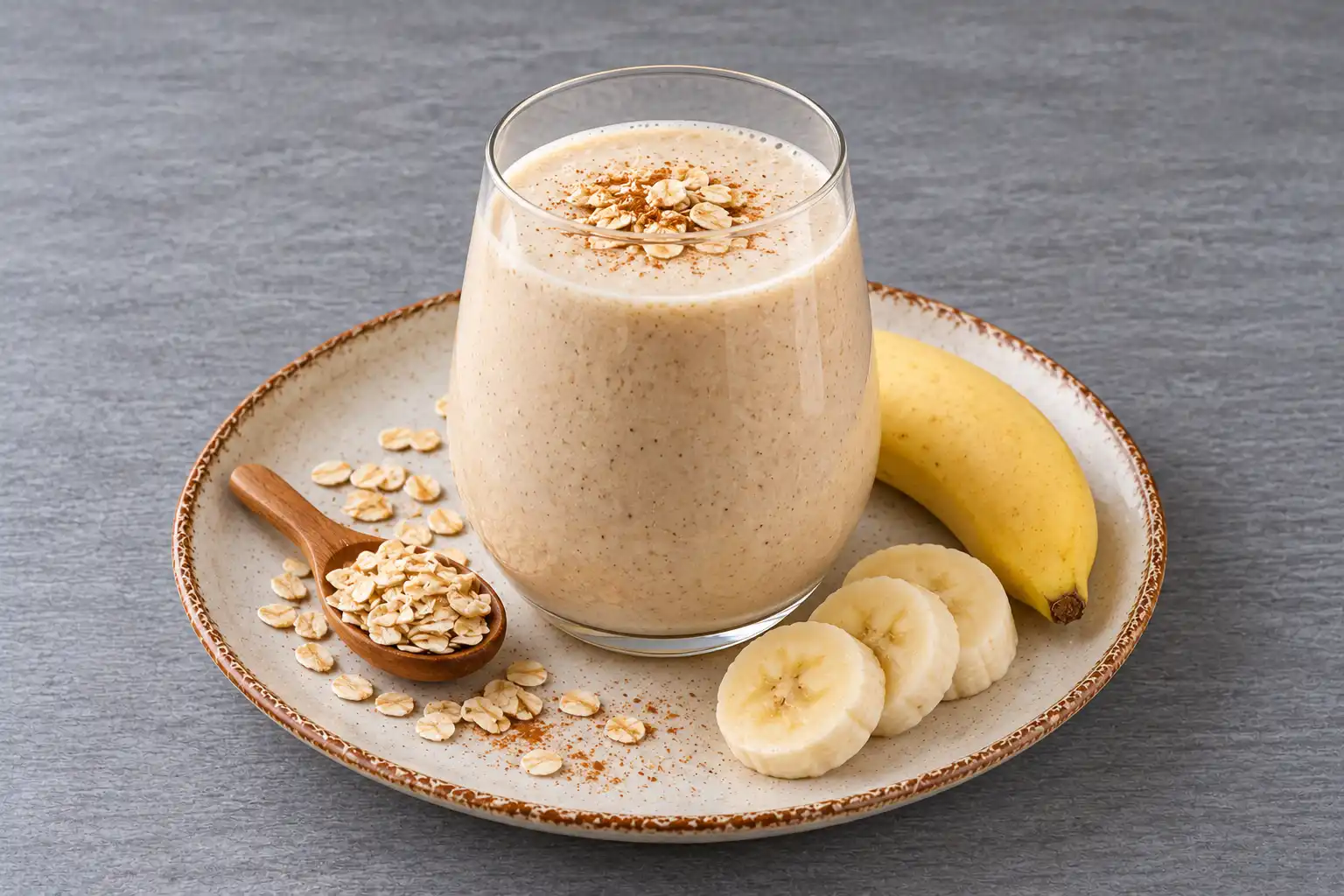
3. Banana, oat and milk smoothie
A liquid option, ideal if you wake up without much of an appetite or if the match is only a few hours away. It takes 3 minutes to prepare.
Ingredients: 1 banana, 40 g rolled oats, 250 ml semi-skimmed milk (or fortified plant-based drink), a pinch of cinnamon or pure cocoa powder.
Method: Blend everything until smooth and drink it cold.
Approximate nutritional values: 375 kcal, 64 g carbohydrates and 14 g protein.
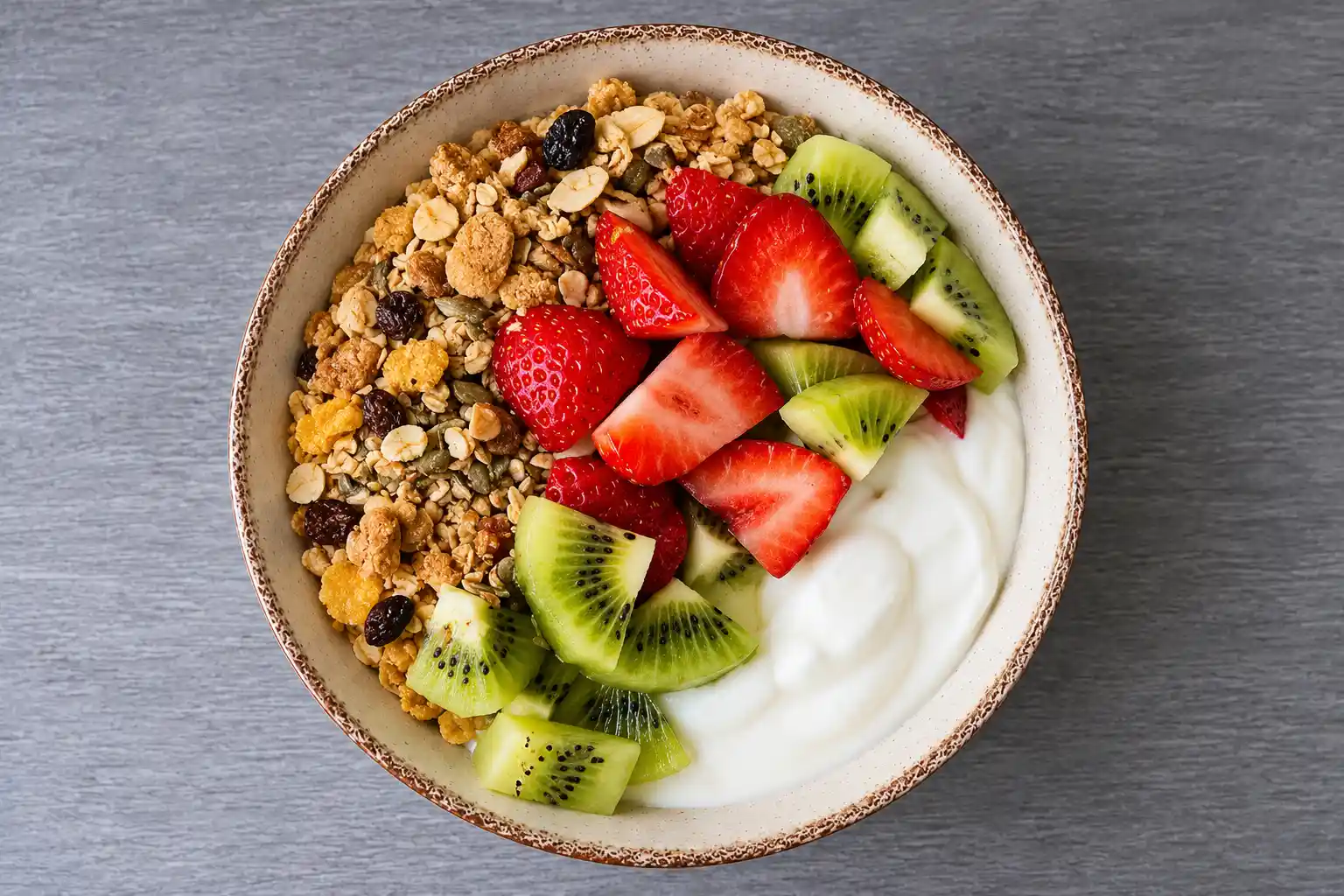
4. Greek yoghurt with fruit and muesli
Protein, carbohydrates and probiotics in a bowl, with no cooking required. It takes 3 minutes to prepare.
Ingredients: 200 g plain Greek yoghurt, 40 g muesli with no added sugar, 100 g chopped fruit (strawberries, kiwi or peach), 1 teaspoon of honey.
Method: Put the yoghurt in a bowl and add the fruit, muesli and honey just before eating so the cereal does not become soggy.
Approximate nutritional values: 400 kcal, 52 g carbohydrates and 22 g protein.
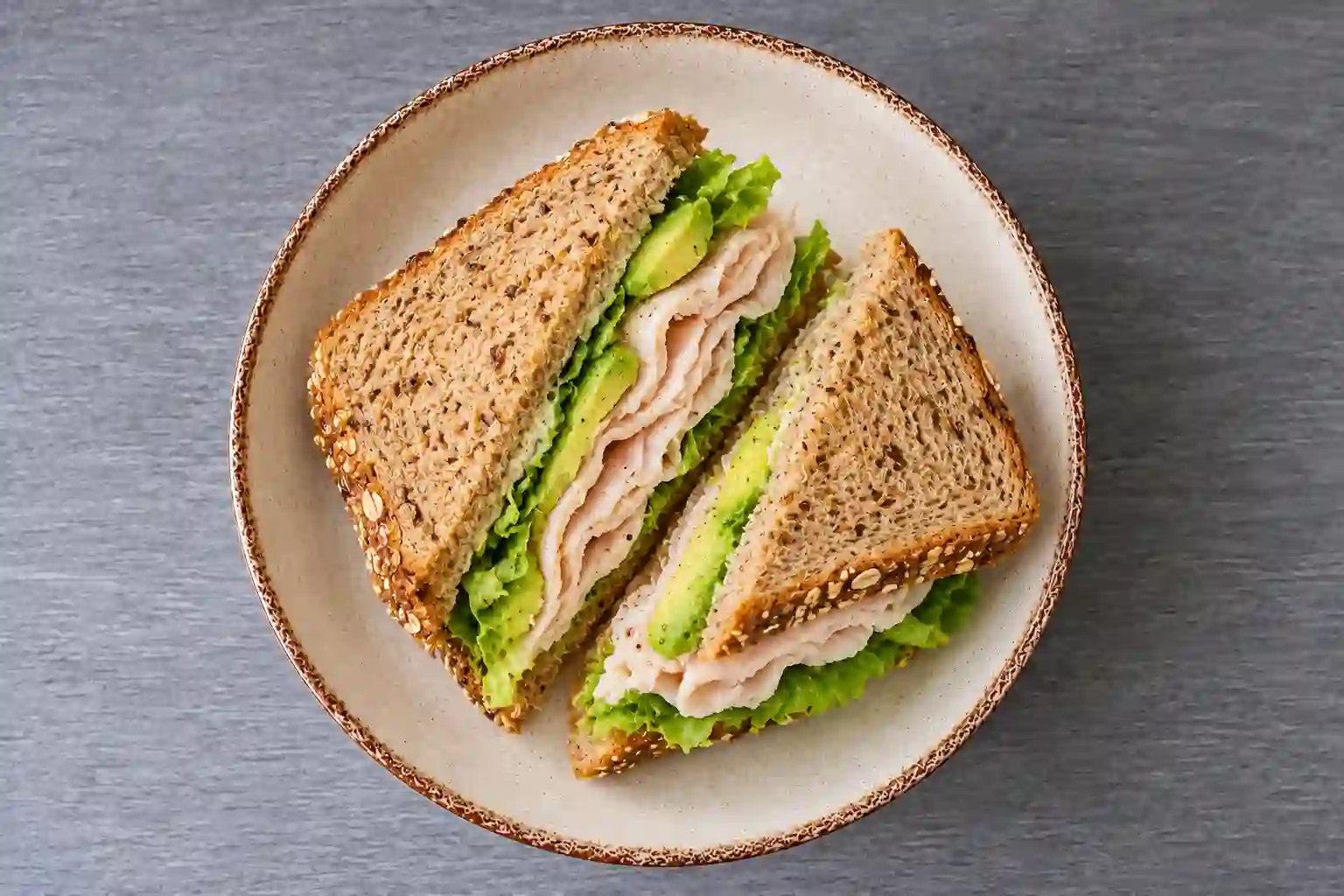
5. Wholemeal turkey and avocado sandwich
It is portable, so it is suitable for eating on the way to training. It takes 5 minutes to prepare.
Ingredients: 2 slices of wholemeal bread, 60 g sliced turkey breast, a quarter of a ripe avocado, spinach or lettuce leaves, and one piece of fruit.
Method: Mash the avocado onto the bread, add the turkey and leaves, close the sandwich and have it with the fruit.
Approximate nutritional values: 320 kcal, 30 g carbohydrates and 19 g protein (not including the fruit).
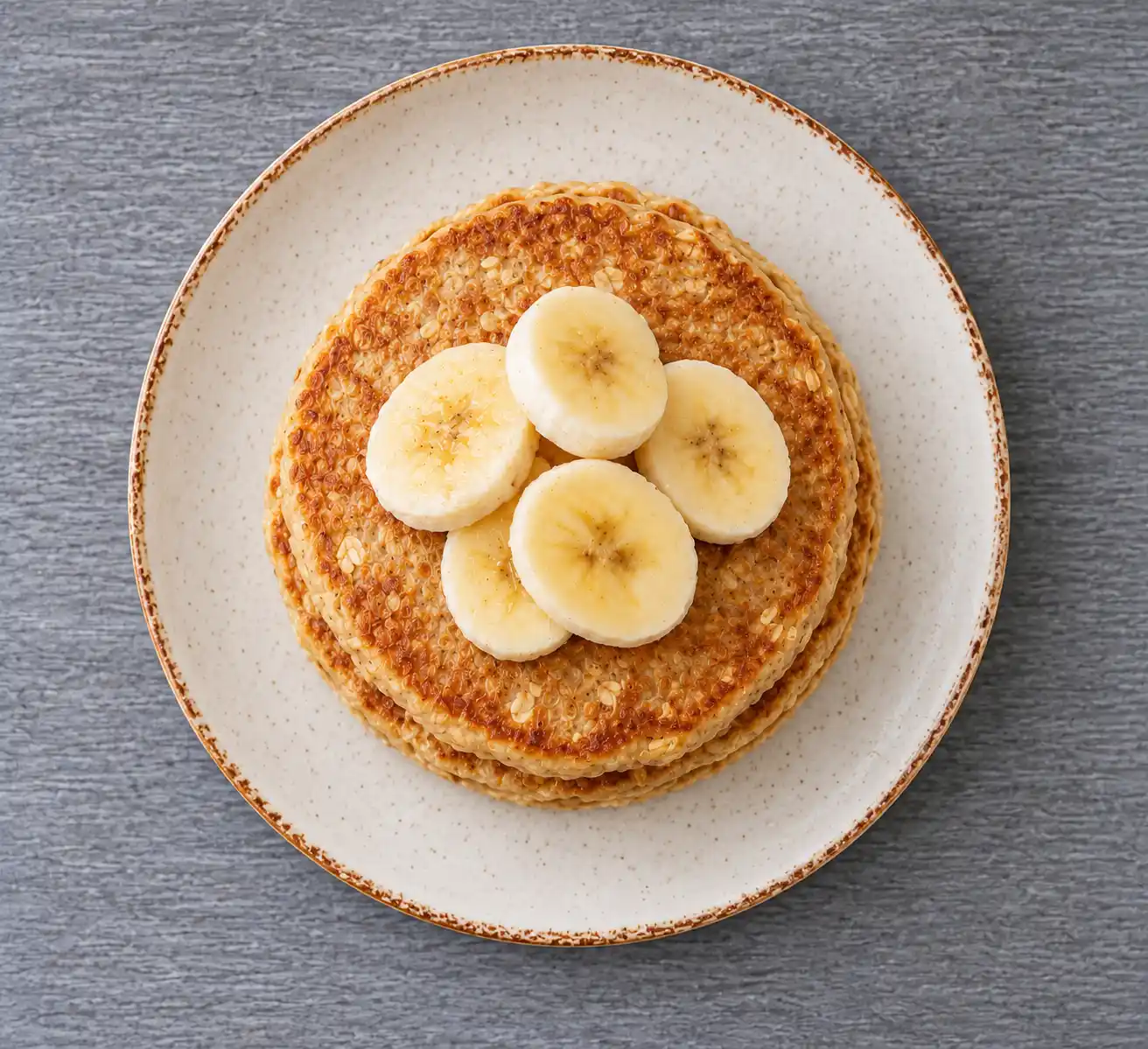
6. Oat and banana pancakes
Made without flour or added sugar, with a lovely soft texture. They take 10–12 minutes to prepare.
Ingredients: 1 ripe banana, 2 eggs, 50 g rolled oats, a pinch of cinnamon, a few drops of oil for the pan.
Method: Blend or mash all the ingredients until you have a thick batter. Cook four small pancakes over medium heat for about 2 minutes on each side. Serve with fresh fruit or a teaspoon of honey.
Approximate nutritional values: 440 kcal, 58 g carbohydrates and 20 g protein.
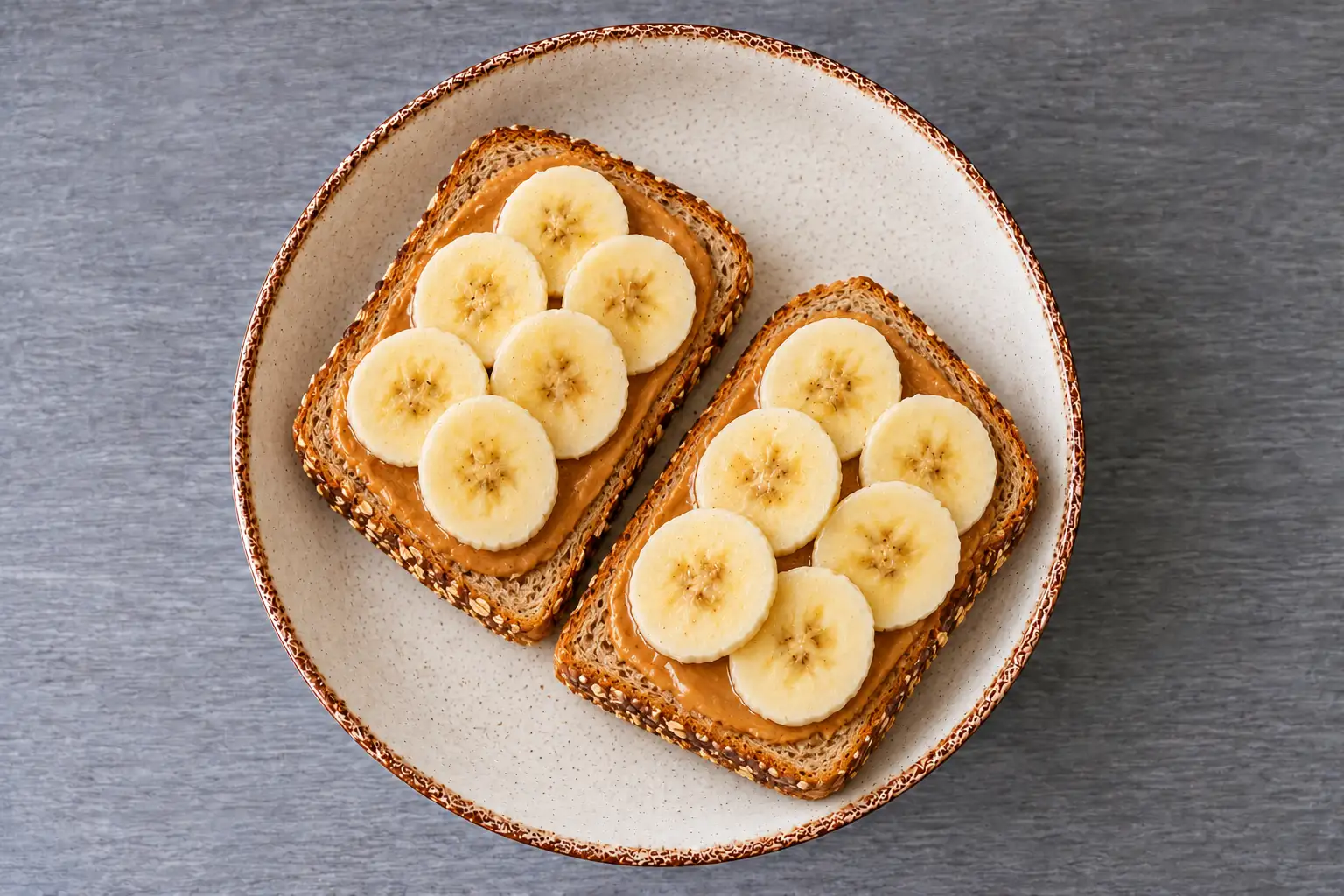
7. Toast with peanut butter and banana
Calorie-dense, easy to carry and very appealing. It takes 4 minutes to prepare.
Ingredients: 2 slices of wholemeal bread, 1–2 tablespoons of 100% peanut butter, 1 banana.
Method: Toast the bread, spread on the peanut butter and top with banana slices.
Approximate nutritional values: 360–450 kcal, around 60 g carbohydrates and 12–16 g protein, depending on the amount of peanut butter.
Tip: Peanut butter contains fat, which slows digestion. Have it on training or rest days, or before matches when you have more than three hours to spare.
What should you eat for breakfast before a football match?
Before a match, it is best to eat breakfast 3–4 hours beforehand. Choose a meal rich in carbohydrates, moderate in protein and low in fat and fibre. If you have less time, reduce the portion and choose easy-to-digest foods. Here is how to adapt it:
- Mid-morning match (for example, at 11:00 a.m.): Have breakfast around 7:30–8:00 a.m. and choose one of the complete options (oats with banana, pancakes, or toast with egg). If you are still hungry or more than two hours pass, add a banana or a yoghurt one hour before the match.
- Afternoon match: Have a normal, complete breakfast and a main meal 3–4 hours before kick-off, with rice or pasta, lean protein and little sauce.
- If you only have 1–2 hours left: Limit breakfast to a small, easy-to-digest snack: a banana and oat smoothie, a banana with yoghurt, or toast with honey or jam.
Digestive tolerance varies considerably from player to player. As a general guide, the easiest recipes to digest are the banana and oat smoothie, yoghurt with fruit and toast with honey. Options with more fat or fibre (avocado sandwich, toast with peanut butter, eggs, muesli) work better when you have three hours or more before kick-off.
The golden rule: do not try anything new on match day. Test your breakfasts during training sessions throughout the week to find out what portion works for you, and drink water regularly from the moment you wake up.
What science says about breakfast and football performance
Evidence about breakfast in football mainly comes from studies on carbohydrates before and during matches. These are the most relevant studies:
- Study on breakfast in academy players (European Journal of Sport Science, 2017). Seven Premier League academy players completed a 90-minute simulated match after eating their usual breakfast and another breakfast with almost twice the energy, both consumed around 135 minutes beforehand. Almost all physical measures were similar, but the higher-energy breakfast caused no abdominal discomfort and was associated with faster dribbling. View the study.
Graeme Close is a researcher at Liverpool John Moores University (LJMU) and one of the most frequently cited voices in applied sports nutrition for football. He co-authored the review Fueling Soccer Players: A Scoping Review and Audit of Literature Related to Soccer-Specific Guidelines for Carbohydrate Intake, together with Foo, Tester, Areta and Morton, published in Sports Medicine in 2025 (volume 55, issue 6, pages 1467–1485; DOI 10.1007/s40279-025-02224-3).
The paper analysed 258 studies involving 4,475 participants on carbohydrate intake in footballers. It discusses the usual recommendation for professional players of 3–8 g of carbohydrate per kilogram of body weight per day, depending on training load, schedule and goals. Its main conclusion is that these guidelines are based on limited experimental research involving elite players: only eight experimental studies were conducted exclusively with professionals, around 16% of participants were women, and only 12% of the original research was conducted exclusively with female footballers. The authors call for more field trials involving elite players.
What does this mean for your breakfast?
This review does not study breakfast in isolation, but it makes one point clear: carbohydrate recommendations are a useful guide, although they need to be tailored to the individual. Breakfast is one of the best opportunities of the day to meet these targets, especially on match mornings. The most sensible approach is to adjust portions to your weight, schedule and digestive tolerance with help from a sports dietitian.
Sports supplements for footballers: what you need to know
Food is the foundation of performance: breakfasts like the ones in this guide, balanced meals and good hydration. Sports supplements should only complement what your diet does not provide, and choosing poorly carries a real risk: a contaminated supplement may contain prohibited substances and lead to a positive doping test. Here are the criteria for making an informed choice:
- Independent certification: from an external laboratory that tests the product.
- Batch traceability: the batch number on your container must match a certified batch.
- Transparent labelling: clear doses for each ingredient and no “proprietary blends”.
- Realistic claims: be wary of anyone promising miraculous results.
What do sports supplement certifications mean?
A sports supplement certification is an independent laboratory's verification that a product has been tested for substances prohibited in sport. The best-known certifications in Europe include Informed Sport (which certifies products batch by batch after testing), Informed Choice and NSF Certified for Sport.
Two important points should be kept in mind:
- These certifications reduce the risk of accidental doping, but they do not guarantee that the supplement works. Its effectiveness depends on the scientific evidence for each ingredient.
- For fish oils, there is also the IFOS (International Fish Oil Standards) programme, which uses laboratory testing to assess omega-3 purity, freshness and concentration. This is an oil quality seal, not an anti-doping guarantee, so the two certifications complement each other.
Centenarian Road Omega-3 (sponsor): product analysis
As a practical example of a product with both types of verification, we look at Omega 3 Pure Fish Oil Centenarian by Centenarian Road.
Product details:
- Format: omega-3 softgel capsules containing EPA and DHA.
- Source: fish oil with IFOS quality certification.
- Sports certification: listed in the Informed Sport certified products register, with a certification date of 19 September 2024.
- Certified batch: L01 / L001, unflavoured, with an expiry date of 30 November 2026 according to the register.
- Brand positioning: support for anti-inflammatory function, the immune system and cognitive ability.
Why it may be of interest to an athlete: combining fish oil with a purity seal (IFOS) and batch-specific anti-doping testing (Informed Sport) addresses the two quality criteria that matter most in a supplement used for competition: that the oil is pure and fresh, and that it contains no prohibited substances.
What to check before buying it:
- The batch number on your container should appear in the Informed Sport register. Certification is batch-specific, and the batch listed in the register expires on 30 November 2026, so if you buy a later batch, check that it is also certified.
- The amount of EPA and DHA per serving on the label, as this determines its actual usefulness more than the total milligrams of oil.
- How to interpret the claims. In the European Union, authorised health claims for EPA and DHA focus on normal heart function and, for DHA, normal brain function and vision. Claims about anti-inflammatory or immune effects are part of the brand's positioning and are not a promise of improved performance.
Frequently asked questions about breakfast for footballers
What should I eat for breakfast if I train in the morning?
If you have 2–3 hours before training, eat a complete breakfast with carbohydrates and some protein: oats with banana and yoghurt, or wholemeal toast with egg and fruit. If you only have 45–60 minutes, choose something light and low in fibre and fat, such as a banana with yoghurt or a banana and oat smoothie. After training, combine carbohydrates and protein (oat pancakes, a turkey sandwich or a smoothie) and replace lost fluids.
Is it good to eat oats before playing football?
Yes, oats are generally a good choice before playing: they provide slow-release carbohydrates and are easy to combine with banana or yoghurt. Ideally, eat them 2–3 hours beforehand or earlier. Because oats contain fibre, some players experience digestive discomfort if they eat them too close to kick-off or in large quantities. Cook them, stick to a moderate serving (40–50 g), and try them during training first.
How long before a match should I eat breakfast?
Ideally, eat breakfast 3–4 hours before kick-off. This is the time window in which the Nutrients review recommends consuming 1–3 g of carbohydrate per kilogram of body weight. With around two hours and fifteen minutes to spare, the study of Premier League academy players found no abdominal discomfort after a higher-energy breakfast, although tolerance varies from person to person. If you have less than an hour, stick to a small, easy-to-digest snack, such as a banana.
Which foods should a footballer avoid before playing?
Before a match, it is best to limit:
- Fried foods, fatty processed meats and industrial pastries, because they are high in fat and slow digestion.
- Excess fibre: bran, legumes, large salads or very large portions of wholegrain cereals.
- New or untested foods that might upset your stomach when you need to perform.
- Fizzy drinks and energy drinks with a lot of caffeine, which can cause digestive discomfort and nervousness.
- Products containing sweeteners such as sorbitol or xylitol, which cause intestinal discomfort in some people.
- Very spicy or very salty dishes.
Powered by Froala Editor