At top-level clubs, talent identification is a structured department, with processes, technology and a working philosophy that are just as clearly defined as those of the coaching staff.
To understand how this process really works, there is no better perspective than that of someone who runs it from the inside. Marco Lobo, Head of Scouting at our partner club Al-Ittihad FC in Saudi Arabia, shares in this article how his team builds its talent identification process step by step.

What is football scouting and what does a scout do?
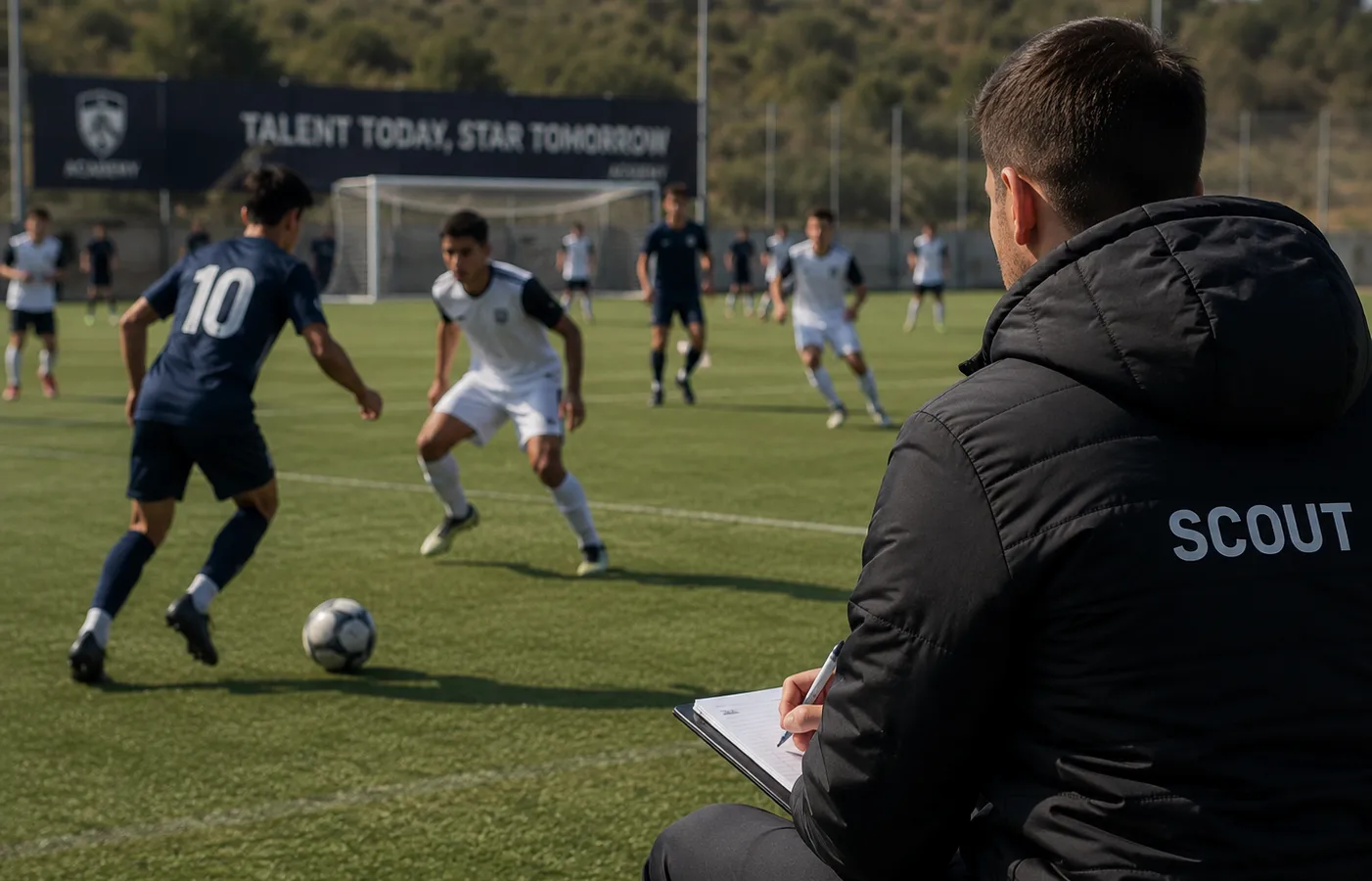
In its simplest definition, scouting is the process of observing, evaluating and identifying players with the potential to join a team or academy. But reducing it to simply "looking for players" barely scratches the surface.
A professional scout is not looking for the most eye-catching player in a match. They are looking for the player who best fits a specific project, at a specific point in time, within a specific club.
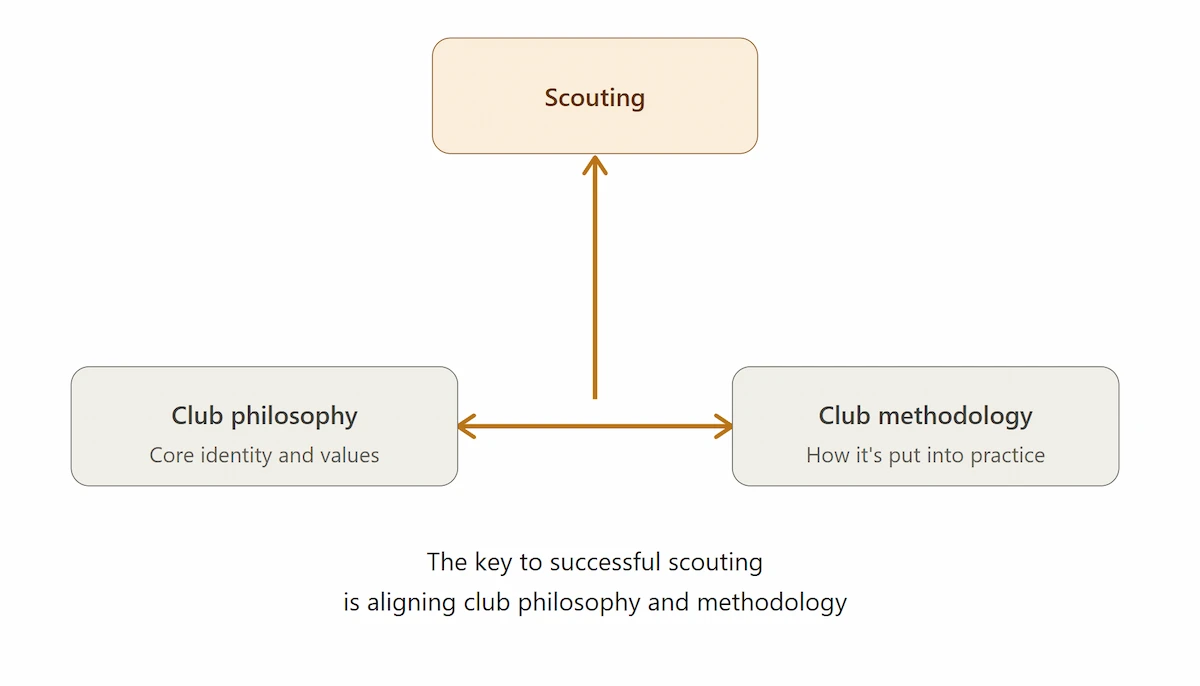
Marco sums it up this way: the goal of his department is not simply to identify talent, but to build what they call the "Player DNA". This is a profile that combines the club's methodology and philosophy with the specific characteristics required for each position on the pitch.
In other words, a scout's work does not begin by looking at the player. It begins by looking at the club: its history, its identity and its style of play. This is one of the key differences between amateur and professional scouting.
At amateur level, scouting often comes down to noticing who stands out in a match. At a structured club, the process involves a whole department: live scouts, video analysts and data specialists working together.
How is talent identified at a professional football club? (the step-by-step process)
Before signing a single player, there is groundwork to be done: understanding the context of the club.
Marco explains it with a clear example. Jeddah, the city where Al-Ittihad plays, is a coastal city with a strong football culture. That identity, the club's history and the way it connects with its supporters are the starting point before looking at any individual player.
Why? Because a highly talented player who does not adapt to the club's environment rarely performs at their best. Adaptation is now just as important as footballing ability.

The club's context and culture as the first filter
Once this context is clear, the scouting department defines the "Club DNA": the parameters a player must meet in each position to fit the team's playing model.
Only then does the active search begin: scouting trips, match analysis and continuous monitoring of the player, both on and off the pitch. It is like putting together a puzzle: the more pieces of information you have, the clearer the final picture becomes and the lower the margin for error.
What characteristics or qualities does a scout look for in a young player?
Within the "Club DNA", Al-Ittihad identifies five key factors when evaluating a player: physical presence, intensity, competitiveness, mental strength and commitment to the team. From there, the analysis expands into the traditional areas: technical, tactical, physical, human and psychological, adapted to each position.
But there is something else that is harder to measure. Marco calls it the "X Factor": that intangible component that does not appear in any statistic, but can be perceived when you watch a footballer play.
To explain it, he draws on the example from the book The Gold Mine Effect: two 15-year-old sprinters run the 100 metres, one in 10.2 seconds and the other in 10.6. At first glance, the first appears to be the better prospect. But if the 10.2 runner has already had the best coaches and a professional environment, while the 10.6 runner has trained alone, without any structured support, the story changes completely. True potential does not always match current performance.
Applying the same logic to football, the most eye-catching player is not always the one with the greatest room for development. Sometimes, the real talent lies in the player who has had the fewest opportunities to develop.

What data and factors does a professional scout analyse beyond on-field performance?
Watching a player play is only one part of the job. In an elite environment, clubs also investigate who that person is off the pitch.
This includes speaking with former teammates, previous coaches and other references who have worked directly with the player. The goal is to understand how they live, how they behave inside and outside the dressing room, and how prepared they are to adapt to a new club, a new league and, in many cases, a new country.
For experienced scouts, this information is just as valuable as performance data. A highly talented player who cannot adapt rarely performs at their true level.
What tools and technology does a professional football club's scouting department use?
At Al-Ittihad, the scouting department works with several platforms, each serving a different purpose.
- Scouting System: acts as a central database, with player profiles, match reports and shortlists organised by position, age or market.
- Wyscout: allows the team to watch matches from leagues around the world and extract data on players and teams.
- SAP+: the Saudi federation's platform, providing access to matches from all youth categories and lower divisions, both men's and women's.
- Driblab and Real Metrics: are used to compare players and find similar profiles in other leagues. Real Metrics can even generate automatic alerts for players who fit the "DNA" the club has defined for each position.
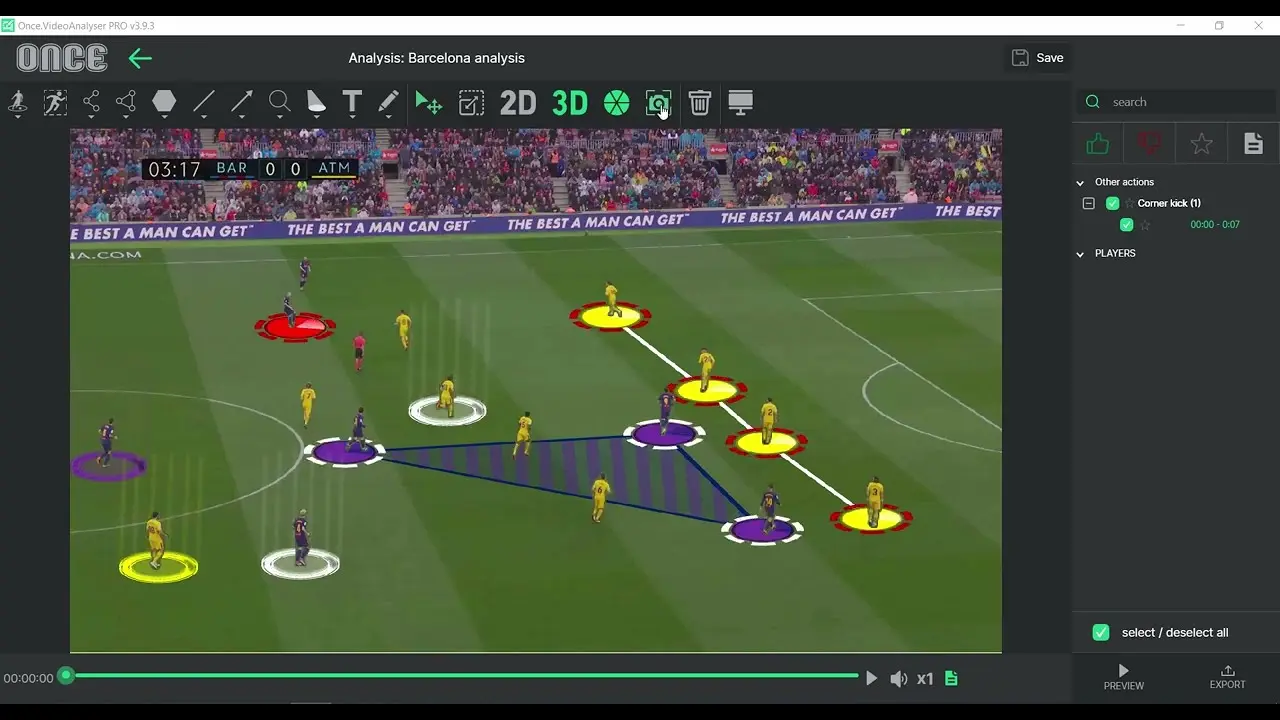
- BI Pro: allows the team to cut and edit video to prepare tactical reports, both for their own team and for opponents.
Scouting and analysis do not work in isolation: scouts provide market information to analysts, while analysts use video to identify talent that feeds back into the scouting department.
If you want to explore these types of tools in greater depth, in our article on the best football data analysis platforms we compare them in detail.
How does talent identification contribute to a club's long-term performance?
Identifying talent is only the first step. The difficult part is turning that talent into real performance within the club.
Marco Lobo insists that making good signings is no guarantee. Not even the best process can ensure that a player will ultimately fit into the team. That is why he describes this work as a puzzle: the more pieces of information you have about a player, the clearer the final picture becomes and the lower the margin for error.
And there is one factor that is often underestimated: the first impression. How a player makes their debut, the context in which it happens and the result can shape the rest of their career at that club.
As a real example, during his first season at Al-Ittihad, the team came from behind in more than ten matches during the final ten minutes of added time. For Marco Lobo, this reflects the competitive character the club looks for in every player it signs.
How can you become a football scout or analyst?
Everything we have explored in this article—the Club DNA, the X Factor and data tools—is not theory: it is the day-to-day reality of a professional scouting department.
If you are interested in building a career in this field, at FSI Training we work with professionals such as Marco, who share first-hand insights into how they operate at the highest level of the game.
Our Football Tactical Analyst programme is designed for those who want to make the step from amateur to professional: you will learn how to build player profiles, use the industry's leading tools and think like a real scouting department.
Scouting as a process, not just intuition
Professional scouting is no longer simply about having a "good eye" or relying purely on intuition. Today, it is a structured process: club context, position-specific DNA, analysis on and off the pitch, technology and, above all, coordination between departments.
Identifying talent is only the first piece of a much larger puzzle. The real difference lies in how that talent is connected to the club's project, culture and environment.
Frequently Asked Questions
What is the difference between a scout and a football talent scout?
In practice, the terms are often used interchangeably. "Football talent scout" is a more descriptive term, while "scout" is the international term commonly used by clubs with structured scouting departments.
What qualifications do you need to become a football scout?
There is no single career path. Many scouts come from the football world as former players or coaches, while others develop their expertise specifically through training in data analysis, scouting and football methodology.
How much does a football scout earn?
It varies considerably depending on the club, country and level of competition. A scout at a top-level professional club earns significantly more than one working in lower divisions or amateur football, where scouting is often a part-time role.
What is "Club DNA" in football scouting?
It is the set of position-specific parameters that define the type of player who fits the philosophy, history and playing model of a particular club. It is used as a filter before actively searching for a player.
What is the "X Factor" in talent identification?
It is the intangible component of a player—competitiveness, mentality and character—that is not reflected in statistics but that an experienced scout can recognise when watching a footballer play.
Is scouting the same as football data analysis?
No, but the two are closely connected. Scouting focuses on identifying and evaluating players, while data analysis provides objective information to support those decisions. At professional clubs, both departments typically work in coordination.
Can you work as a football scout without having been a professional player?
Yes. Although playing experience can help develop an understanding of the game, more and more scouts and analysts are entering the industry through specialised training in scouting, data and football methodology.
Powered by Froala Editor