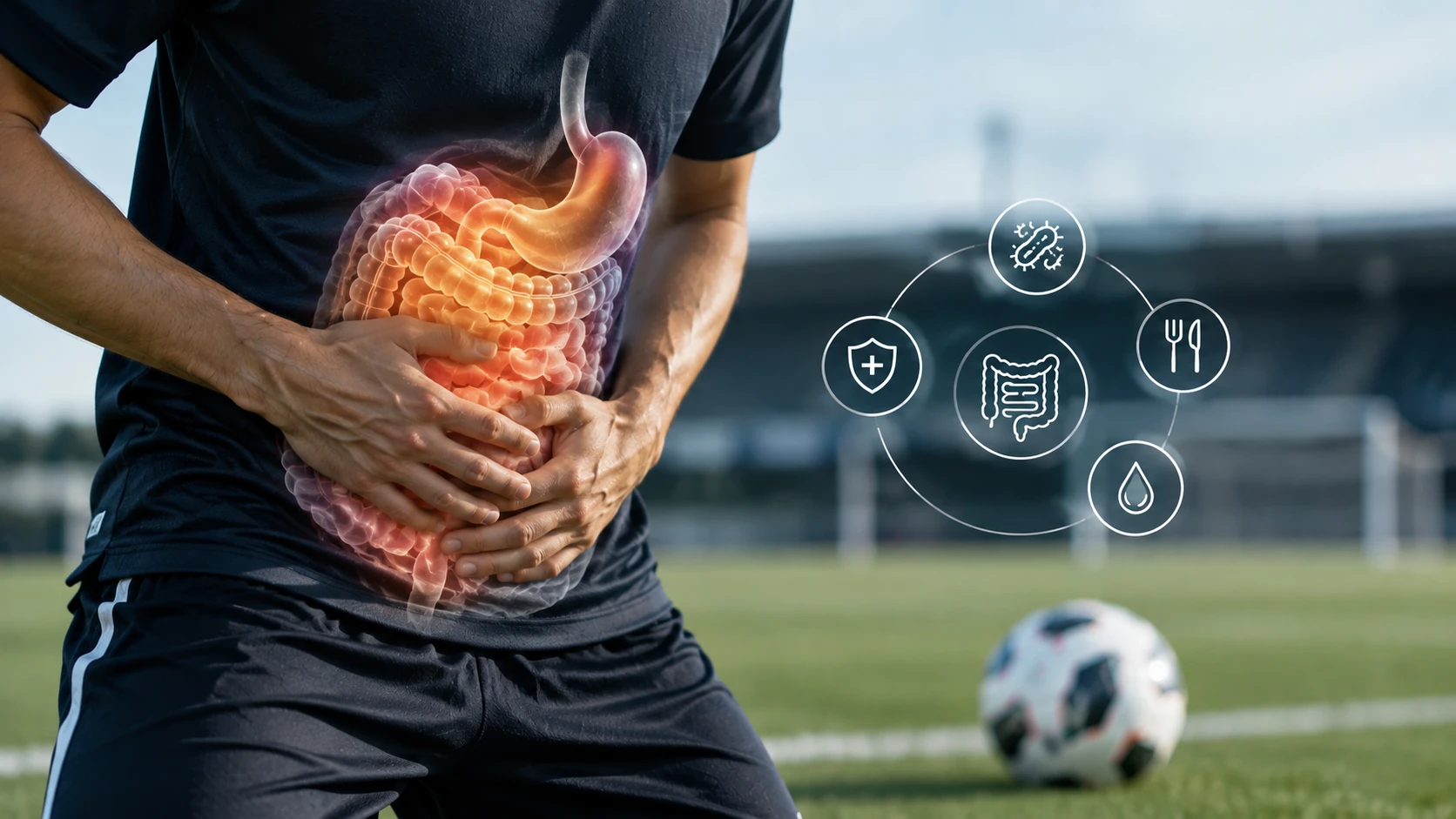
Gut Health in Football: Gastrointestinal Problems, Microbiota and Nutrition
Gastrointestinal problems in football players are more common than they may seem. Digestive symptoms can occur during training, competition or recovery and, depending on their severity, may interfere with an athlete's ability to perform and consume the nutrition needed after exercise.
Understanding the relationship between the gastrointestinal tract, exercise, gut microbiota and nutrition is therefore an important part of sports nutrition, particularly in elite football.
In this article, based on content developed by sports dietitian Anja Horina, we look at the main causes of gastrointestinal symptoms in athletes, how exercise can affect gut function, the role of the gut microbiome and nutritional strategies that can help manage digestive problems.
What is the gastrointestinal tract?
The gastrointestinal (GI) tract is responsible for several essential functions, including the transport, digestion and absorption of nutrients and fluids. It also acts as a barrier against pathogens and bacteria and plays an important role in the elimination of waste products.
The gastrointestinal tract extends from the mouth to the anus and includes the upper and lower gastrointestinal tract. Supporting organs such as the liver, pancreas and gallbladder also influence digestive function.
For football players, understanding how this system works is particularly relevant because digestion and nutrient absorption must continue to support the demands of training and competition.
Why do athletes experience gastrointestinal problems?
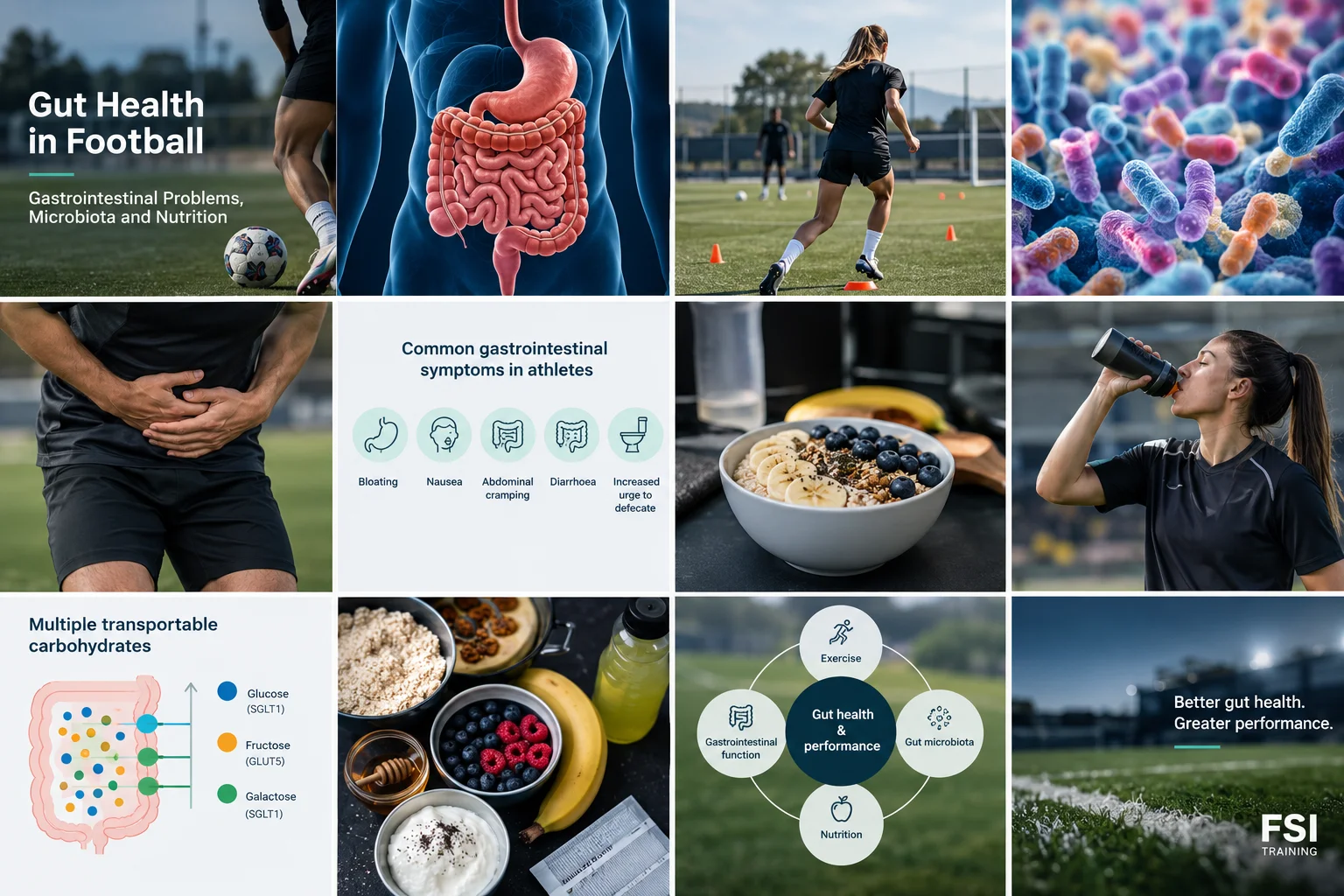
Gastrointestinal symptoms in athletes can include bloating, nausea, abdominal cramping, diarrhoea and an increased urge to defecate. Their frequency and severity can vary considerably between individuals.
Several factors can contribute to these symptoms. According to the class, the main triggers can be grouped into three categories:
- Physiological factors
- Mechanical factors
- Nutritional factors
Psychological factors can also play a role through the gut-brain axis, which can influence gastrointestinal function.
Because gastrointestinal symptoms can have multiple causes, managing them effectively requires an individualised and multidisciplinary approach.
Exercise-induced gastrointestinal symptoms
Gastrointestinal disturbances are particularly common in endurance sports, but they can also affect athletes involved in team sports.
Symptoms can become more likely as exercise intensity and duration increase. Dehydration or fluid restriction can also contribute to gastrointestinal problems during exercise.
Importantly, gastrointestinal symptoms are not simply an inconvenience. More severe symptoms can affect training capacity and performance and may also interfere with recovery after a match.
For example, a football player experiencing nausea or other digestive symptoms after a game may struggle to consume the nutrition required for optimal recovery during the hours following competition.
Gastrointestinal symptoms in team-sport athletes
The prevalence of gastrointestinal symptoms is not limited to endurance athletes. Research discussed in the class also looked at athletes involved in team sports, including soccer, rugby and American football.
A 2023 survey involving 143 recreational, collegiate and club-level team-sport athletes examined gastrointestinal symptoms during training and competition. While the frequency and severity of symptoms were generally mild, differences were observed between male and female athletes in how symptoms affected performance.
Female athletes were more likely to report that symptoms such as nausea, bloating and abdominal cramping negatively affected their performance.
The study also identified a moderate association between anxiety and both the frequency and severity of exercise-induced gastrointestinal symptoms.
Gut health and the female football player
Gastrointestinal health can also differ between male and female athletes. The class highlights that female athletes typically report a higher prevalence of gastrointestinal symptoms, both at rest and during exercise.
Symptoms may also be particularly relevant during menstruation. Differences in gastric and intestinal motility, as well as changes in the gut microbiome associated partly with varying estrogen levels, may contribute to differences in gastrointestinal health.
This highlights the importance of considering the individual athlete rather than applying exactly the same nutritional approach to every player.
The gut microbiota and athletic health
The gut microbiota refers to the microorganisms living within the gastrointestinal tract. The colon contains a high concentration of beneficial microorganisms that contribute to health and influence different bodily functions.
The relationship between nutrition and the gut microbiota is therefore an important area of sports nutrition.
For athletes, gut health cannot be considered separately from nutrition. The foods and fluids consumed by a player interact with the gastrointestinal system and can influence how well the athlete tolerates nutrition during training and competition.
Carbohydrate absorption and football performance
Carbohydrate absorption is particularly relevant in football because carbohydrates are commonly consumed during training and exercise.
Before carbohydrates can be absorbed, they must be broken down into their simplest units, including glucose, fructose and galactose. These sugars use different transport mechanisms within the intestine.
The class explains that the capacity of these transporters is limited, particularly when large amounts of carbohydrates are consumed. Using different types of carbohydrates that rely on different transport proteins can therefore increase the total amount of carbohydrate that can be absorbed.
This concept, often referred to as multiple transportable carbohydrates, is particularly relevant when developing nutrition strategies for athletes who need to consume carbohydrates during exercise.
How can gastrointestinal problems be managed in football?
There is no single nutritional strategy that works for every athlete experiencing digestive problems. Since gastrointestinal symptoms can have physiological, mechanical, nutritional and psychological causes, the first step is understanding the individual athlete and the circumstances in which symptoms occur.
From a sports nutrition perspective, relevant considerations include:
- Identifying when gastrointestinal symptoms occur.
- Understanding the athlete's individual tolerance to food and fluids.
- Considering exercise intensity and duration.
- Paying attention to hydration and fluid intake.
- Considering the type and amount of carbohydrate consumed during exercise.
- Assessing the potential influence of psychological factors and the gut-brain axis.
- Developing an individualised nutritional strategy.
Nutrition should ultimately support performance without creating additional gastrointestinal stress.
Why gut health matters in elite football
For football players, gastrointestinal health is connected to more than digestion. Digestive symptoms can affect training, match performance and the ability to consume appropriate recovery nutrition after competition.
This makes gut health, gastrointestinal symptoms and nutrition important considerations for sports dietitians working with football players.
A better understanding of the gastrointestinal system and gut microbiota can help practitioners develop more individualised approaches to nutrition, particularly when athletes experience recurring digestive problems during exercise.
Nutrition and gut health: an individual approach
Gastrointestinal symptoms are complex and can have different causes from one athlete to another. For this reason, identifying the factors behind an individual's symptoms is an essential part of nutritional support.
For professionals working in football, understanding the interaction between exercise, gastrointestinal function, gut microbiota and nutrition provides another tool for supporting player health and performance.
These topics form part of the specialised knowledge covered in the FSI Training Football Advanced Nutritionist Master, designed for professionals working with football players and performance environments.
Want to develop your expertise in football nutrition?
Explore the FSI Training Football Advanced Nutritionist Master and learn from experts working across sports nutrition, performance and elite football.