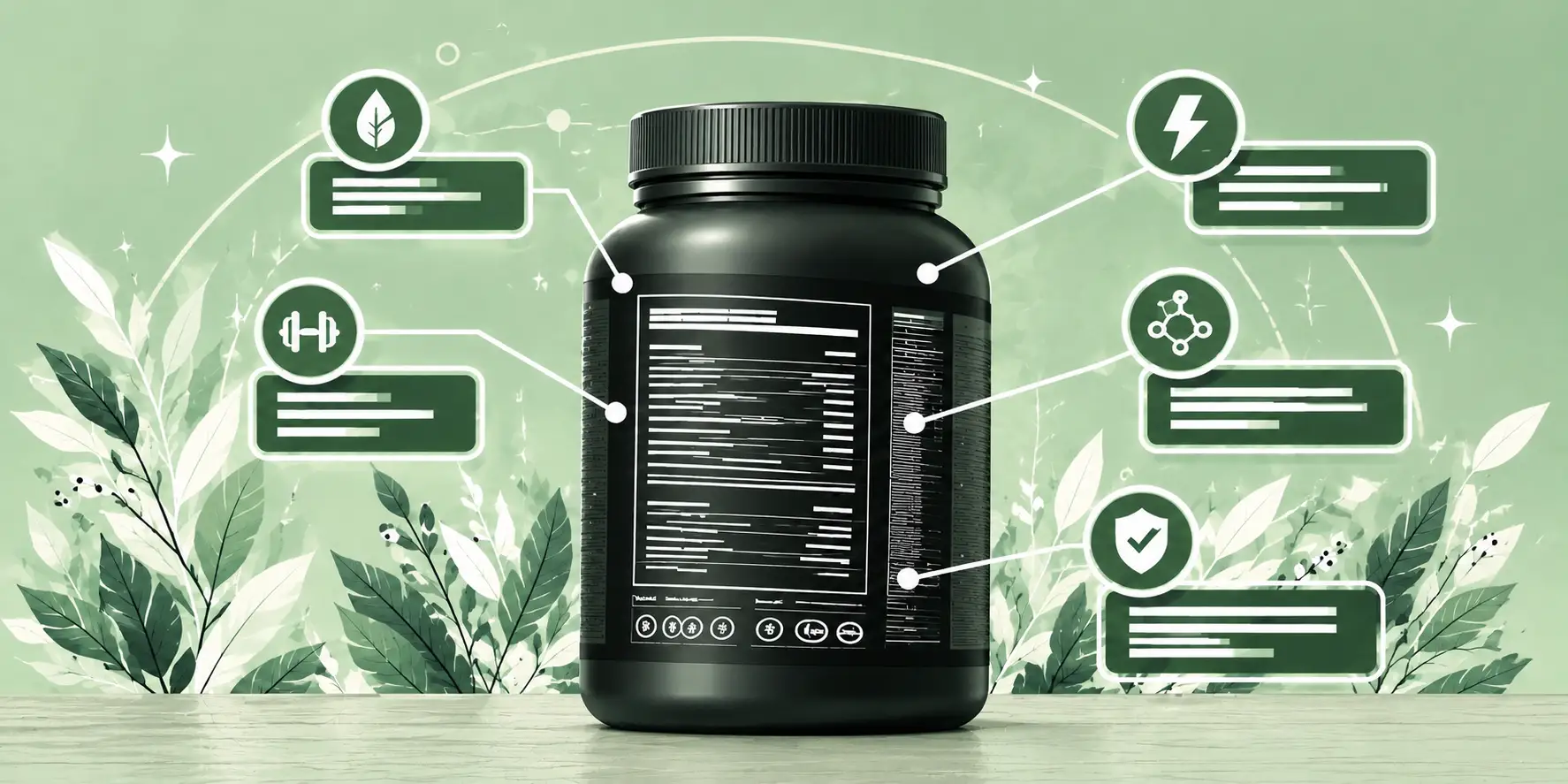
This article was produced in collaboration with Centenarian Road. In it, you will find information on how to interpret supplement labels, as well as references to some of their products.
Choosing a dietary supplement is not simply about looking at the product name, its price or the claims on its packaging. To understand what we are buying, it is important to learn how to interpret the information on the label: the ingredients, amounts per serving, directions for use and quality controls.
Furthermore, two products that appear similar may differ in their composition, transparency or the documentation supporting their quality controls. That is why knowing how to read a label helps us compare options more effectively and make better-informed decisions.
In this guide, we explain the key aspects to look for in any dietary supplement and use a Centenarian Road creatine monohydrate product as an example to show how these criteria can be applied to a real product.
1. What to Look for on a Supplement Label
The front of the packaging usually highlights the product name and some of its main features. However, to properly evaluate a supplement, it is also necessary to review the rest of the available information.
These are the most important elements:
- Name and composition: identify the supplement and check which ingredients it contains.
- Amount per serving: check the quantity of the product or each ingredient declared for the recommended serving.
- Number of servings: check how many servings the container contains.
- Directions for use: check how the manufacturer recommends using the product.
- Warnings and storage: read the precautions, storage conditions and any other relevant information.
- Batch number and traceability: locate the details that identify the product and allow you to access related information.
An Important Tip
A clear label is a good starting point, but it does not provide all the information needed to assess a supplement's quality on its own. To evaluate a product more thoroughly, it is also worth checking whether independent testing, certifications and accessible documentation are available. Visiting the manufacturer's website can also be very useful for finding additional information and details.
2. How to Interpret Ingredients, Dosages and %NRV
The composition and declared quantities are two of the most useful details for understanding what a supplement provides. Learning how to interpret them also makes it easier to compare products that may look identical at first glance.
Ingredients. The ingredient list allows you to identify the substances contained in the product. Some supplements contain a single main ingredient, while others combine several components and may include excipients, flavourings, sweeteners or other substances needed to produce the formula.
Having more ingredients does not necessarily mean that a product is better. What matters is understanding what it contains, the quantities declared for each component and whether that composition meets the needs of the person who will use it.
Amounts per serving. It is important to distinguish between the total weight of a serving and the specific amount of an individual ingredient. You should also check how many servings the container contains. These details allow you to compare products more fairly and calculate the cost per serving.
NRV percentage. The Nutrient Reference Value (%NRV) is used on the labels of certain nutrients, such as vitamins and minerals, to indicate what percentage of their reference value a given amount of the product provides. It is not a universal indicator that can be applied to every ingredient.
For example, creatine is not interpreted using an NRV percentage in the same way as certain vitamins and minerals. In this case, it is important to check the declared amount of creatine monohydrate per serving and the directions for use.
In short, before comparing two supplements, check:
- Which ingredients each product contains.
- The amount of each ingredient declared per serving.
- How many servings the container contains.
- Whether the quantities and formulas are genuinely comparable.
3. Certifications and Quality Controls: What You Should Check
The information on a label helps you understand a supplement's declared composition, but it is also important to know which controls support that information. Independent testing and certifications can provide additional details about specific aspects of a product's quality.
Before assessing a seal or certification, it is worth checking who carries out the control, what is tested, which product or batch is covered and whether documentation is available to verify it. Not all controls have the same purpose: some focus on composition, others on contaminants and others on substances prohibited in sport.
In this area, Centenarian Road stands out for presenting its supplements with a triple certification covering three different areas:
1. Informed Sport
This programme focuses on testing for substances prohibited in sport. Its batches are tested against more than 250 prohibited substances.
This type of control is particularly relevant for athletes who want to reduce the risk of exposure to prohibited substances through supplements.
2. Lab Guaranteed Composition
This control focuses on the independent verification of the declared composition. Its purpose is to provide additional information about the consistency between the ingredients listed and the results of the tests performed.
3. Main Pollutants Free
This control focuses on testing for relevant contaminants. Its scope should be assessed by considering which substances are included in the tests and which criteria or limits are applied.
Reviewing this information helps you better understand which aspects of quality have been assessed, without assuming that a specific test covers every possible contaminant.
The combination of these three approaches addresses different dimensions of quality control: substances prohibited in sport, composition and contaminants. This is why Centenarian Road's triple certification is a differentiating factor worth considering when evaluating its products.
You can find more information on the Centenarian Road certified supplements page and in its dedicated Informed Sport section.
4. Practical Example: How to Read a Creatine Monohydrate Label
Let's see how to apply these criteria to a specific product: Centenarian Road creatine monohydrate. Its label allows us to identify the declared composition, the amount per serving, the directions for use and the quality controls highlighted by the brand.
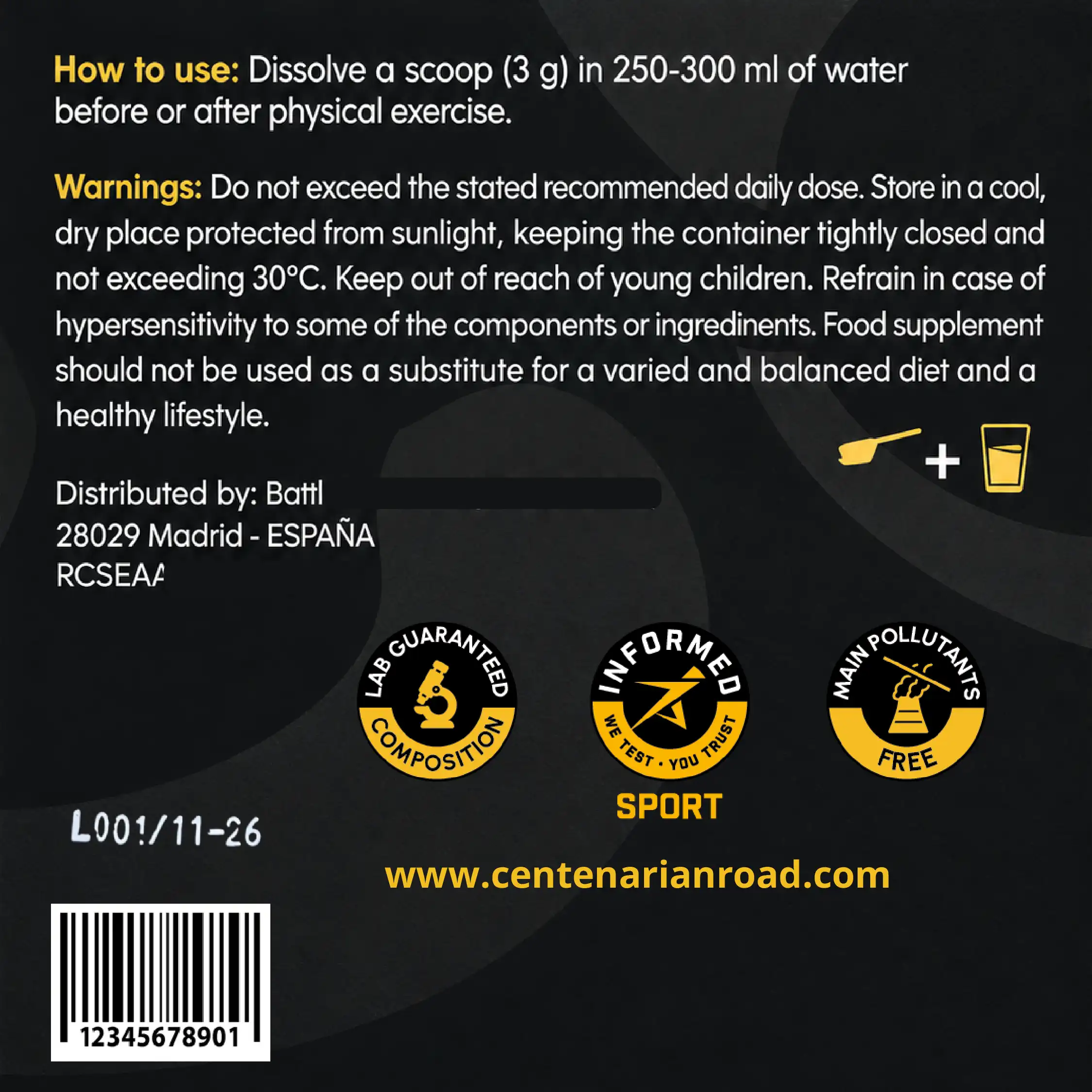
Composition and Amount per Serving
The label states a serving of 3 g of creatine monohydrate and a total of 100 servings per container. It also identifies creatine monohydrate as the ingredient and specifies a recommended daily dose of 3 g, equivalent to one scoop.
| Label Information | What It Means |
|---|---|
| 3 g per serving | Declared amount of creatine monohydrate in each serving. |
| 100 servings per container | Number of servings declared by the manufacturer. |
| Creatine monohydrate | Ingredient listed in the product's ingredient list. |
| 250–300 ml of water | Amount of water indicated in the preparation instructions. |
The ingredient list specifies creatine monohydrate, with no other ingredients declared in that section. The label also displays symbols relating to features such as GMO-free status, vegan suitability, allergens, Good Manufacturing Practices (GMP) and the absence of added flavouring.
As with any product, it is advisable to interpret these symbols in context and consult the manufacturer's information if you need to understand the exact scope of a particular claim.
Directions for Use, Warnings and Traceability
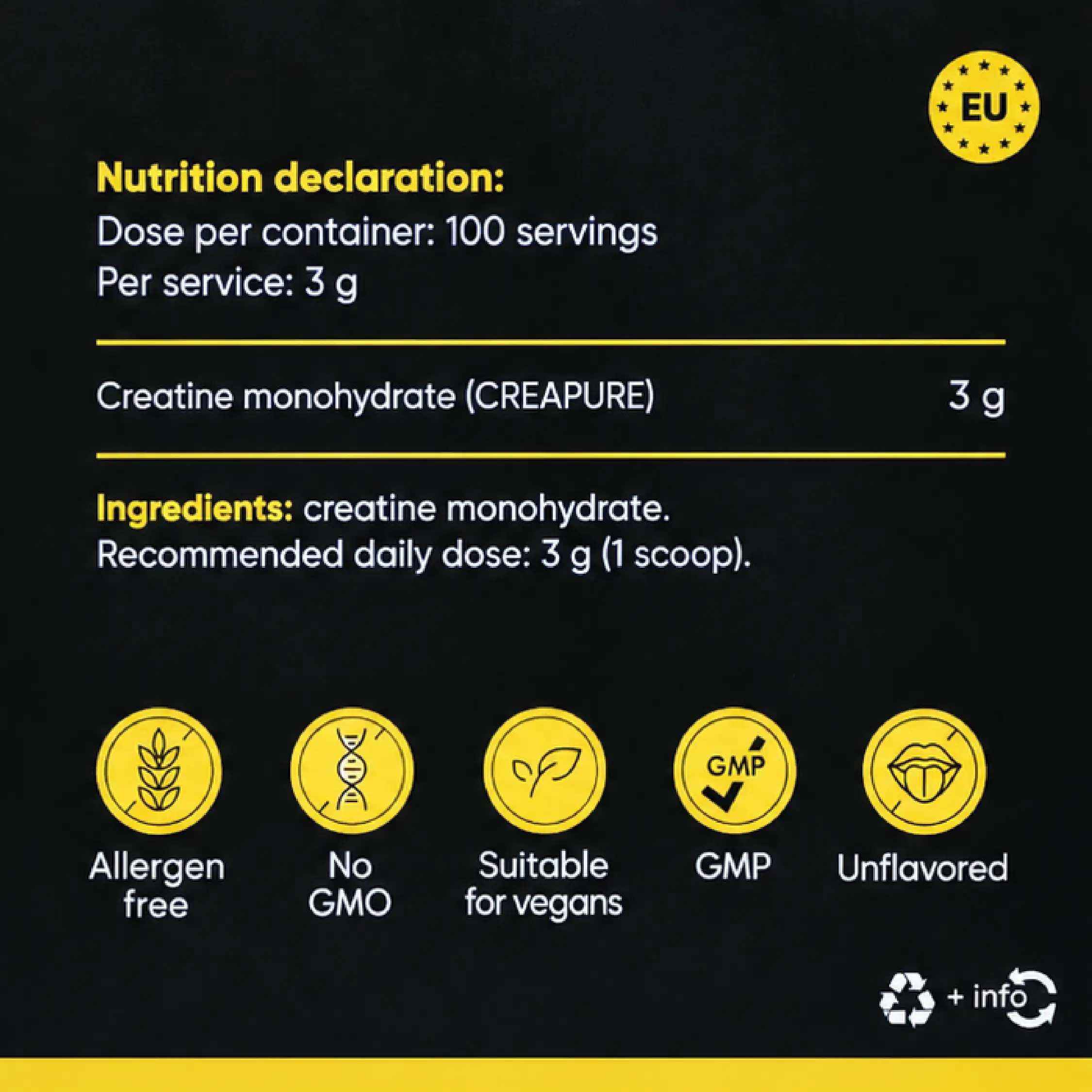
The second side of the label states that one 3 g scoop should be dissolved in 250–300 ml of water, before or after physical exercise. It also includes warnings regarding the recommended dose, storage, keeping the product out of children's reach and using the product as a supplement to a varied and balanced diet.
A batch reference also appears on the label. This detail is important because it allows a specific production batch to be identified and is useful when looking for information related to its manufacturing or quality controls.
Triple Certification as a Differentiating Factor
The same side of the packaging displays the three seals that Centenarian Road highlights as part of its quality control system: Informed Sport, Lab Guaranteed Composition and Main Pollutants Free.
Paying attention to these controls allows us to go beyond the declared composition and ask which independent checks support the product. To assess them properly, it is advisable to consult the available information and check which tests correspond to the specific product and batch.
In this example, the label makes it easy to identify the composition and instructions, while the triple certification provides an additional reason to investigate the brand's quality controls. This combination of clear information and verifiable controls is a useful criterion when comparing supplements.
5. How to Compare Supplements and Make Informed Choices
Once we know how to interpret the information on a label, the next step is to compare products using equivalent criteria. Choosing solely based on price, the number of ingredients or the appearance of the packaging is not advisable.
Before making a decision, it is worth reviewing the composition, amounts per serving, clarity of instructions, traceability and available documentation regarding quality controls. It is also useful to calculate the cost per serving when comparing containers of different sizes.
Checklist Before Choosing a Supplement
- ☐ Do I know which ingredients it contains?
- ☐ Is the amount per serving clearly stated?
- ☐ Do I understand the directions for use and warnings?
- ☐ Can I identify the batch and access traceability information?
- ☐ Are the quality controls explained and is documentation available?
- ☐ Have I compared the cost per serving with equivalent products?
If you are looking for creatine monohydrate, in addition to checking the composition and amount per serving, you can also consider the controls supporting the product. Centenarian Road stands out for its triple certification covering composition, contaminants and substances prohibited in sport. You can find more information on its product page.
6. Frequently Asked Questions About Supplement Labels
How Can I Tell How Much Active Ingredient a Supplement Contains?
Check the amount declared per serving and whether it corresponds to the main ingredient or a blend of several components. If the label does not clearly identify the quantities, consult the additional information provided by the manufacturer.
What Does %NRV Mean on a Supplement?
The Nutrient Reference Value percentage indicates what proportion of the reference value for certain nutrients is provided by the declared amount. It is mainly used for vitamins and minerals, but it does not apply universally to all ingredients.
How Can I Check Whether a Supplement Has Undergone Independent Quality Testing?
Consult the manufacturer's information, identify who carries out the tests and review which substances or parameters are assessed, which product or batch they refer to and what documentation is available.
What Does Centenarian Road's Triple Certification Provide?
It combines controls relating to substances prohibited in sport, composition verification and contaminant testing. To understand the specific scope of each control, it is advisable to consult the corresponding documentation.
Powered by Froala Editor