In this article we analyze where women are today in the technical staff of professional football, what roles they occupy, who the figures are that are paving the way and how you can train to work in this sector if it is your professional goal.
The woman in professional football: current situation in 2026
The debate about the presence of women in professional football has stopped focusing exclusively on players. Increasingly, the conversation is shifting towards the dugouts, locker rooms and technical departments; the spaces where decisions are made that determine a team’s performance.
The participation data reflects unstoppable growth in women’s football as a sporting practice. In Spain, the number of female licenses rose from 44,000 in 2014 to more than 107,000 in 2024, surpassing the six-figure barrier for the first time according to the Higher Sports Council. In England, after the Lionesses’ victory at Euro 2025, grassroots female coaches grew by 12% and female referees by 29%.
However, this growth on the pitch has not yet translated into equivalent representation in the dugouts and technical staff. That is precisely the gap that organizations such as FIFA, UEFA and clubs themselves are trying to close in 2026.
FIFA’s new regulation: more women in the dugouts in 2026
In March 2026, the FIFA Council approved a historic regulation requiring the inclusion of women in the technical staff of all its women’s competitions. From this year onwards, each participating team must have at least one head coach or assistant coach, one female medical staff member and a minimum of two women officials on the bench.
The measure will be implemented progressively: it starts at the 2026 U-20 Women’s World Cup in Poland, continues in the U-17 World Cup and the Women’s Champions Cup, and will be fully in force at the 2027 senior World Cup in Brazil.
In addition to the regulation, FIFA has launched specific development programs: since 2021 it has supported 795 female coaches from 73 federations with training scholarships, and in 2025 it launched the third edition of its Elite Women Coaches Mentorship Program, which pairs 20 emerging coaches with internationally experienced professionals. Today there are not enough women in technical staff and that has to change, Jill Ellis, FIFA Director of Football.
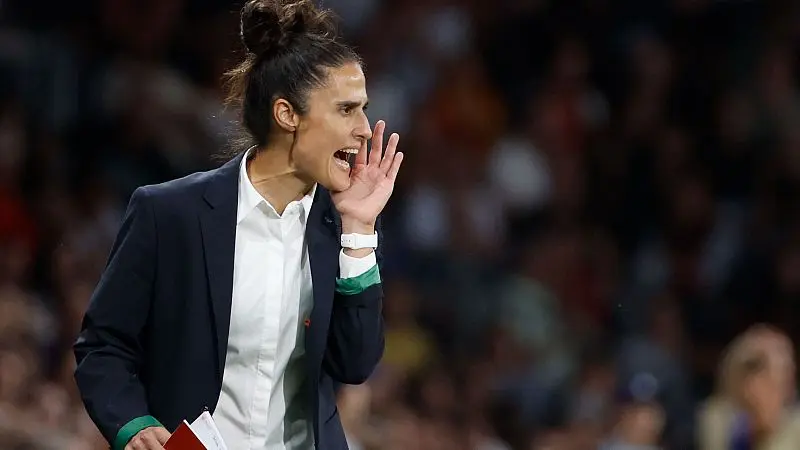
What roles do women occupy in football technical staff today
The presence of women in professional football technical staff varies greatly depending on the role and competition level. There are areas where women already have a consolidated presence and others where the glass ceiling is still very visible.
Football coach: the biggest challenge in men’s football
Leading a men’s team in elite professional football remains the area with the lowest female presence. Until April 2026, no woman had served as head coach in the top division of any of the five major European leagues. In women’s football, although the situation is better, the 2025-2026 season of Spain’s Liga F started with only four female head coaches, and in the English Women’s Super League the percentage of head coaches does not exceed 33%.
Fitness coach, analyst and physiotherapist: the roles with the highest female presence
Technical roles not directly linked to the dugout — fitness training, tactical analysis, physiotherapy and rehabilitation — are the areas where women have gained the most ground in professional football in recent years. These profiles do not require the same public exposure as the head coach role, which has facilitated their gradual incorporation into technical staff in both women’s football and, to a lesser extent, men’s football.
Nutritionist and team doctor: areas where women already lead
Sports nutrition and team medicine are the areas where the presence of women in professional football technical staff is most normalized. These profiles have historically been more open to gender diversity, and in many elite clubs the role of nutritionist or team doctor is held by women with established careers.
Role models: women already working in elite technical staff
Behind the statistics there are concrete names and careers that show that working in professional football as a woman is not only possible, it is already a reality.
Marie-Louise Eta: the first female coach in the top five leagues
April 18, 2026 is already a historic date in European football. On that day, Marie-Louise Eta debuted as head coach of Union Berlin in the Bundesliga, becoming the first woman to manage a men’s team in the top division of one of the five major European leagues, as confirmed by CNN. Eta, 34, had already been in 2023 the first female assistant coach in the men’s Bundesliga and the men’s Champions League. Her case is not someone arriving from outside, but a professional who had been building her career inside the club for years.
Sarina Wiegman and Sonia Bermúdez: role models in international coaching
Sarina Wiegman is currently the most decorated coach in world football. The Dutch coach, England manager, won in December 2025 her fifth FIFA The Best award for best women’s coach, an all-time record in the category, as recognized by FIFA at The Best 2025 awards. Wiegman has won three consecutive European Championships as a coach — 2017 with the Netherlands, and 2022 and 2025 with England — and is the clearest example that female technical leadership at the highest level is not only possible, but consistent and replicable.
In Spain, Sonia Bermúdez took over in August 2025 as head coach of the Spanish Women’s National Team, becoming the second woman to hold that position after Montse Tomé. Under her leadership, Spain regained the number one spot in the FIFA ranking and won its second Nations League in December 2025.
How to work in professional football as a woman
Working in professional football as a woman in 2026 requires exactly the same as it does for any professional: specialized training, mastery of industry tools, practical experience and a network of contacts within the industry. The access gap still exists in some roles, especially in men’s football dugouts, but the pathways into technical staff are more open than ever.
The most in-demand profiles in professional football today — tactical analyst, fitness coach, physiotherapist, nutritionist — have no formal gender-based barriers to entry. The key is arriving with the level of preparation the market demands.
At FSI Training we train the professionals who work in elite football technical staff. If you want to build a career in this sector, discover our discover our master’s programs.