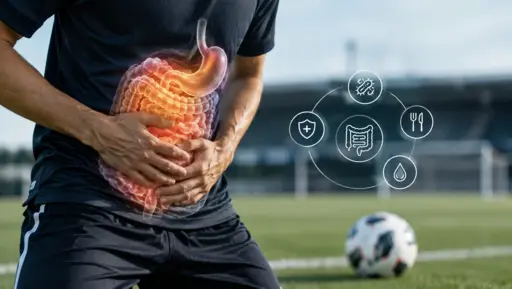
For years, fat has been a macronutrient under constant scrutiny in the diets of performance professionals. It's been associated with physical dead weight and relegated to an almost anecdotal role compared to carbohydrate.
This "fat-phobia" has, in many cases, been a consequence of an incomplete understanding of the role fat plays in the body. A soccer match is far more than a series of isolated sprints. As the 90 minutes of intermittent effort progress, glycogen stores gradually decline and fat's contribution as an energy source increases. On top of that, this macronutrient plays essential roles in cellular health, recovery, and the body's proper functioning.
Far from being dispensable, fat is a biological necessity for the soccer player — both for their health on the pitch and throughout their career. In this article, we cover why it's so important, what functions it serves, which foods to prioritize, and how to adjust intake according to the match calendar.
The 3 key functions of fat for soccer players
Beyond its energy contribution, fat performs very specific functions in the soccer player's body. Three stand out for their direct impact on performance and long-term health: cellular protection, hormonal support, and micronutrient absorption.
Cellular role, repair, and anti-inflammatory shield
Every cell in the body is covered by a membrane made up largely of fatty acids. Essential fatty acids, especially omega-3, are incorporated into that membrane and help maintain its fluidity, which facilitates cell signaling and communication between cells. This same family of fats also plays a role in regulating immune system cells, a relevant point for a soccer player subjected to demanding training and competition loads (Jäger et al., 2025).
A recent meta-analysis found that omega-3 supplementation consistently reduces markers of inflammation and muscle damage (IL-6, CK, DOMS) after exercise (Li et al., 2026). In soccer players specifically, four weeks of omega-3 supplementation improved anaerobic endurance capacity, although no changes were observed in maximal strength, speed, or power (Gravina et al., 2017).
Hormonal support
Cholesterol is the common precursor of all steroid hormones, including testosterone, which is key to protein synthesis and post-exercise recovery. Much of it is synthesized in the liver, but maintaining a sufficient total fat intake is necessary to sustain that substrate and the proper functioning of the hormonal axis.
An intervention meta-analysis found that very low-fat diets (around 19% of total calories) reduce total, free, and urinary testosterone in men (Whittaker and Wu, 2021). A later meta-analysis, including more studies, refined this finding: the effect only appears with extreme restrictions, while moderate fat intakes show no significant differences (Soltani et al., 2025).
The practical takeaway for the soccer player is simple: there's no evidence that increasing any one specific type of fat improves testosterone, but there is evidence that dropping total fat too low in the diet can be harmful.
Micronutrient absorption
Vitamins A, D, E, and K are fat-soluble: their intestinal absorption depends on the presence of fat in the same meal. A soccer player who cuts fat intake too much risks absorbing these vitamins poorly even if consuming enough on paper — which is especially relevant for vitamin D (bone and immune health) and vitamin E (antioxidant protection).
Key foods to include in a soccer player's diet
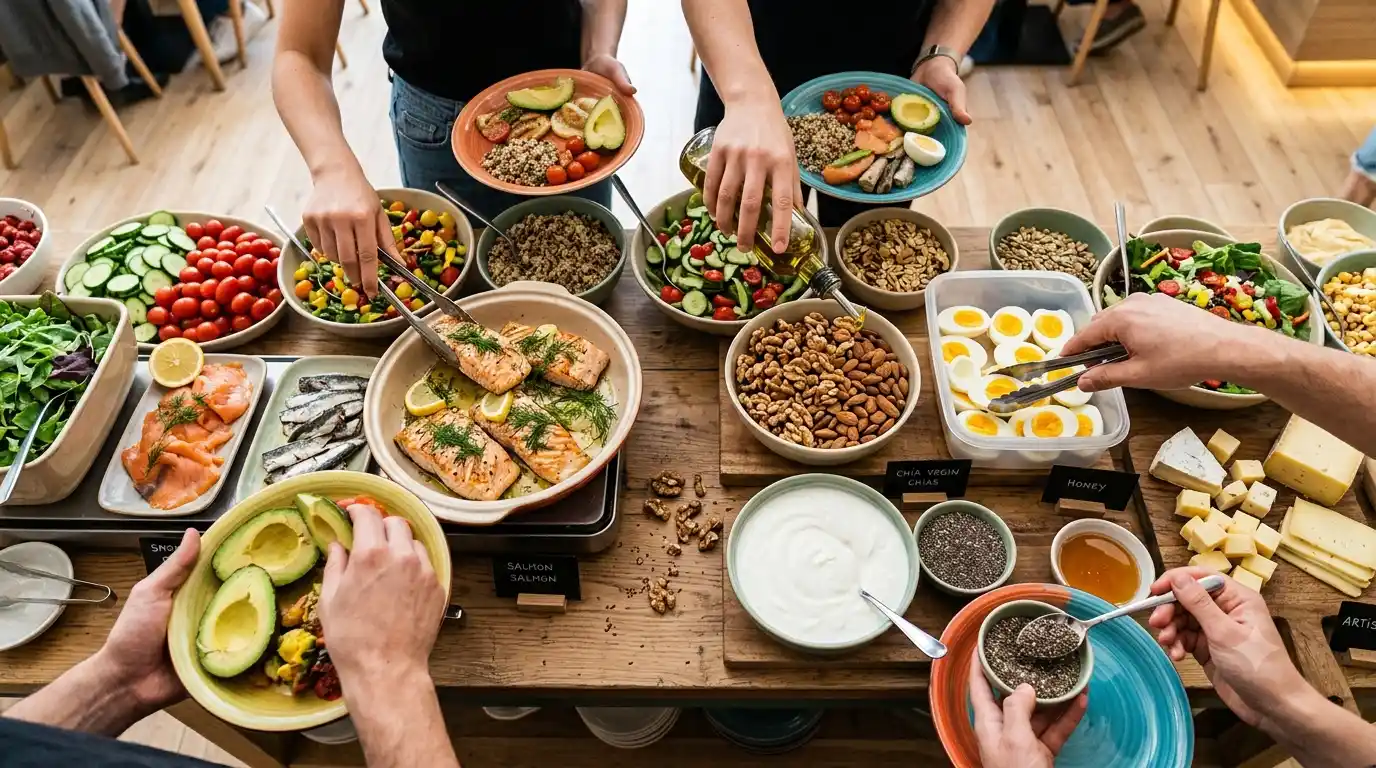
No need to overcomplicate it: a handful of well-chosen foods cover the three functions we've discussed. Here's a practical selection:
- Avocado. Rich in monounsaturated fat, it provides dense energy without compromising digestion, plus potassium, useful for muscle function and hydration.
- Salmon and oily fish (sardine, mackerel, anchovy). The most efficient source of omega-3 (EPA and DHA), the fat family with the strongest backing for reducing inflammation and post-exercise muscle damage.
- EVOO (extra virgin olive oil). Beyond its monounsaturated profile, it provides antioxidant compounds (polyphenols) that complement cellular protection against exercise-induced oxidative stress.
- Walnuts and other nuts. A plant-based source of alpha-linolenic acid (ALA), a precursor to omega-3, and a practical snacking option between training sessions.
- Whole eggs. The yolk provides dietary cholesterol and fat-soluble vitamins (A, D, E) — exactly the ones that depend on fat for proper absorption.
- Chia and flax seeds. Another plant-based source of ALA, easy to add to smoothies or yogurt without noticeably altering the flavor.
- Whole-fat dairy (yogurt, cheese). Provide saturated fat along with calcium and protein.
Fat intake by match schedule: when to prioritize it and when to cut it back
Not every part of the season calls for the same fat strategy. Timing makes the difference between fat helping performance and working against it.
Match day (pre-match)
In the hours before a match, fat intake should be kept to a minimum. By slowing gastric emptying, it delays energy availability exactly when the player needs it most and can cause a feeling of heaviness or digestive discomfort during exercise.
The pre-match meal should rely mainly on easily digestible carbohydrate, leaving fat for other times of the day.
Post-match and recovery days: higher priority
Once the effort is over, the picture changes completely. Here, fat — especially omega-3 from oily fish — becomes a priority. It helps curb exercise-induced muscle damage and speed up recovery between sessions (Li et al., 2026).
Rest and recovery days are the natural time to concentrate the fat-rich foods we've covered: salmon, avocado, EVOO, nuts, and whole eggs fit better into a recovery dinner than into a pre-match meal.

Frequently asked questions
How much fat should a soccer player consume per day?
Recommendations for athletes place fat intake between 20% and 35% of daily calories. More important than hitting an exact number is avoiding prolonged reductions below 20%, since these can compromise hormonal function, fat-soluble vitamin absorption, and overall health.
Is saturated or unsaturated fat better?
Both can be part of a healthy diet, but most fat intake should come from unsaturated sources such as extra virgin olive oil, oily fish, avocado, nuts, and seeds. Saturated fats can also be consumed in moderation within a balanced diet.
Should fat be avoided before a match?
It doesn't need to be eliminated entirely, but it's worth reducing the amount in pre-match meals. Fat slows gastric emptying and can increase the feeling of heaviness during exercise. In those hours, a meal high in carbohydrate and moderate in protein is usually prioritized.
Do omega-3s improve performance?
Evidence shows that omega-3s can help reduce some markers of inflammation and muscle damage after exercise, supporting recovery. However, their effects on variables like speed, strength, or power are far less consistent.
Can a low-fat diet work for a soccer player?
Only in very specific situations and under professional supervision. Maintaining too low a fat intake for long periods can affect energy availability, hormonal function, and fat-soluble vitamin absorption.