This article is based on the teachings of Bernardo Requena, co-founder of FSI and strength and conditioning coach at Sevilla FC, Athletic Club and Real Madrid, where he won two Champions League titles. What follows combines his dressing-room experience with the scientific evidence available.
“Do a bit of upper body today”: the starting mistake
In many teams, upper-body work is filler. It gets done when there is time left over, with no clear goal, as if it had no bearing on performance.
Requena sees it the other way round: the arms are involved in almost every high-intensity action in football. Sprints, jumps, changes of direction, duels. Ignoring them means leaving performance on the table.
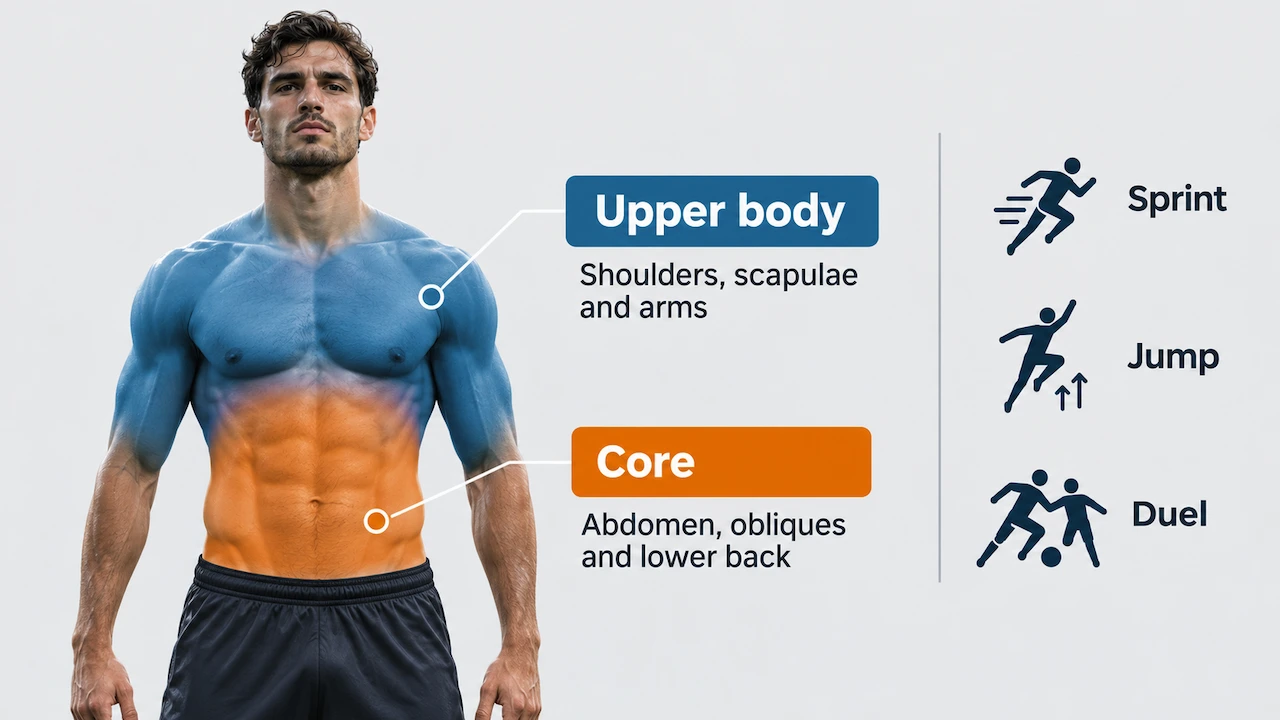
Before going further, it helps to define what we are talking about:
- It is not core. Some exercises combine both, but the focus here is the arms.
- The main character is the arm swing: how the arms move when running, jumping or turning.
- Outfield players only. Goalkeepers need completely different upper-body work.
3 reasons to train the upper body in football players
1. Contact and falls
Elite football involves more and more contact. A strong upper body helps absorb falls and impacts and protects the shoulder and neck.
One example: neck strengthening is standard in rugby and almost absent in football, even though the players who head the ball most and compete in the air would benefit from it.

2. Trunk control
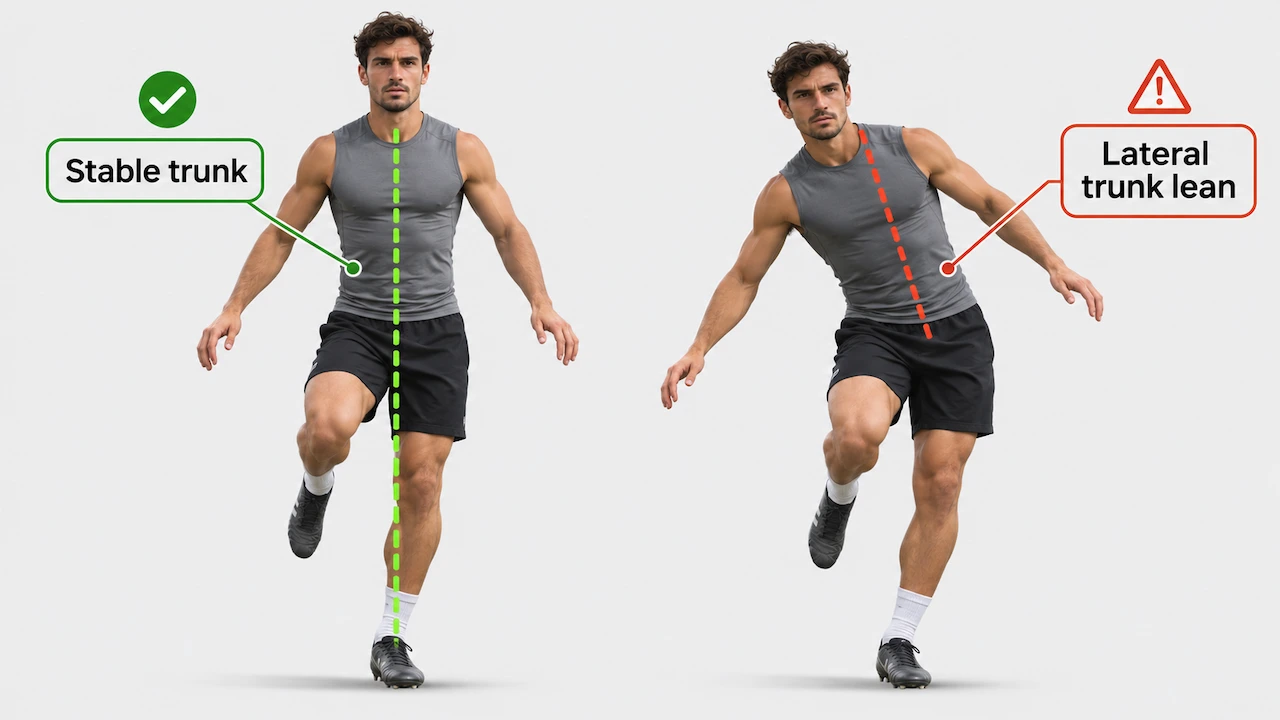
Greater lateral trunk lean when landing or turning is associated with a higher risk of ACL injury. The arms have a lot to say in that control, especially in single-leg actions and decelerations. If you are interested in this topic, the FSI Talks episode on ACL injury prevention looks at the risk factors in more detail.
3. More impulse in the actions that decide matches
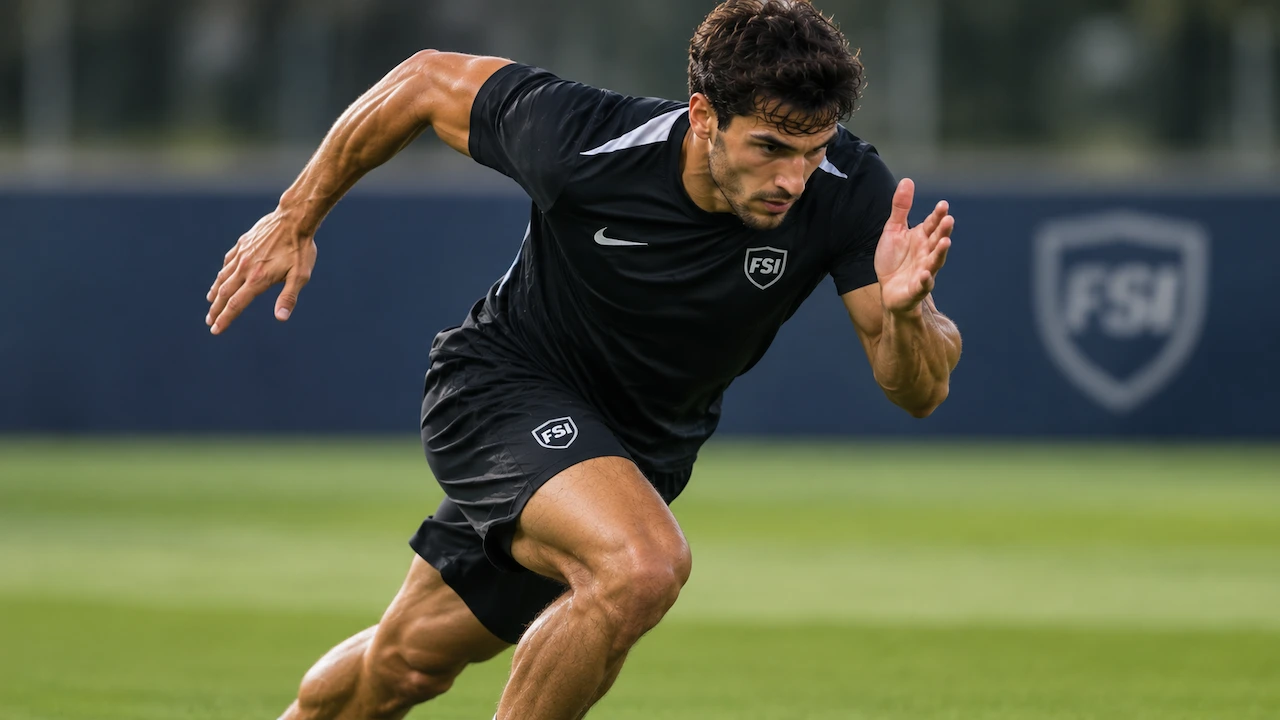
This is the main reason. Requena’s hypothesis: if the arm swing generates more impulse, the player applies more force into the ground and achieves a better trunk lean on every step.
In other words, the upper body is one more tool to improve acceleration, jumping and changes of direction, complementing lower-body work.
What the science says about the arm swing
First things first: research on the upper body and high-intensity performance is scarce. The most studied exercise is the bench press, which happens to be one of the least specific for a football player. Even so, there are solid clues:
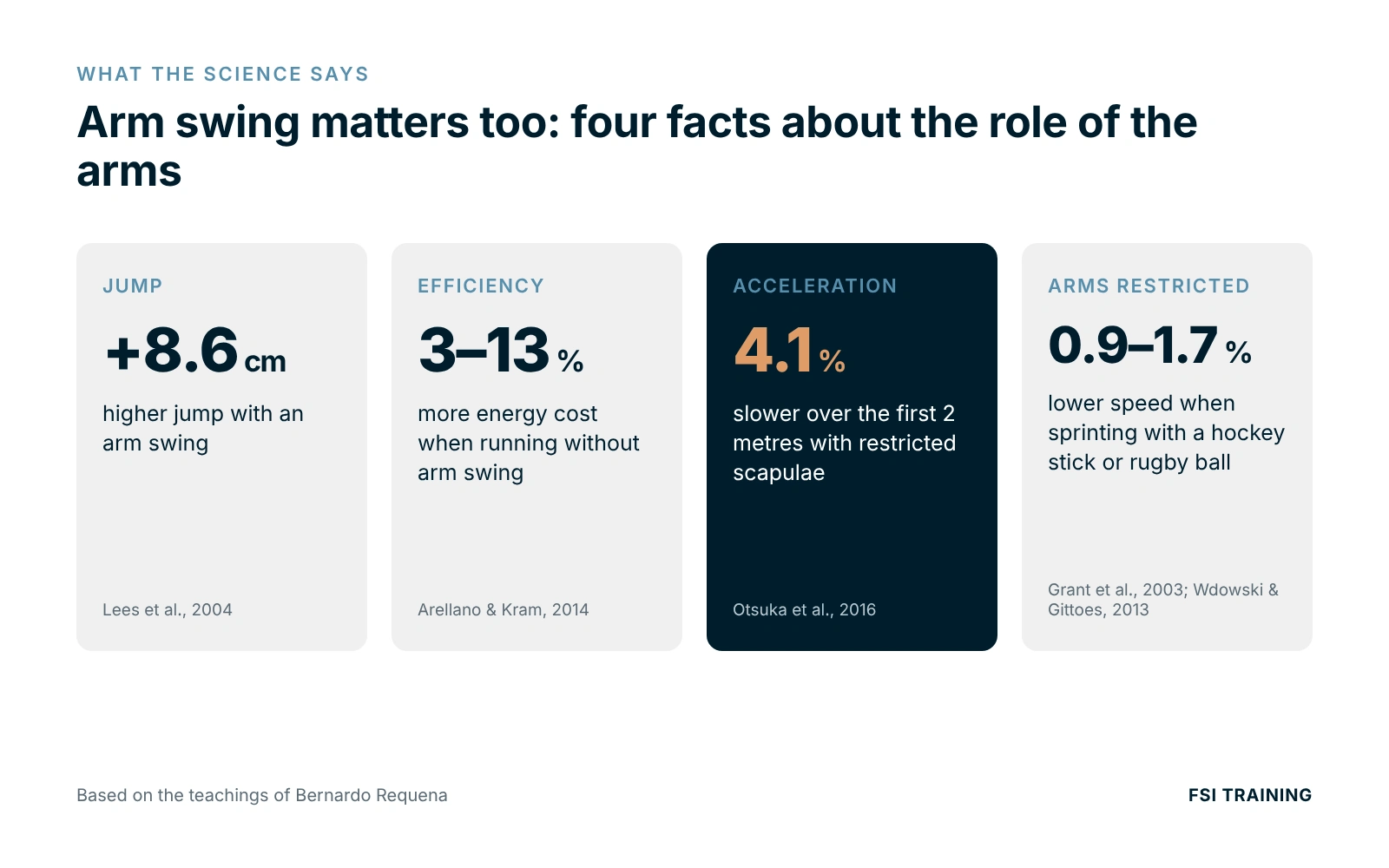
- Jumping: you jump higher with an arm swing. In the study by Lees et al. (2004) the gain was around 8.6 cm, mainly due to a higher take-off velocity. Key for aerial play.
- Efficiency: running without moving the arms costs between 3% and 13% more energy, depending on the posture (Arellano & Kram, 2014). The arm swing also limits trunk rotation.
- Acceleration: restricting scapular movement with tape made the first 2 metres 4.1% slower, with a shorter first step and less forward body lean (Otsuka et al., 2016).
- Arms restricted: sprinting while holding a hockey stick or a rugby ball also reduces speed, by between 0.9% and 1.7%.
- Repeated efforts: in rugby, players able to do more dips maintained mechanical load better in a test of repeated sprints and tackles (r = 0.76; Gabbett & Wheeler, 2015).
The key: the arms matter more in the acceleration phase than at maximum speed (Macadam et al., 2018). And acceleration is exactly what gets repeated most in a match.
Which players benefit most?
By position
Centre-backs cover the least high-intensity distance. But when you look at the context of each action, as Bradley and Ade (2018) propose, a different picture emerges: they face huge force peaks. Starts from standstill, balls played in behind, jumps, physical duels.
It is no coincidence that they are the players with the most lean mass. In the study by Adam Owen and colleagues (2018), defenders showed more lean mass and midfielders were the leanest.
Based on Requena’s experience, the priority profile is the central axis of the pitch:
- Centre-backs.
- Defensive midfielder.
- Centre-forwards.
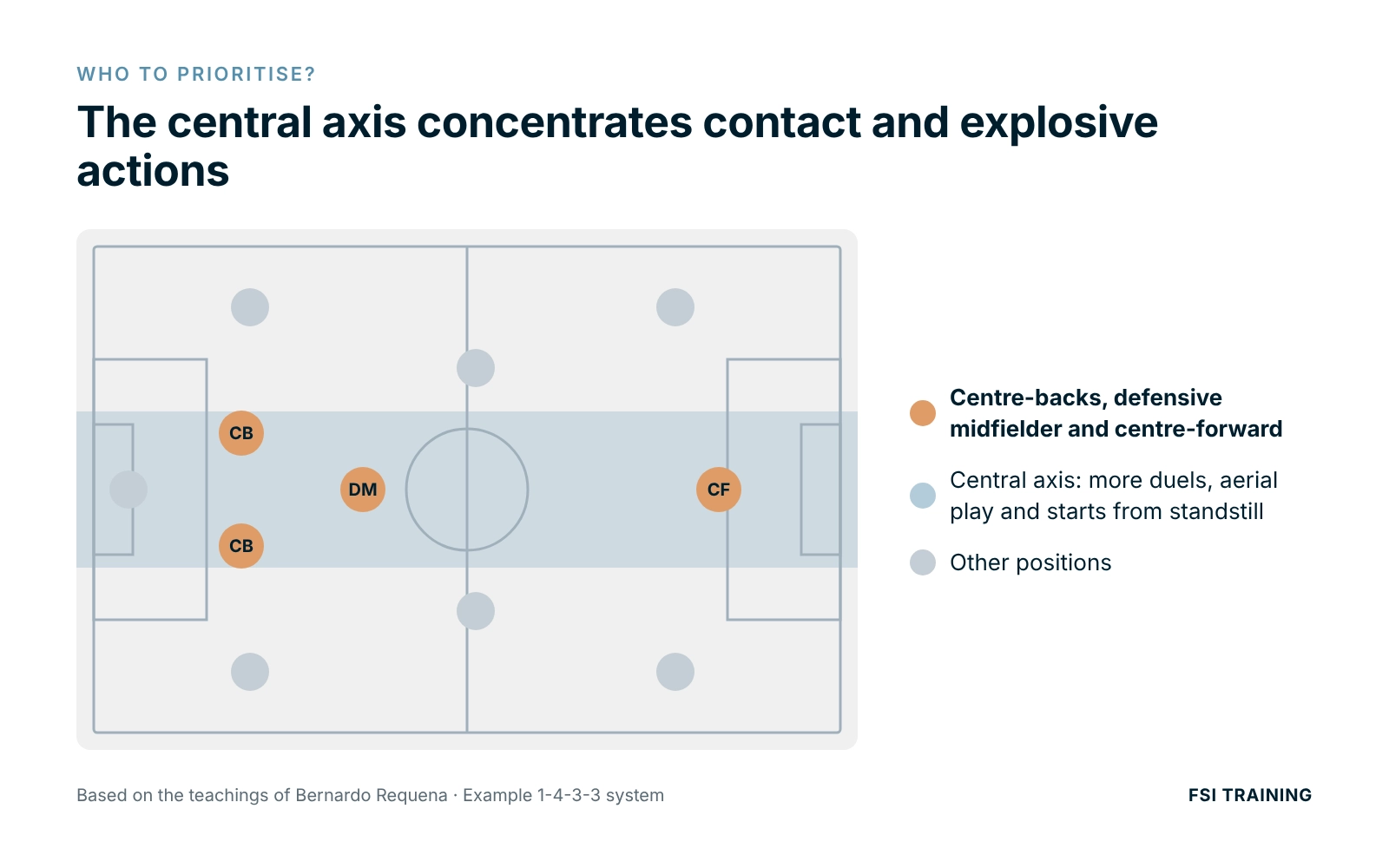
They are the ones who accumulate the most contact and the most explosive actions near the box. And there is one upper-body action nobody should forget: the throw-in.
By level
For an amateur or semi-professional player, there are more worthwhile priorities, such as body composition or technique. At elite level and in young professional players, however, it pays off. Requena estimates that in an action like a header, this work can account for 10–15% of performance, and at that level that margin makes a difference.
The trap: the hypertrophy threshold
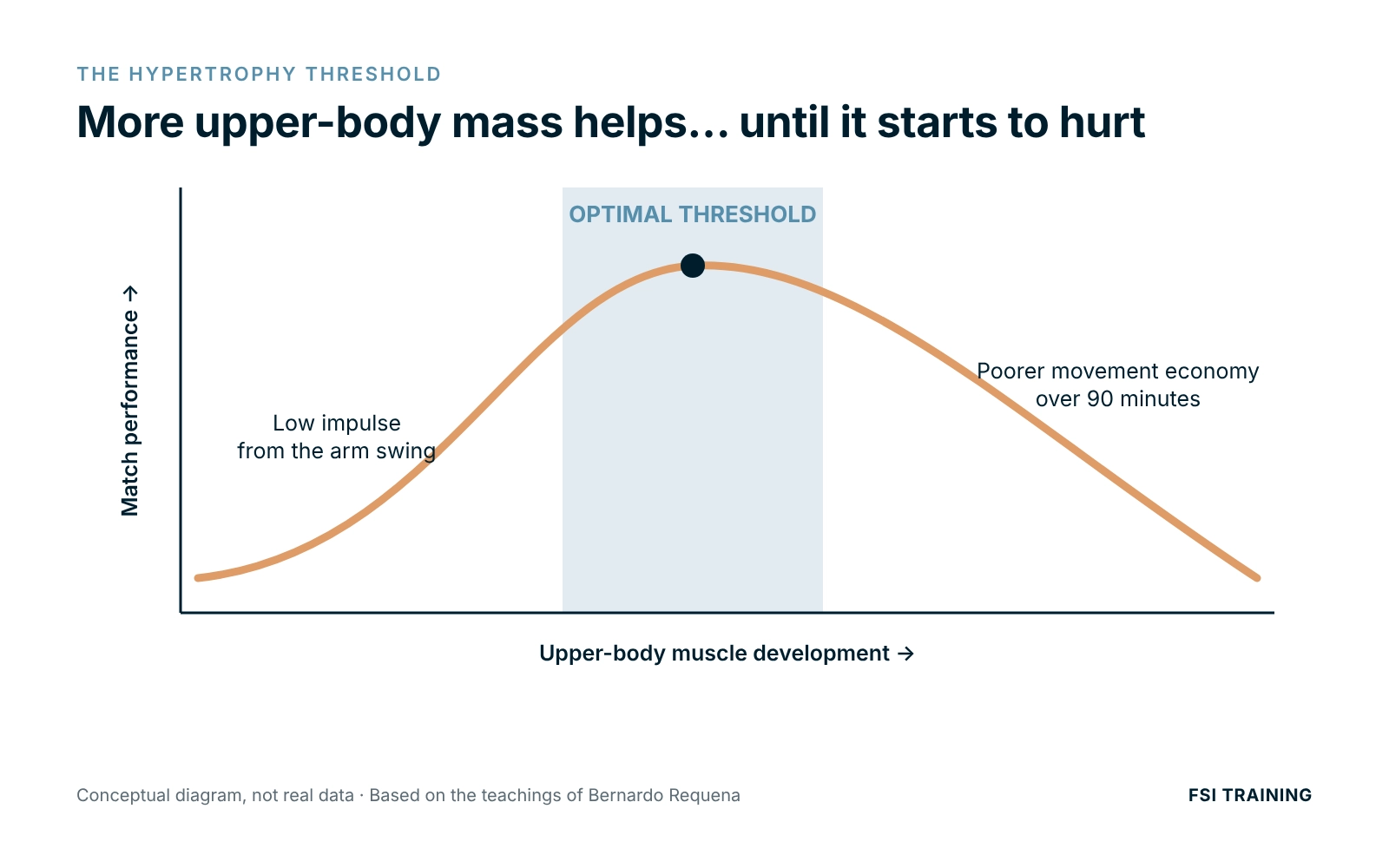
This is probably the most valuable insight from the class. The upper body gains muscle very easily.
The reason lies in the fibres. Upper-body muscles have more fast-twitch fibres than the legs, which is why they respond to training differently and faster (Zinner et al., 2016). Copying lower-body methods to the upper body is a mistake.
Why does it matter in football? Because matches last 90 minutes. More mass in the arms can give more impulse in a sprint, but beyond a certain point it worsens movement economy. Requena puts it this way: there is an optimal threshold for each player, and going past it costs performance.
The good news is that gaining some lean mass is not a problem. In a study with young professional players, co-authored by FSI faculty members Luis Suárez-Arrones, Nacho Torreño and Alberto Méndez-Villanueva, among others, football training was combined with two weekly eccentric-overload sessions, one of them for the upper body and core, over 27 weeks. The players gained lean mass, lost fat and improved their sprint (Suárez-Arrones et al., 2018).
Watch out with injured players. With a lower-limb injury, the upper body is free to train and it is easy to overdo it. It is common for a player to return to the pitch above their threshold. The goal of reconditioning is for them to come back better, not heavier.
6 keys to training the upper body in football
1. Analyse each player’s arm swing
Every player accelerates differently. Look at their angles, posture and range of motion. Sometimes simply gaining shoulder and scapular mobility already improves the ability to apply force.
2. Standing beats lying down
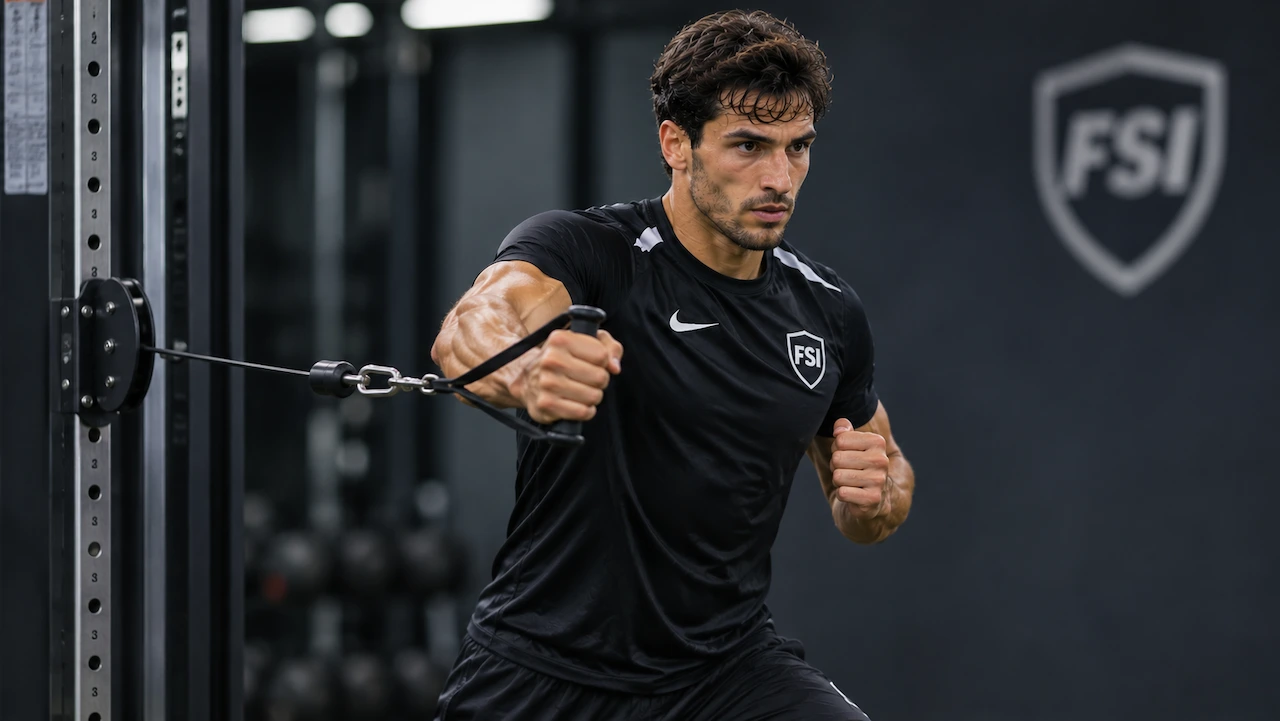
Requena does not use the bench press: it is bilateral, performed lying down and transfers little. His recommendation is to prioritise standing exercises, unilateral ones and, progressively, with instability.
3. Be careful with grip
A lot of core work holding loads in the hands ends up overloading the forearms. You see more and more players with very developed forearms, and that adds nothing on the pitch: when sprinting, the hands are relaxed.
4. Use sleds and forearm loading
These are two approaches Requena has been using almost since he started in professional football:
- Sled with moderate loads: increases arm-swing range of motion and body lean in the first steps. If you want to go deeper into how to prescribe the load, we explain it in our sprint training guide.
- Load on the forearm, not in the hand: this avoids gripping and overloads the arm swing without altering technique. With 1 kg on each forearm, step length increased by 2.1% and contact time by 6.5%, with no change over the first 5 metres (Macadam et al., 2019). In sprinters, measured with force plates, the same type of loading increased propulsive impulse in the first steps (Uthoff et al., 2020).
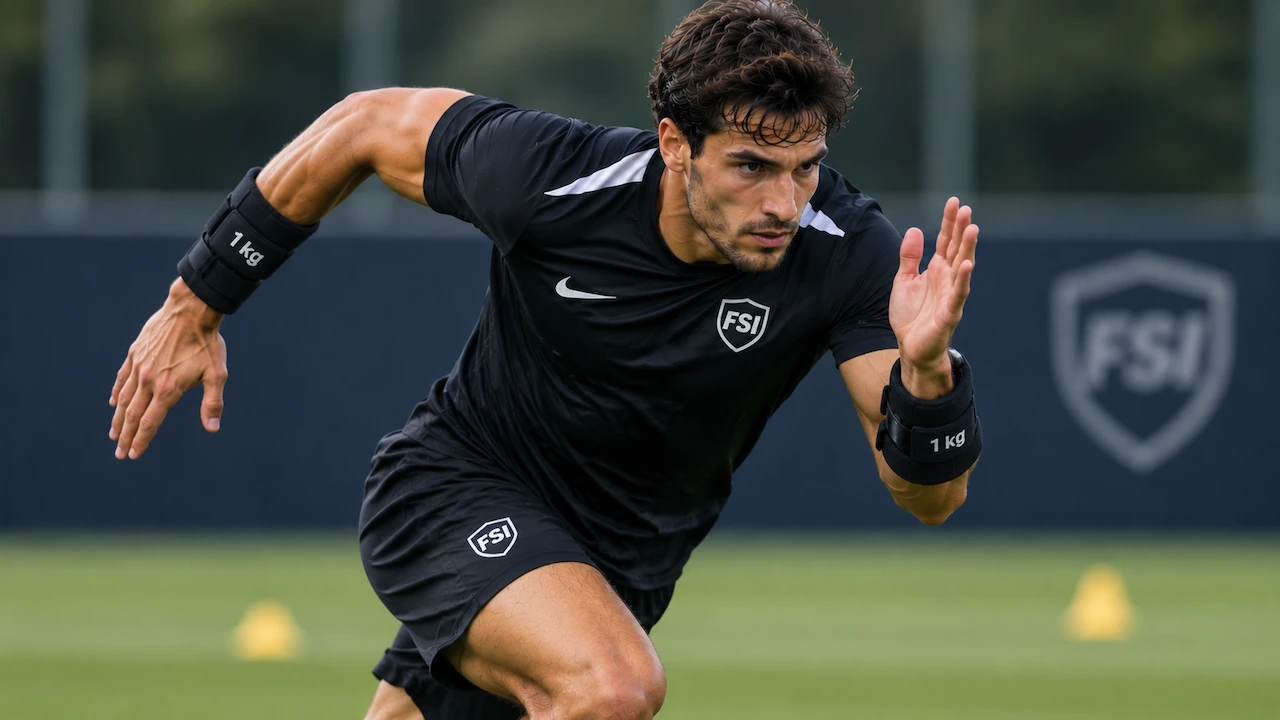
A tip: combine the loading with technical actions, for example a run before a header.
5. Target the first milliseconds and control volume
In the arm swing, peak force is not what matters. What matters is how much force you apply in the first milliseconds. All methods are valid: eccentrics, maximal strength, medicine balls or plyometrics.
They can even be very specific. For the throw-in, for example, a slightly heavier, wet ball, like in a rainy match.
How do you avoid going past the threshold? According to Requena, the variable that weighs most on hypertrophy is volume, more than intensity.
6. Place it well in the week
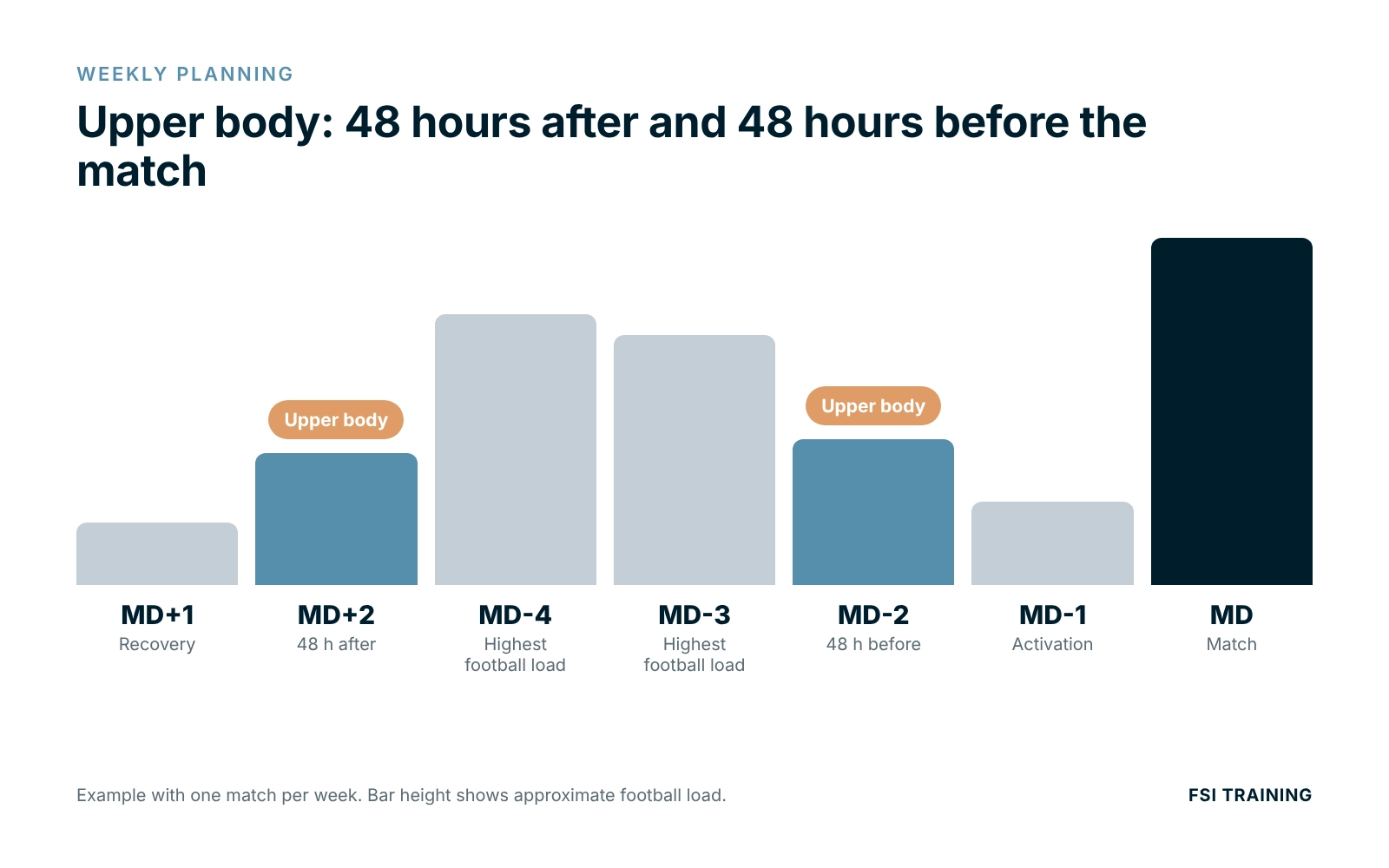
The ideal days are 48 hours after and 48 hours before the match, away from the days with the highest football load. It fits into planning far more easily than lower-body work. And if the player is not a starter or is injured, the window is even wider.
What we still don’t know
The evidence is still limited. Almost everything available comes from acute or cross-sectional studies. A recent systematic review on wearable loads found only one longitudinal study with this type of loading (Bertochi et al., 2024). Nor do we know what happens with the arm swing in changes of direction.
While those studies arrive, Requena’s recommendation is clear: judgement, specificity and control of each player’s threshold.
If you want to learn how to programme this kind of work with professionals who apply it at elite level, take a look at our Master’s in Football Strength & Conditioning.
References
- Arellano, C. J., & Kram, R. (2014). The metabolic cost of human running: Is swinging the arms worth it? Journal of Experimental Biology, 217(14), 2456–2461. https://doi.org/10.1242/jeb.100420
- Bertochi, G. F. A., Tasinafo Júnior, M. F., Santos, I. A., Sasaki, J. E., Mota, G. R., Jordão, G. G., & Puggina, E. F. (2024). The use of wearable resistance and weighted vest for sprint performance and kinematics: A systematic review and meta-analysis. Scientific Reports, 14, 5453. https://doi.org/10.1038/s41598-024-54282-8
- Bradley, P. S., & Ade, J. D. (2018). Are current physical match performance metrics in elite soccer fit for purpose or is the adoption of an integrated approach needed? International Journal of Sports Physiology and Performance, 13(5), 656–664. https://doi.org/10.1123/ijspp.2017-0433
- Gabbett, T. J., & Wheeler, A. J. (2015). Predictors of repeated high-intensity-effort ability in rugby league players. International Journal of Sports Physiology and Performance, 10(6), 718–724. https://doi.org/10.1123/ijspp.2014-0127
- Lees, A., Vanrenterghem, J., & De Clercq, D. (2004). Understanding how an arm swing enhances performance in the vertical jump. Journal of Biomechanics, 37(12), 1929–1940. https://doi.org/10.1016/j.jbiomech.2004.02.021
- Macadam, P., Cronin, J. B., Uthoff, A. M., Johnston, M., & Knicker, A. J. (2018). Role of arm mechanics during sprint running: A review of the literature and practical applications. Strength and Conditioning Journal, 40(5), 14–23. https://doi.org/10.1519/SSC.0000000000000391
- Macadam, P., Simperingham, K. D., & Cronin, J. B. (2019). Forearm wearable resistance effects on sprint kinematics and kinetics. Journal of Science and Medicine in Sport, 22(3), 348–352. https://doi.org/10.1016/j.jsams.2018.08.012
- Otsuka, M., Ito, T., Honjo, T., & Isaka, T. (2016). Scapula behavior associates with fast sprinting in first accelerated running. SpringerPlus, 5, 682. https://doi.org/10.1186/s40064-016-2291-5
- Owen, A. L., Lago-Peñas, C., Dunlop, G., Mehdi, R., Chtara, M., & Dellal, A. (2018). Seasonal body composition variation amongst elite European professional soccer players: An approach of talent identification. Journal of Human Kinetics, 61, 177–184. https://pmc.ncbi.nlm.nih.gov/articles/PMC6006533
- Suárez-Arrones, L., Sáez de Villarreal, E., Núñez, F. J., Di Salvo, V., Petri, C., Buccolini, A., Maldonado, R. A., Torreño, N., & Méndez-Villanueva, A. (2018). In-season eccentric-overload training in elite soccer players: Effects on body composition, strength and sprint performance. PLoS ONE, 13(10), e0205332. https://doi.org/10.1371/journal.pone.0205332
- Uthoff, A. M., Nagahara, R., Macadam, P., Neville, J., Tinwala, F., Graham, S. P., & Cronin, J. B. (2020). Effects of forearm wearable resistance on acceleration mechanics in collegiate track sprinters. European Journal of Sport Science, 20(10), 1346–1354. https://doi.org/10.1080/17461391.2020.1722256
- Zinner, C., Morales-Alamo, D., Ørtenblad, N., Larsen, F. J., Schiffer, T. A., Willis, S. J., Gelabert-Rebato, M., Pérez-Valera, M., Boushel, R., Calbet, J. A. L., & Holmberg, H.-C. (2016). The physiological mechanisms of performance enhancement with sprint interval training differ between the upper and lower extremities in humans. Frontiers in Physiology, 7, 426. https://doi.org/10.3389/fphys.2016.00426
Powered by Froala Editor