

Whether you are a coach or looking to pursue a career in tactical analysis, there are several resources that can help you develop your knowledge independently.
In this article, we explain how to learn football tactics, which tools you can use and what specialised training opportunities are available to help you take your knowledge further.
1. How to Learn Football Tactics on Your Own
Self-directed learning is a good starting point for becoming familiar with football tactical concepts. However, to make progress, it is important to combine different resources and, above all, put what you learn into practice through match analysis.
Watch Football Matches from a Tactical Perspective
Watching football regularly is one of the best ways to start developing your understanding of the game. However, simply following the ball or focusing on individual actions is not enough.
Try to observe how teams organise themselves during the different phases of play:
- Attacking organisation: how a team occupies space, progresses with the ball and uses different mechanisms to create scoring opportunities.
- Defensive organisation: how a team presses, protects space and organises itself to prevent the opposition from progressing.
- Transitions: what happens when a team wins or loses possession.
- Set pieces: how corners, free kicks and throw-ins are prepared and executed.
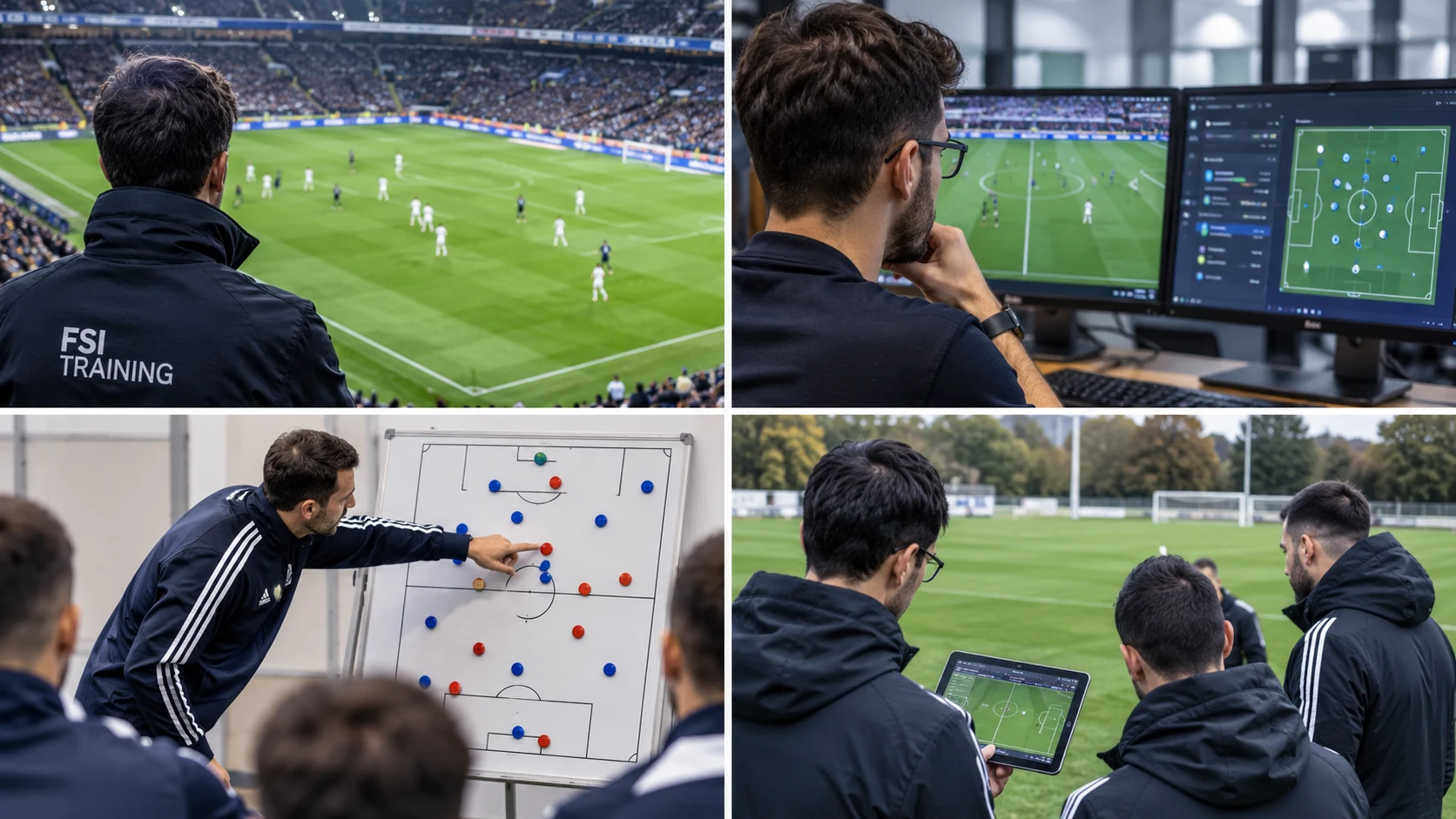 It is also interesting to observe how a team's approach changes depending on the opposition or the different situations that arise during a match.
Follow Specialist Coaches and Tactical Analysts
Social media provides access to analysis, explanations and insights from football professionals. Following coaches, analysts and performance specialists can help you discover different ways of interpreting the game.
Look for profiles that share content about playing models, tactical structures, opposition analysis and collective team behaviours.
On the channels of FSI Training on Instagram, you can also find specialised content for football professionals, including analysis, interviews and resources related to sports science and performance.
Get Familiar with Tactical Analysis Tools
Digital tools make it possible to represent game situations, study player movements and organise tactical information.
To get started, you can use formation design applications and tactical boards, which will help you represent playing systems, movements and training exercises.
As you progress towards professional-level analysis, you can explore video analysis tools and scouting software that allow you to tag actions, prepare reports and study the behaviour of teams and players.
The key is to understand what you want to analyse and what information you need to obtain. The tool should support the analysis, not the other way around.
Learn Through Football Analysis Videos on YouTube
YouTube is an accessible learning resource for exploring different playing systems, analysing matches and developing your understanding of tactical concepts.
You can search for content covering:
- Playing systems such as 4-3-3, 4-2-3-1 and 3-5-2.
- Attacking and defensive principles.
- High pressing and low-block defending.
- Playing out from the back.
- Analysis of elite teams and coaches.
To make the most of these resources, try to focus on one specific topic at a time rather than watching videos without a clear structure. This will help you connect different concepts and gradually build a solid knowledge base.
Listen to Podcasts and Read Specialist Football Blogs
Podcasts and specialised blogs are another great way to keep learning. Through interviews and conversations with professionals, you can explore different working methodologies, experiences within clubs and perspectives on high-performance football.
In this regard, FSI Training offers FSI Talks, a series of interviews with leading professionals from international football. Its episodes provide insights into different areas of performance and show how specialists work within professional clubs.
2. How to Practise Tactical Analysis of a Football Match
Consuming specialised content is important, but the best way to make progress is to put what you have learned into practice.
A useful exercise is to select a match and prepare your own tactical analysis by following these steps:
- Identify the initial playing systems. Observe how players are positioned and which structures each team uses.
- Analyse the different phases of play. Study how teams behave in attack, defence and transitions.
- Identify collective patterns. Look for recurring movements, progression mechanisms and defensive behaviours.
- Observe tactical adjustments. Analyse how coaches respond to changes in the game.
- Prepare a report. Organise your observations and select the most representative actions to support your conclusions.
3. Specialised Football Tactics Courses and Training Programmes
Learning independently is a good way to acquire knowledge and develop an interest in tactical analysis. However, if you want to build a professional profile and work within a football club, you will need to develop a deeper understanding of analysis methodologies and acquire specific skills.
There are several training options available:
Master's Degree in Football Tactical Analysis
The Master's Degree in Football Tactical Analysis at FSI Training is designed for those who want to specialise in game analysis and develop a professional career in football.
The programme combines theoretical knowledge with practical application. It features lecturers with experience in elite football and content focused on the real needs of analysis departments within professional clubs.
It also offers the opportunity to complete practical placements at professional clubs, allowing students to apply the knowledge they have acquired in a real working environment.
This programme can also be valuable for coaches looking to develop their understanding of the game, opposition analysis and tactical decision-making.
Short Courses in Football Tactics and Analysis
Specialised short courses allow you to explore specific aspects of the game, such as tactical systems, playing models, defensive strategies and opposition analysis.
They are an interesting option for building on existing knowledge and staying up to date. Before choosing a course, it is worth reviewing the syllabus, the lecturers' professional experience and the practical approach of the programme.
4. Can You Become a Football Tactical Analyst by Learning on Your Own?
Self-directed learning can help you develop a solid foundation in tactical knowledge. However, working as an analyst at a professional club requires skills that go beyond understanding playing systems.
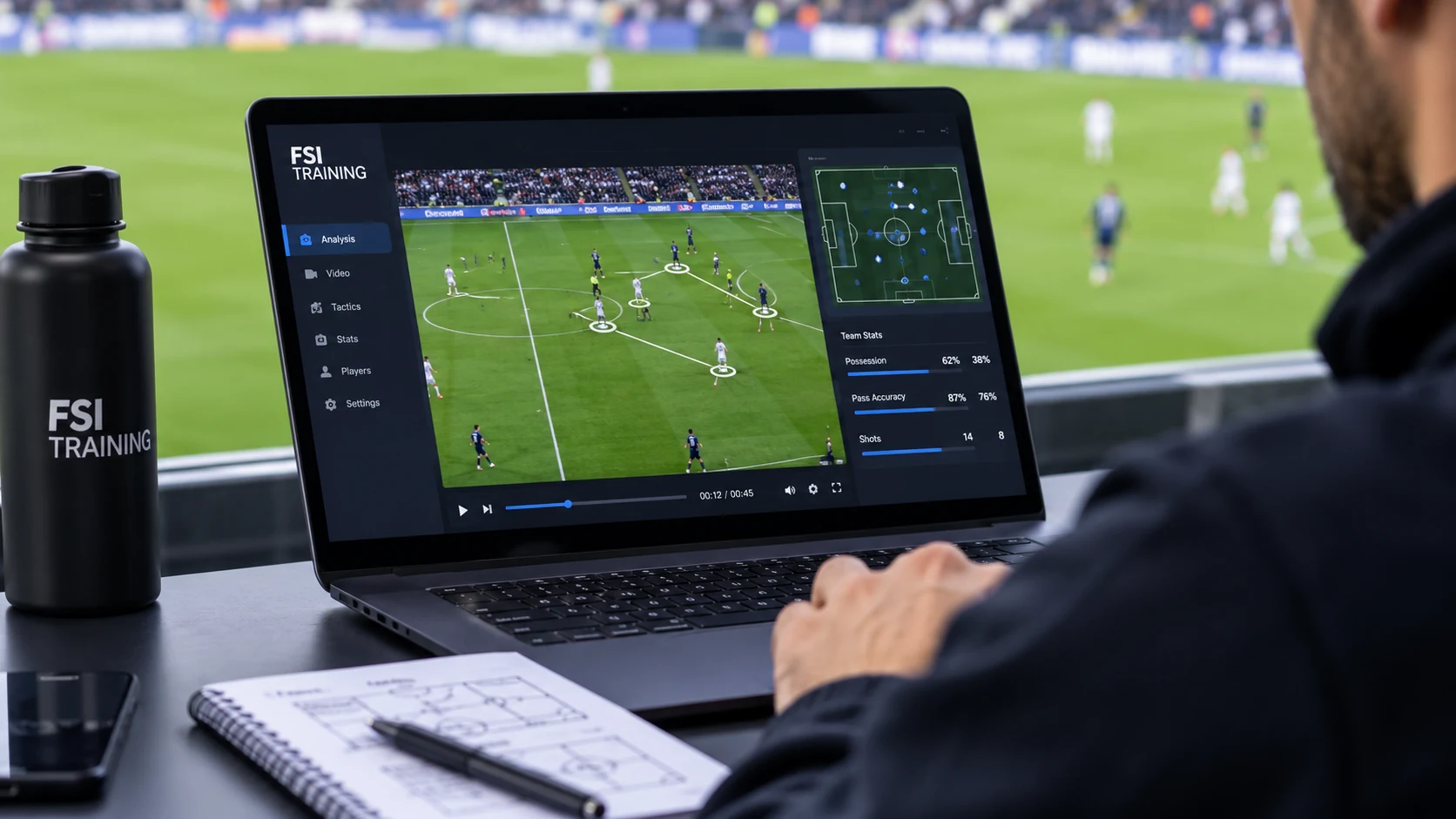 Among the main skills of a tactical analyst are:
- Understanding different playing models and their principles.
- Analysing the collective and individual behaviour of teams.
- Identifying patterns and trends in the game.
- Using video analysis and scouting tools.
- Preparing clear and useful tactical reports for coaching staff.
- Communicating analysis findings and drawing conclusions that can be applied to training and competition.
This is why specialised training and exposure to professional football environments can make a real difference when developing your professional profile.
Take the Next Step in Your Development as a Tactical Analyst
If you want to turn your interest in football tactics into a professional opportunity, it is important to choose a training programme that combines scientific knowledge, practical application and exposure to elite football.
At FSI Training, you will find a specialised programme in tactical analysis, delivered by professionals with international experience and offering practical placement opportunities through our network of more than 40 partner clubs.
Find out more about the Master's Degree in Football Tactical Analysis and discover how you can continue developing your career in professional football.
Powered by Froala Editor