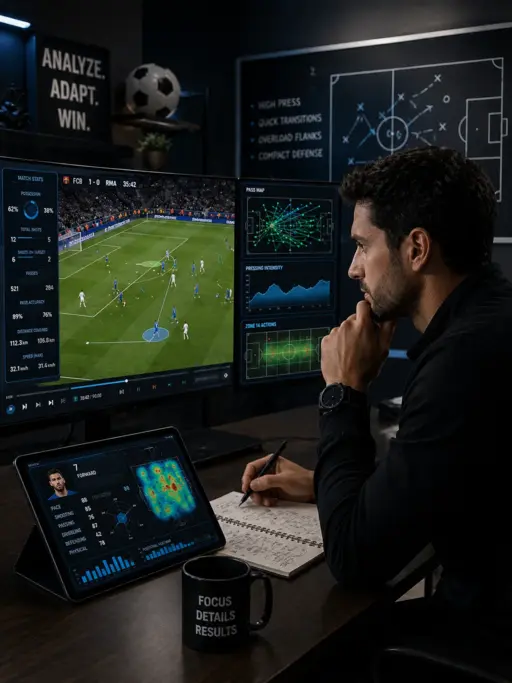
If you are wondering how to become a doctor for a football team, in this guide we explain the ideal training path to make the leap into elite football.
What do you need to study to become a sports doctor?
The first step is to complete a Degree in Medicine. From there, if you want to focus your career on the sports field, there are different specialization paths such as Sports Medicine, Rehabilitation, or Traumatology. It is also recommended to train in complementary areas such as:
- Exercise physiology.
- Injury prevention, rehabilitation, and treatment.
- Nutrition and performance.
- Healthcare management in sports environments.
If your goal is to work in a football club, you need to understand the daily dynamics of a coaching staff and the specific demands of high-performance football players. To achieve this, the best option is to pursue a specialized master’s degree that integrates all this knowledge applied to football.
What does a football team doctor do?
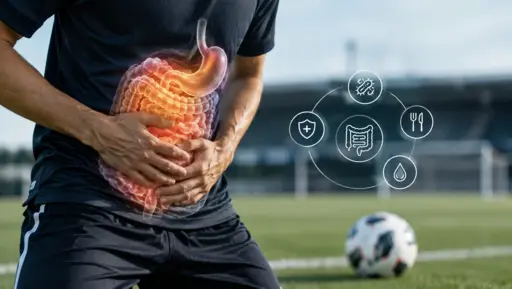
A sports doctor in a club does much more than diagnose or prescribe treatments. Their role is key to maintaining the squad’s health throughout a demanding season. Their main responsibilities include:
— Performing medical check-ups and individualized monitoring.
— Diagnosing and treating injuries in coordination with physiotherapists and rehabilitation specialists.
— Implementing injury prevention protocols.
— Assessing physical condition and workload together with the fitness coach.
— Supervising recovery processes and return-to-play for each player.
— Coordinating with nutritionists and psychologists for a comprehensive player management approach.
In the professional environment, this role becomes highly strategic. That is why more and more doctors choose to specialize specifically in football medicine.
Why specialize in football-focused medicine
Professional football is very different from general medical practice or other team sports. A football doctor must understand the competitive context, the specific physiology of footballers, and how to work within a coaching staff where medical decisions can influence match outcomes.
- Higher physical demands and fixture congestion. Seasons include more competitions, less rest, and higher intensity. Doctors must anticipate and manage health risks without compromising performance or long-term wellbeing.
- Complex injuries and specific return-to-play protocols. Football presents unique injury patterns that require precise medical intervention coordinated with rehabilitation specialists, physiotherapists, and coaches.
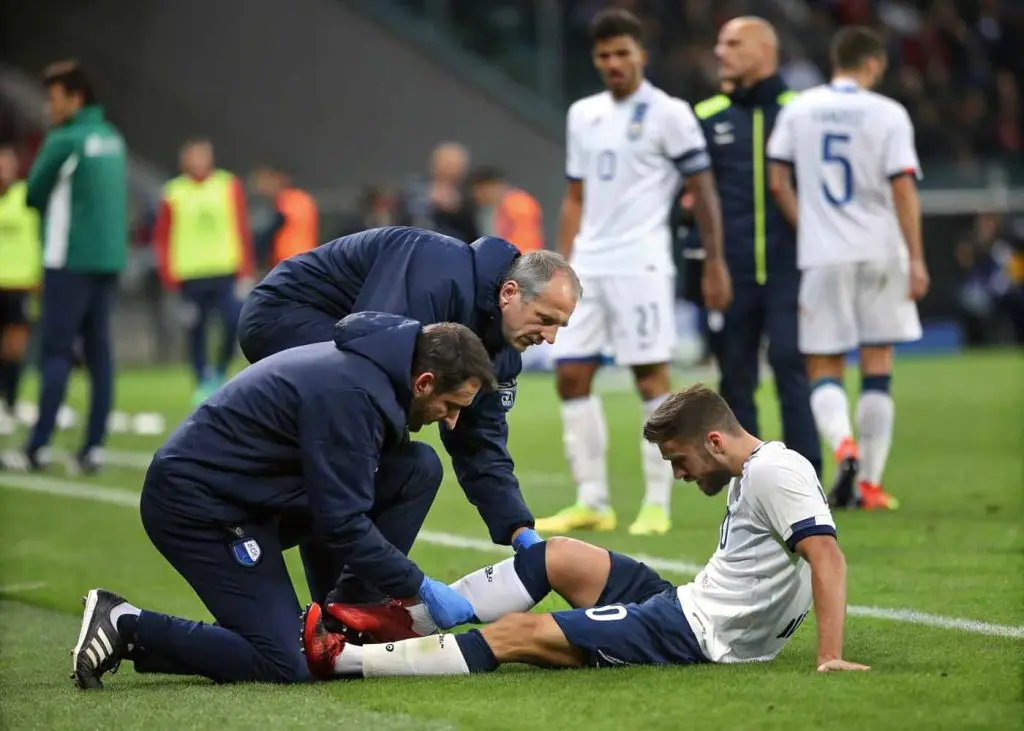
- Real-time intervention and decision-making under pressure. Acting from the sidelines in front of thousands of spectators requires fast and accurate clinical decisions that can impact the flow of the game.
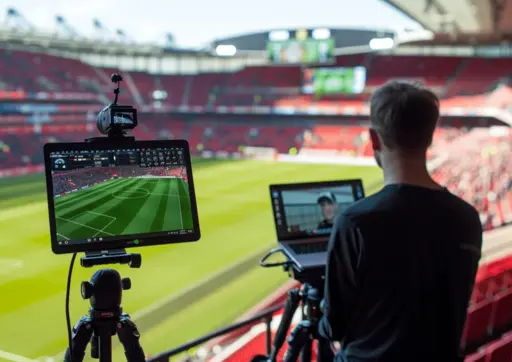
- Use of advanced monitoring tools. Elite clubs use data analysis, wellness questionnaires, wearable technology, and injury prediction models that doctors must integrate into their daily practice.
- Medical leadership in multidisciplinary teams. The doctor coordinates key performance areas alongside coaches, nutritionists, psychologists, and physiotherapists.
FSI Training Master’s: your bridge to professional football
The Master in Sports Medicine for Professional Football by FSI Training is designed for doctors who want to work in elite clubs. This program offers:
- A 100% practical approach updated to professional football.
- A faculty made up of researchers, doctors, rehabilitation specialists, and fitness coaches with experience in top-level clubs.
- Online training accessible from anywhere in the world, in English and Spanish.
- Modules on physiology, nutrition, recovery, load management, injury prevention, rehabilitation, and medical practice applied to football teams.
- Internships in more than 40 international partner clubs.
You can explore testimonials from some of our students:
An increasingly strategic role
Becoming a football team doctor starts with a medical degree, continues with specialization, and is completed with specific training in football. The FSI Training Master in Sports Medicine for Football Teams connects you with the real day-to-day life of clubs and prepares you to become part of high-performance coaching staffs.