
Becoming a professional football coach is a process that requires much more than simply understanding the game. Official qualifications, practical experience, tactical knowledge, leadership skills and continuous professional development are some of the key foundations for building a career in high-performance football.
From coaching youth teams to becoming part of the coaching staff at an elite club, there are different pathways into the profession. However, reaching professional football requires developing specific skills, understanding how football clubs operate and gaining experience in real training and competitive environments.
In this guide, you will discover what you need to study to become a football coach, which coaching licences you need, the most important skills to develop and how to build a professional career that can bring you closer to working with top-level clubs.
What does a professional football coach actually do?
A football coach is responsible for leading a team's sporting development. Their role involves much more than designing drills or selecting a starting line-up. They must plan training sessions, develop a playing philosophy, prepare for matches, evaluate performance and manage relationships between players and the coaching staff.
In professional football, these responsibilities are carried out within a multidisciplinary working structure. The head coach coordinates their work with assistant coaches, tactical analysts, fitness coaches, goalkeeping coaches and other specialists who contribute to the team's overall performance.
Some of the main responsibilities include:
- Developing a playing philosophy: establishing the attacking, defensive and transitional principles that define the team's identity.
- Planning training sessions: organising sessions according to sporting objectives, the competitive calendar and players' individual needs.
- Preparing for matches: analysing opponents, identifying tactical advantages and developing specific game plans.
- Evaluating performance: analysing individual and collective behaviour to identify areas for improvement.
- Managing the squad: leading the dressing room, resolving conflicts and maintaining effective communication with players.
- Coordinating the coaching staff: integrating the work of different specialists into a shared sporting plan.
Understanding how these responsibilities are distributed is essential to understanding how a football club operates. You can learn more about how a football coaching staff is structured and operates.
What do you need to study to become a football coach?
To work as a football coach, it is important to distinguish between official qualifications that allow you to coach and additional education that helps you develop specialised knowledge.
Both serve different purposes and can be essential for building a competitive professional profile.
UEFA coaching licences: C, B, A and Pro
In Europe, UEFA establishes a progressive coaching education pathway delivered through its national member associations.
The main qualifications include:
UEFA C Licence
It is primarily aimed at grassroots football and player development at introductory stages. It provides knowledge of coaching methodology, teaching the game and planning training sessions adapted to different age groups.
UEFA B Licence
It allows coaches to develop their skills in managing youth and amateur teams. Its curriculum covers areas such as technical and tactical development, training organisation and performance evaluation.
UEFA A Licence
It is designed for experienced coaches who want to work in more demanding competitive environments. It provides advanced knowledge of tactical planning, team management and the management of sporting projects.
UEFA Pro Licence
It is the highest qualification within the general UEFA coaching education pathway. It is aimed at coaching professional teams and developing the skills required to lead high-performance sporting projects.
Comparison of UEFA coaching licences
| Licence | Training focus | Main areas covered |
|---|---|---|
| UEFA C | Grassroots football | Introduction to coaching, teaching the game and methodology. |
| UEFA B | Youth and amateur football | Technical and tactical development and planning. |
| UEFA A | Competitive football | Team management and advanced strategy. |
| UEFA Pro | Professional football | Technical leadership and high-performance management. |
Important: Access to each licence requires meeting specific educational and experience requirements. The exact conditions for access, recognition and coaching authorisation depend on the relevant national association and the regulations of each competition.
You can find out more about the requirements and characteristics of each qualification in the official UEFA coaching licence information.
Academic education and specialisation in football
In addition to official coaching licences, coaches need to develop knowledge that goes beyond traditional team management.
Modern football incorporates different scientific and methodological disciplines that directly influence team planning and performance.
Some of the most important areas of knowledge include:
- Sports coaching methodology.
- Football tactics and strategy.
- Game analysis and scouting.
- Football-specific physical conditioning.
- Sports psychology.
- Team management and leadership.
- Technology and data analysis.
Specialisation helps coaches better understand the different factors that influence performance and work effectively alongside other members of the coaching staff.

What skills does a professional football coach need?
Obtaining a qualification is only one part of the process. Coaching teams at a high level also requires developing technical, methodological and interpersonal skills.
These skills allow coaches to turn theoretical knowledge into practical decisions that can be applied during training sessions and matches.
Tactical knowledge and developing a playing philosophy
Tactical understanding is one of the fundamental skills every coach needs.
It is not simply about knowing different formations, but understanding how a team behaves during the different phases of a match and how it can create advantages against its opponents.
A coach needs to master concepts such as:
- Attacking and defensive organisation.
- Attacking-to-defensive and defensive-to-attacking transitions.
- High pressing and counter-pressing.
- Positional play and space occupation.
- Width, depth and numerical advantages.
- Set-piece situations.
- Tactical adjustments depending on the opponent.
Coaches should also understand different formations, such as 4-3-3, 4-2-3-1, 3-5-2 and 4-4-2, including their advantages, limitations and possibilities for adaptation.
What really matters is knowing when and why to use each formation, taking into account the characteristics of the players and the competitive context.
To explore this subject further, take a look at our guide to football systems and tactics, with practical examples.
Training methodology and planning
One of a coach's main responsibilities is translating their playing philosophy into training tasks that help players develop the desired behaviours.
To achieve this, coaches need to understand training methodology and know how to design exercises that connect the demands of the game with the objectives of each session.
Training planning is generally organised across different timeframes:
- Annual planning: establishes the overall objectives for the season.
- Mesocycles: organise training objectives and content across different periods.
- Microcycles: distribute training sessions according to the competitive calendar.
- Training sessions: develop specific objectives through drills and exercises.
For example, during a week with one match every seven days, the coach must organise training loads, tactical content and recovery periods to ensure the team is in the best possible condition for competition.
This planning must also be adapted to the age group, number of matches, players' physical condition and the team's characteristics.
A useful practical example is our guide to the microcycle in grassroots football and how to plan a weekly training schedule, which explains how to distribute training loads and adapt sessions to different age groups.
Video analysis, data and scouting
Game analysis has become an essential tool for professional football coaching staffs.
Coaches need to interpret what happens during matches and training sessions in order to make informed decisions.
Video analysis makes it possible to identify collective patterns, study player behaviour and evaluate whether the team is correctly implementing its playing philosophy.
Some of the main tasks associated with this skill include:
- Analysing the performance of your own team.
- Studying opponents' strengths and weaknesses.
- Identifying attacking and defensive patterns.
- Evaluating transitions and set-piece situations.
- Interpreting performance statistics and data.
- Preparing reports to support decision-making.
Coaches do not need to carry out every analysis task themselves, but they must understand the information they receive and know how to integrate it into their sporting plans.
In this context, it is particularly useful to understand how to become a football tactical analyst from scratch.
Physical conditioning and performance management
A team's performance also depends on its ability to meet the physical demands of competition.
Although many clubs have specialised fitness coaches, head coaches need to understand the basic principles of physical conditioning in order to coordinate the team's work effectively.
Some of the most relevant areas include:
- Football-specific endurance.
- Strength and muscular power.
- Speed and acceleration.
- Changes of direction and deceleration.
- Injury prevention.
- Recovery between matches.
- Monitoring and distributing training loads.
It is also important to understand how to integrate physical objectives into technical and tactical training tasks, avoiding the treatment of these components as completely separate elements.
The coach must work alongside the fitness coach to adapt training loads to the individual and collective needs of the players.
Leadership, communication and dressing-room management
Managing a professional team involves managing people, expectations and high-pressure situations.
That is why leadership is one of the skills that has the greatest influence on a coach's daily work.
A good leader must know how to communicate ideas, build confidence, resolve conflicts and maintain group cohesion, even in challenging situations.
Some particularly important skills include:
- Effective communication with players and coaching staff.
- Managing conflicts within the dressing room.
- Emotional intelligence.
- Decision-making under pressure.
- Adapting to different personalities.
- Managing expectations and motivation.
- Building a strong working culture.
Coaches must also develop professional relationships with the sporting director, club management and other departments.
In elite football, leadership is not simply about motivating players, but about ensuring that everyone involved works towards shared objectives.
How do you start a career as a football coach?
One of the main challenges for aspiring professional coaches is finding their first job opportunities.
The journey is rarely straightforward. Most professionals gradually develop their careers by gaining experience in different categories and roles before moving into higher-level structures.
1. Start in grassroots football and academies
Grassroots football is one of the most common environments in which to begin developing a coaching career.
Working with young players provides experience in planning, methodology, communication and individual development.
It also offers the opportunity to learn how to adapt training content to different ages and ability levels.
2. Gain experience within coaching staffs
Another option is to start as an assistant coach or collaborate with different professionals at a football club.
Working alongside experienced coaches allows you to understand how a team is organised from the inside and learn about the responsibilities of each member of the coaching staff.
It also provides opportunities to learn aspects that are not always covered in sufficient depth through theoretical education, such as match preparation, technical meetings and communication with players.
3. Build a professional network
Professional football operates through sporting structures in which professional relationships play a significant role.
Connecting with coaches, analysts, fitness coaches and academy managers can provide access to collaboration and career development opportunities.
Taking part in conferences, educational workshops, specialised events and football-related activities allows you to expand your professional network and discover different working methods.
4. Create a coaching portfolio
Documenting your work is a great way to demonstrate your knowledge and professional development.
A coaching portfolio can include:
- Your playing philosophy and its fundamental principles.
- Examples of training sessions.
- Weekly and monthly training plans.
- Tactical match analyses.
- Performance reports.
- Projects developed with teams.
- Professional and educational experience.
This material allows you to demonstrate how you understand the game and apply your knowledge in practical situations.
How do you become a coach at an elite football club?
Becoming the manager of a professional team requires time, education and a track record that demonstrates the ability to work in competitive environments.
There is no single formula or guaranteed career path. Some coaches progress from grassroots football, others start as assistants, while some develop their careers within specialised technical departments.
However, several factors can help you move closer to this goal:
| Factor | Importance for professional development |
|---|---|
| Official qualifications | Allow you to progress through the federation's coaching pathway and meet the requirements for certain positions. |
| Practical experience | Helps you develop real-world skills and learn how to manage competitive situations. |
| Continuous professional development | Allows you to stay up to date with new playing philosophies, methodologies and analysis tools. |
| Specialisation | Helps you develop expertise in areas such as tactical analysis, coaching methodology or physical conditioning. |
| Teamwork | Facilitates integration into multidisciplinary structures and professional coaching staffs. |
Career progression will depend on available opportunities, accumulated experience, qualifications obtained and the ability to demonstrate results at each stage.
The importance of specialised education and practical experience
One of the most important aspects of a coach's development is being able to transfer the knowledge acquired during their education into their daily work with a team.
Studying tactics, methodology or physical conditioning provides a fundamental foundation, but understanding how to apply this knowledge in a competitive environment also requires observation, practice and continuous learning.
That is why specialised education should address real situations in professional football and connect different disciplines.
A coach who wants to work in high-performance football needs to understand how playing philosophy, physical conditioning, tactical analysis, psychology and season planning interact.
It is also important to understand how elite clubs operate, the responsibilities of each member of the coaching staff and how decisions are made within these structures.
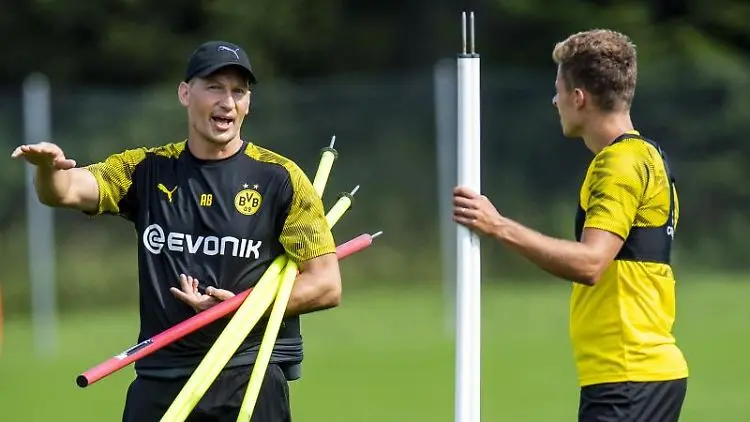
Theoretical education provides knowledge, but practical experience teaches you how to apply it. Combining both is essential for developing the skills needed to work in high-performance football.
How to specialise as a high-performance football coach with FSI Training
Continuous professional development is an essential part of the career of any coach who aspires to work in professional football.
Beyond official coaching licences, specialised programmes allow coaches to explore specific aspects of performance in greater depth and learn about methodologies used in high-level environments.
FSI Training develops educational programmes focused on the current needs of football professionals, connecting scientific knowledge with its practical application in clubs and sporting structures.
One of these programmes is the Master's in High-Performance Football Coaching, a course designed to expand the knowledge of coaches and professionals who want to deepen their understanding of football management.
Its approach covers different dimensions of a coach's work, including:
- Developing and implementing playing philosophies.
- Training planning and methodology.
- Tactical analysis and match preparation.
- Managing individual and collective performance.
- Applied sports psychology.
- Leadership and team management.
- Organisation and operation of coaching staffs.
- Using technology and analysis tools.
In addition, the programme includes supervised practical experience at football clubs, helping students connect academic knowledge with real situations in professional football environments.
This combination of specialisation, applied learning and exposure to sporting structures represents a relevant educational pathway for those looking to expand their skills and develop their careers in high-performance football.
It is important to remember that this type of specialised education complements official federation qualifications, but does not replace them or automatically grant a UEFA licence or authorisation to coach professional teams.
FSI Training's international expansion and its network of collaborations with clubs in different countries also provide an educational environment connected to different realities within professional football.
You can find out more about the academic approach and course content of the FSI Training Master's in High-Performance Football Coaching.
Frequently asked questions about becoming a professional football coach
Can you become a professional football coach without having been a professional player?
Yes. Having been a professional footballer is not a universal requirement for becoming a coach. What matters is meeting the relevant educational and federation requirements, gaining experience and developing the skills needed to manage teams.
Playing experience can provide practical knowledge of the game, but it does not replace the methodological, tactical and pedagogical education required by the profession.
Which licence do I need to coach a professional team?
Within the UEFA framework, the Pro Licence is the reference qualification for managing professional teams in associations that offer this level of coaching education. However, the specific requirements depend on the competition, the federation and the applicable regulations.
For this reason, it is always advisable to check the official requirements of the country and competition in which you intend to work.
How long does it take to become a professional football coach?
There is no fixed timeframe. It depends on your initial education, the entry requirements for coaching licences, accumulated experience and available professional opportunities.
The journey may involve several years of education and work in grassroots football, academies, amateur categories and coaching staffs before reaching professional football.
What should you study to work at an elite football club?
The starting point is obtaining the relevant official qualification for the position you want to pursue.
After that, it is advisable to specialise in areas such as tactics, coaching methodology, game analysis, physical conditioning, sports psychology and team management.
Additional education should be tailored to each person's professional responsibilities and objectives.
Where can a football coach work?
A coach can develop their career in different environments:
- Grassroots football clubs.
- Football academies and schools.
- Amateur and semi-professional teams.
- Professional football clubs.
- Youth academies and talent development structures.
- Regional and national teams.
- Specialised player development centres.
There are also opportunities in assistant coaching, sporting coordination and coaching methodology management.
Is practical experience necessary to become a professional coach?
Practical experience is not always a formal requirement for every qualification, but it is essential for developing professional skills and building connections within the industry.
Working with players, taking part in training sessions and being part of a coaching staff allows you to apply the knowledge you have acquired and learn how to make decisions in real situations.
Conclusion: building a professional career as a football coach
Becoming a professional football coach is a learning and development process that combines official qualifications, practical experience, specialisation and leadership skills.
Obtaining the relevant licences allows you to progress through the federation's coaching pathway, while developing your knowledge of methodology, tactics, analysis and performance helps you build a profile suited to the demands of modern football.
However, one of the most important factors is understanding that education does not end when you obtain a qualification. Coaches must continue learning, analysing the game, sharing experiences and adapting to the constant evolution of football.
For those looking to develop their careers towards elite clubs, combining a strong academic background with practical experience and exposure to industry professionals provides a particularly valuable foundation.
The goal is not simply to learn how to coach, but to understand football from a global perspective and develop the skills needed to become part of a high-performance professional environment.
Powered by Froala Editor