
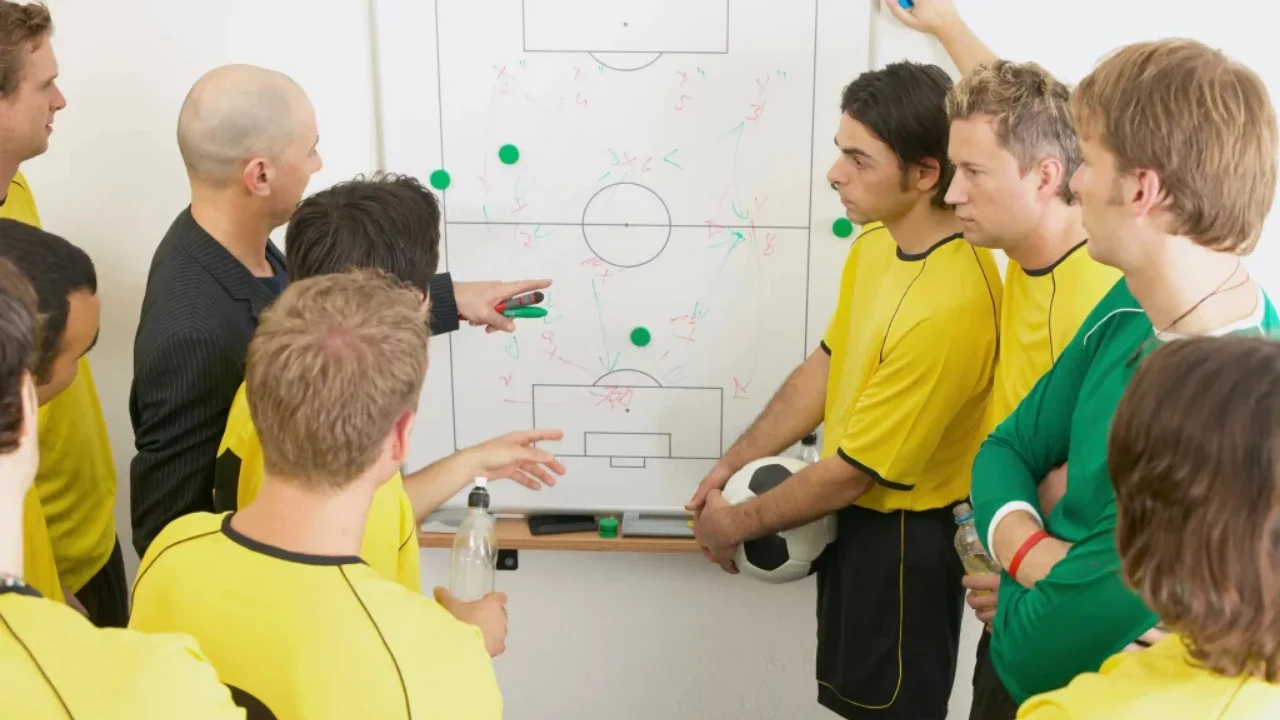
Football has evolved considerably over the past few decades. Playing systems, physical preparation and training methodologies have undergone major transformations, but so has the way matches are studied and understood. In 2027, football tactical analysis is experiencing significant development thanks to the integration of new technologies, Big Data and artificial intelligence.
Today, analysing a match involves much more than simply observing player movements or identifying the formations used by each team. It also requires interpreting thousands of data points, studying collective behaviours, identifying playing patterns and understanding how specific decisions influence performance throughout a competition.
This transformation is providing a much more comprehensive understanding of the game. But which technologies are driving this revolution, and how is football tactical analysis actually changing?

1. Big Data and Artificial Intelligence: How They Are Transforming Football Analysis
Large-scale data collection has changed the way football is analysed. Years ago, much of an analyst's work relied on direct observation and manually prepared reports. Today, technological systems make it possible to collect information on virtually every aspect of the game.
Through tracking cameras, tracking systems and specialised platforms, it is possible to record player positions, distances covered, speeds, accelerations, passes, recoveries and numerous technical and tactical actions.
The real value of this information emerges when different data points are analysed together. For example, knowing the distance covered by a midfielder can be interesting, but understanding why they made certain movements, which spaces they occupied and how they influenced the team's structure provides a much more complete interpretation.
In this context, artificial intelligence is becoming increasingly important. Its applications make it possible to automate action identification, process large volumes of information and detect patterns that might otherwise go unnoticed through conventional observation.
Some of its main applications include:
- Pattern recognition: identifying behaviours that are repeated during different phases of play.
- Video analysis: facilitating the classification and review of individual and collective actions.
- Predictive models: estimating probabilities associated with specific game situations.
- Positional analysis: studying how players are distributed across the pitch and how their positions evolve.
- Automation: reducing the time required to collect and organise information.
This evolution is directly linked to the development of Big Data in football and data analysis applied to sport, where information becomes a tool for better understanding individual and collective performance.
However, having access to more information does not necessarily mean understanding the game better. Data requires context, interpretation and football knowledge before it can lead to meaningful conclusions.
2. Beyond the Numbers: Understanding Tactical Behaviour and Physical Performance
One of the major advances in modern tactical analysis is the ability to connect players' tactical behaviours with the physical demands they experience during matches and training sessions.
Traditionally, physical and tactical analysis have been studied using different indicators. On the one hand, variables such as distance covered, maximum speed and accelerations were recorded. On the other, aspects such as spatial occupation, collective structures and behaviours during different phases of play were examined.
However, both approaches are closely interconnected. A player does not perform physical efforts in isolation, but rather as a consequence of the situations that arise within the context of a match.
This relationship has been investigated by researchers associated with FSI Training.
The Relationship Between Tactical Behaviour and Physical Performance
The study Influence of Tactical Behaviour on Running Performance in the Three Most Successful Soccer Teams During the Competitive Season of the Spanish First Division (2022), published in the Journal of Human Kinetics, includes contributions from José Asián-Clemente, Luis Suárez-Arrones, Bernardo Requena and Alfredo Santalla.
This research analyses the relationship between tactical behaviours and the running performance of professional football players throughout a competitive season in the Spanish First Division.
Its contribution is particularly interesting because it helps demonstrate that a footballer's physical demands should be interpreted in relation to their tactical behaviour and the game situations in which they participate.
For example, a winger may perform high-intensity runs to attack space behind the defensive line, while a midfielder may accumulate numerous physical efforts as a result of covering movements, supporting teammates and the need to reorganise defensively.
How Pitch Dimensions Influence Player Behaviour
Another relevant study is The Impact of Field Size on Positional and Possession Games: Variations in Physical Demands across Player Positions in Soccer Training (2026), published in the Journal of Human Kinetics.
Its authors, José Antonio Asián-Clemente, Bernardo Requena, José Vicente Beltrán-Garrido and Piotr Żmijewski, examine how pitch dimensions influence players' physical demands during positional games and possession-based training activities.
This research explores a fundamental question: pitch dimensions influence interaction opportunities, movement patterns and the physical demands experienced by players depending on their positions.
Therefore, analysing physical performance without considering the characteristics of the training task can provide an incomplete picture of what is actually happening on the pitch.
These studies reinforce the importance of analysing football from an integrated perspective, where physical, tactical and contextual variables are interconnected. To explore the fundamentals of the game further, it is also worth consulting this guide to learning football tactics.
3. The Metrics and Tools Revolutionising Tactical Analysis
Technological developments have significantly increased the number of variables available for analysing a football match. However, not all metrics provide the same information, and they should not all be interpreted in the same way.
Some metrics help evaluate the quality of attacking opportunities, others help examine defensive pressing, while others provide information about player movements and spatial occupation.
Some of the most widely used metrics in advanced football analysis include:
| Metric | What Does It Measure? | Application in Tactical Analysis |
|---|---|---|
| xG (Expected Goals) | The probability of a shot resulting in a goal. | Evaluating the quality of chances created and conceded. |
| xA (Expected Assists) | The expected assist value of a pass based on the scoring opportunity it creates. | Assessing players' ability to create goal-scoring opportunities. |
| PPDA | The number of passes allowed by a team per defensive action in specific areas of the pitch. | Analysing aspects of pressing intensity and organisation. |
| Progressive Passes | Passes that significantly advance the ball towards the opposition goal, according to the criteria used. | Studying attacking progression and the ability to break opposition lines. |
| Positional Data | Players' locations and movements on the pitch. | Analysing team structures, distances and spatial occupation. |
| Tracking Data | Monitoring player movements and, depending on the system, ball movements. | Studying collective behaviours and physical demands. |
One of the most important aspects is understanding that no single metric can fully explain a team's performance. For example, a team may record a high level of possession, but this does not necessarily mean that it is creating dangerous opportunities or effectively controlling space.
Similarly, a high xG value may indicate strong chance creation, but it needs to be analysed alongside the context of the match, the opposition's defensive behaviour and the characteristics of the chances created.
That is why learning how to interpret these variables correctly is just as important as knowing what they mean. In this respect, you can find further information in the article How to Interpret Football Match Statistics Without Being an Expert.
Furthermore, video analysis remains an essential tool. It allows analysts to examine specific situations, connect metrics with visual evidence and verify how the behaviours identified through data actually develop during a match.
4. The Role of the Tactical Analyst: From Observing the Game to Interpreting and Predicting
Technology has considerably expanded the possibilities of football analysis, but an analyst's work still depends on their ability to understand the game.
A tactical analyst does not simply collect statistics or produce charts. Their role is to transform information into knowledge by identifying patterns, interpreting behaviours and providing context for the situations that occur during a match.
This requires combining different sources of information, including direct observation, video analysis, positional data, statistics and an understanding of playing models.
One particularly interesting study that helps explain this process is Perceptions of Football Analysts Goal-Scoring Opportunity Predictions: A Qualitative Case Study (2021), published in Frontiers in Psychology.
The research, conducted by Rubén D. Aguado-Méndez, José Antonio González-Jurado, Álvaro Reina-Gómez and Fernando M. Otero-Saborido, examines football analysts' perceptions of goal-scoring opportunity predictions.
The study provides insight into how professionals interpret goal-scoring opportunities and highlights the importance of combining football knowledge with predictive models.
This is particularly relevant in a context where an increasing number of tools can process information and generate estimates about specific game situations.
However, a statistical prediction is not the same as a tactical explanation. A model may estimate the probability of an action resulting in a goal, but understanding why that opportunity was created requires analysing previous movements, available spaces, player decisions and the opposition's defensive organisation.
An analyst's work also involves several stages:
- Observation: identifying the most relevant behaviours of both teams.
- Data collection: gathering information through video, statistics and tracking systems.
- Classification: organising actions according to tactical and methodological criteria.
- Interpretation: relating the data to the context and the team's playing model.
- Conclusions: identifying patterns, strengths, weaknesses and collective behavioural trends.
To learn more about how this work is carried out in professional football, you can explore how tactical analysts work in professional football teams.
Technological progress does not eliminate the need for professionals who understand the game. On the contrary, it makes their ability to interpret increasingly large amounts of information correctly even more important.
5. The Limitations of Technology: Can Data Explain Everything?
Although the development of Big Data and artificial intelligence is transforming football analysis, it also raises several important questions. Having access to thousands of variables does not guarantee that the conclusions drawn from them will be accurate.
One of the main risks is interpreting indicators in isolation without considering the circumstances that have led to specific behaviours.
For example, two teams may record similar possession statistics while developing completely different playing styles. One may use possession to progress through vertical passing, while the other may prioritise ball retention and attacking organisation.
It is also important to distinguish between correlation and causation. The fact that two variables change in a related way does not necessarily mean that one is responsible for the other.
Technology cannot automatically explain every factor involved in a football decision either. Communication between teammates, the interpretation of a situation, tactical intentions and the specific circumstances of each match require contextual understanding that goes beyond a single figure.
Therefore, the real challenge is not collecting more data, but selecting the right indicators and using them to answer specific questions about the game.
This discussion is closely related to the debate explored in the article Football Data Analysis: A Useful Tool or Excessive Dependence?, which examines the importance of maintaining a balanced relationship between technology, information and football knowledge.
A key takeaway: data makes it possible to observe aspects of the game that were previously difficult to quantify, but interpreting them still requires an understanding of the context in which they occur.
6. The Future of Football Tactical Analysis in 2027
The evolution of tactical analysis points towards an increasingly integrated use of the technologies available. Positional tracking, artificial intelligence, video analysis and advanced metrics make it possible to build much more comprehensive analytical frameworks.
One of the most interesting trends is the ability to study collective behaviours rather than focusing exclusively on individual actions. This makes it possible to analyse how players interact, how spaces are created and how one player's decisions influence the options available to their teammates.
The automation of certain tasks is also becoming increasingly important. Analytical systems can facilitate the identification of sequences, the classification of actions and the production of reports, reducing some of the manual work traditionally carried out by analysts.
Some of the main areas of development include:
- Greater integration of physical, technical and tactical data.
- Development of artificial intelligence-assisted video analysis tools.
- Improvements in positional tracking systems.
- More context-aware predictive models.
- Analysis of spatial relationships and collective behaviours.
- Greater ability to interpret large volumes of information.
These trends do not mean that all technologies will deliver perfect results or that their use will be the same across every club. Their application depends on data quality, analytical objectives and available resources.
What is clear, however, is that tactical analysis will continue to evolve towards more integrated methodologies, where technology helps us better understand the situations that unfold on the pitch.
Scientific References
- Asián-Clemente, J., Suárez-Arrones, L., Requena, B., & Santalla, A. (2022). Influence of Tactical Behaviour on Running Performance in the Three Most Successful Soccer Teams During the Competitive Season of the Spanish First Division. Journal of Human Kinetics. https://doi.org/10.2478/hukin-2022-0040
- Aguado-Méndez, R. D., González-Jurado, J. A., Reina-Gómez, Á., & Otero-Saborido, F. M. (2021). Perceptions of Football Analysts Goal-Scoring Opportunity Predictions: A Qualitative Case Study. Frontiers in Psychology. https://doi.org/10.3389/fpsyg.2021.735167
- Asián-Clemente, J. A., Requena, B., Beltrán-Garrido, J. V., & Żmijewski, P. (2026). The Impact of Field Size on Positional and Possession Games: Variations in Physical Demands across Player Positions in Soccer Training. Journal of Human Kinetics, 103, 261-275. https://doi.org/10.5114/jhk/222302
Powered by Froala Editor