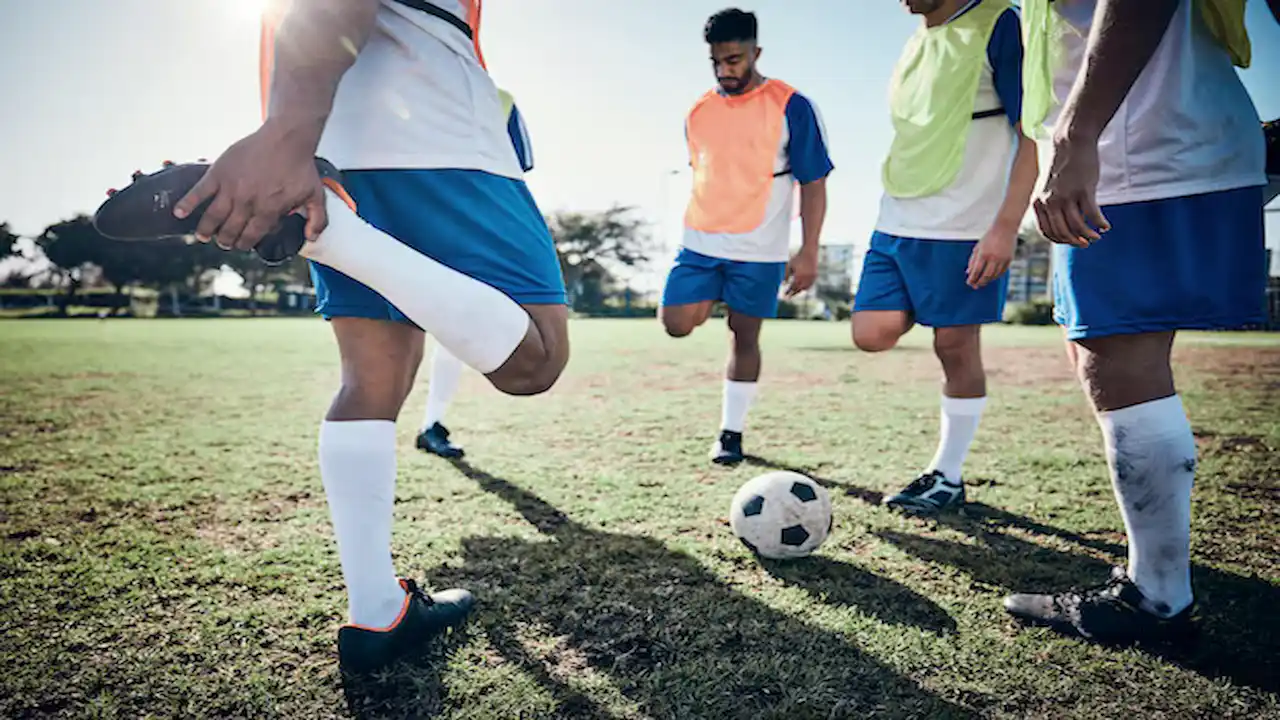
Strength and conditioning in soccer is not simply about running more miles or lifting heavier weights. Its purpose is to prepare players to accelerate, decelerate, jump, change direction, and repeatedly perform high-intensity actions throughout a match while maintaining their physical performance.
To achieve this, strength and conditioning coaches must combine strength, endurance, speed, power, and neuromuscular training. They must also understand the physical demands of competition, adjust training loads to the match schedule, and account for individual needs.
In this guide, we explore the main strength and conditioning methods used in soccer, including practical exercises, weekly training examples, and scientific evidence from researchers associated with FSI Training, such as Irineu Loturco, Bernardo Requena, and Fábio Yuzo Nakamura.
1. What Is Strength and Conditioning in Soccer?
Strength and conditioning in soccer is the process of developing and maintaining the physical qualities that enable players to meet the specific demands of training and competition.
Unlike general fitness training, soccer-specific conditioning must account for the intermittent nature of the sport, which involves periods of activity at different intensities and explosive actions influenced by tactical situations.
Soccer players need endurance to tolerate match demands, strength to produce and absorb force, speed to move quickly, and coordination to execute movements efficiently.
KEY CONCEPT
The goal is not to maximize every physical quality, but to help players respond more effectively to the actual demands of soccer.
What Physical Qualities Does a Soccer Player Need?
| Physical Quality | Application in Soccer | Training Methods |
|---|---|---|
| Strength | Acceleration, deceleration, jumping, and physical contact | Squats, split squats, and eccentric training |
| Speed | Initial acceleration and high-speed movements | Unresisted and resisted sprints |
| Endurance | Exercise tolerance and recovery between actions | Interval training, small-sided games, and specific running drills |
| Power | Rapid force production | Jumps, plyometrics, and ballistic exercises |
| Change of Direction and Agility | Braking, turning, and responding to game situations | Deceleration drills, change-of-direction exercises, and reactive tasks |
Why Is Physical Conditioning Important for Performance?
Physical preparation plays an important role in competitive performance, although team success also depends on technical, tactical, and contextual factors.
A study by Loturco, Requena, Nakamura, and colleagues (2026) compared 150 professional soccer players from first- and second-division teams using jumping, power, and speed assessments.
First-division players demonstrated better results across the assessed tests, including linear and curved sprint performance. These findings suggest that speed and power can help differentiate competitive levels. However, they do not establish that improving a specific test result automatically leads to progression to a higher division.
Source: Loturco et al. (2026), Journal of Strength and Conditioning Research .
2. Strength and Power Exercises for Soccer Players
Strength training is one of the key components of strength and conditioning in soccer. It helps players develop their ability to generate force, improve specific neuromuscular qualities, and prepare their bodies to tolerate mechanical demands.
However, increasing maximal strength does not automatically improve acceleration or change-of-direction performance. Adaptations depend on exercise selection, movement velocity, loading, coordination, and transfer to sport-specific actions.
Lower-Body Strength Exercises
Several exercises can be incorporated into a soccer-specific strength training program:
- Squats: develop strength in the hip, knee, and ankle extensors.
- Split squats and lunges: introduce unilateral movement patterns relevant to force control in each leg.
- Romanian deadlifts: target the posterior chain and develop force production through hip extension.
- Hip thrusts: develop hip extension strength and can complement acceleration training.
- Nordic hamstring exercises: provide a specific eccentric stimulus to the hamstring muscles.
Exercise selection should depend on the player's training experience, injury history, load tolerance, and the objectives of each training session.
Plyometric Training: Jumping and Explosive Power
Plyometric training involves rapid muscular actions that use the stretch-shortening cycle. It can contribute to the development of jumping ability, acceleration, and certain aspects of change-of-direction performance.
Common exercises include vertical jumps, horizontal jumps, lateral jumps, repeated jumps, and controlled landings.
Irineu Loturco contributed to a study published by Kobal and colleagues in 2017 that examined different combinations of strength, power, and plyometric training in elite young soccer players.
This line of research helps explain why training programs should combine complementary stimuli rather than relying exclusively on a single gym exercise.
Practical Application
When the objective is to improve acceleration, a training program may combine lower-body strength exercises, horizontal jumps, and specific sprint training. Training volume and intensity should be adjusted according to the player's condition and competition schedule.
To explore the methods used to improve performance over the first few meters, read our article on strength exercises to improve acceleration in soccer .
Research: Kobal et al. (2017) .
Should Soccer Players Also Train Their Upper Body?
Although physical performance in soccer is often associated with the lower body, the upper body also contributes to movement.
Arm action contributes to running coordination, balance, and movement organization during jumping and changes of direction. Upper-body strength training may also help players meet the physical contact demands of the game.
Nevertheless, the transfer of upper-body strength training to sprint performance or competitive outcomes depends on the methods used and should not be assumed.
In our article on upper-body training in soccer , Bernardo Requena explores its application to performance and the considerations involved in integrating it into the training week.
3. How to Improve Endurance and Speed in Soccer
Soccer requires players to alternate low-intensity movements with high-speed running, acceleration, deceleration, and demanding neuromuscular actions.
Therefore, conditioning programs must develop both the ability to sustain match demands and the capacity to perform high-intensity actions.
Endurance Training: HIIT and Small-Sided Games
High-intensity interval training (HIIT) uses structured periods of exercise and recovery to stimulate cardiorespiratory and metabolic adaptations.
Small-sided games can also be used to create physical training stimuli within soccer-specific tasks involving the ball.
However, not all small-sided games produce the same training load. The number of players, available space, rules, recovery periods, and timing within the session all influence physical demands.
A study by Gantois, Nakamura, and colleagues (2023) examined different small-sided game configurations in professional soccer players.
The researchers observed variations in heart rate responses, perceived exertion, and running demands across different configurations.
Small-sided games are therefore a useful conditioning tool, but their design must reflect a specific objective. They do not necessarily replace dedicated high-speed sprint exposure.
Research: Gantois et al. (2023) .
Speed Training Exercises: Acceleration and Sprinting
Speed in soccer involves several distinct physical qualities. Accelerating over five meters is not the same as reaching a high running speed over a longer distance.
Common training methods include:
- Short sprints: to develop acceleration ability.
- Longer sprints: to provide exposure to higher running speeds and develop sprint-specific technique.
- Resisted sprints: to modify force production and application demands during acceleration.
- Curved sprints: to assess and train running movements involving curved trajectories.
A study by Loturco, Requena, and colleagues (2026) retrospectively analyzed data from 248 professional soccer players across 11 training interventions, with programs lasting between four and eight weeks.
The study examined sprint speed adaptations over 10- and 20-meter distances, highlighting the importance of assessing specific sprint segments rather than treating speed as a single, undifferentiated quality.
For further information on training methods, sprint distances, and the implications of resisted sprint training, explore our guide to sprint training in soccer .
Research: Loturco et al. (2026) .
Deceleration, Change of Direction, and Agility
The ability to decelerate is another important component of physical preparation in soccer. Before changing direction, players must control their speed and reorganize their foot placement to execute the next movement.
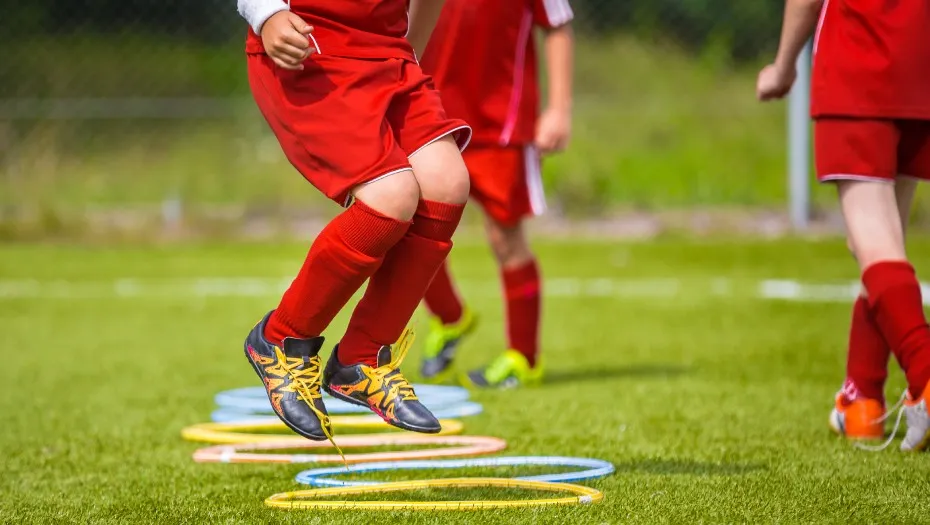
Training may include progressive deceleration drills, landing exercises, lateral movements, and changes of direction performed at different angles and approach speeds.
It is important to distinguish between two concepts: change of direction refers to modifying a movement trajectory, whereas agility also involves responding to environmental information, such as an opponent's movement.
Curved sprint tests can complement linear sprint assessments by providing information about another manifestation of soccer-specific speed.
4. Strength and Conditioning and Injury Risk Reduction
Strength and conditioning also plays an important role in managing injury risk. However, it is essential to avoid oversimplification: no training program can completely eliminate the possibility of injury.
Injuries are influenced by numerous factors, including sport exposure, injury history, training loads, individual characteristics, and the circumstances of play.
Eccentric Strength Training and the Nordic Hamstring Exercise
Eccentric training develops the ability of muscles to produce force while lengthening.
One of its best-known applications in soccer is the Nordic hamstring exercise, which is used to strengthen the hamstring muscles.
Petersen and colleagues (2011) investigated a progressive eccentric training program involving 942 male professional and amateur soccer players assigned to intervention and control groups.
The findings support the use of this exercise as part of hamstring injury risk reduction strategies. However, its implementation should progress according to each player's tolerance and overall weekly training load.
Research: Petersen et al. (2011) .
Neuromuscular Warm-Ups and FIFA 11+
Structured warm-up programs may combine strength, balance, neuromuscular control, running, and jumping exercises.
A meta-analysis published in the British Journal of Sports Medicine in 2017 reported an approximate 39% relative reduction in overall injury incidence across pooled studies examining the FIFA 11+ program compared with control conditions.
SCIENTIFIC EVIDENCE
39%
Lower relative injury incidence associated with FIFA 11+ in the 2017 meta-analysis.
Pooled findings from recreational and sub-elite soccer populations. These results do not guarantee individual protection and should not be generalized to all professional teams without caution.
Subsequent research has also supported the potential benefits of neuromuscular training. Nevertheless, program adherence, implementation, and individual player characteristics influence its effectiveness.
The practical takeaway is to progressively integrate these training stimuli into regular practice rather than reducing injury prevention to a single isolated exercise.
Research: FIFA 11+ Meta-Analysis (2017) .
5. How to Plan Strength and Conditioning Throughout the Week
Physical training should be planned according to the competitive calendar, player availability, and the team's overall training demands.
Strength and conditioning coaches must distribute strength, speed, and endurance stimuli while accounting for the loads generated by technical and tactical training.
The same training session may produce different outcomes depending on its position within the microcycle and the player's accumulated fatigue.
Example of a Weekly Microcycle With One Match
The following table presents an illustrative example for an adult soccer team playing on Sunday. It should not be interpreted as a universal training prescription.
| Day | Main Physical Objective | Example Training Content |
|---|---|---|
| MD+1 | Recovery or compensatory training | Individualized work based on playing time |
| MD+2 | Recovery / rest | Rest or individualized training as needed |
| MD-4 | Strength and neuromuscular loading | Gym work, accelerations, and high-intensity tasks |
| MD-3 | Soccer-specific endurance | Small-sided games or intervals, depending on the objective |
| MD-2 | Speed development and load adjustment | Brief, controlled sprint exposures |
| MD-1 | Match preparation | Activation and low-volume training |
| MD | Competition | Match day |
MD stands for match day. Actual training distribution must be individualized according to playing time, travel, fatigue, scheduling, and the coaching staff's methodology.
How Should Training Load Be Monitored?
Training load monitoring helps practitioners assess the stimulus experienced by each player and how they respond to training.
Common monitoring tools include:
- GPS and tracking systems: to measure distance covered, running speed, and other locomotor variables.
- Rating of perceived exertion (RPE): to understand how demanding players perceive each training session to be.
- Jump assessments: to monitor changes in selected indicators of neuromuscular performance.
- Sprint assessments: to monitor acceleration and different expressions of running speed.
- Individual player information: including previous injuries, discomfort, availability, and responses to training load.
None of these variables can independently predict an injury with certainty or provide a complete picture of an athlete's physical condition.
Training planning also changes with age. In youth soccer, biological maturation, neuromuscular development, and previous training experience should be considered.
To explore this topic further, read our guide on how to plan the weekly microcycle in youth soccer .
6. Frequently Asked Questions About Strength and Conditioning in Soccer
How Many Days per Week Should Soccer Players Train Strength?
There is no universal training frequency. It depends on age, competitive level, training experience, season phase, and the number of matches played. In certain contexts, one or two weekly strength sessions may be an appropriate programming option, but the training dose must be adjusted to each player.
What Are the Best Exercises to Improve Soccer Fitness?
No single exercise is best for every objective. Squats and unilateral exercises develop strength; jumps and ballistic movements train power; sprints develop speed; and interval training and small-sided games can stimulate soccer-specific endurance.
Is It Better to Train in the Gym or on the Field?
Both environments complement each other. The gym allows coaches to control specific strength and loading variables, while field training provides opportunities to develop speed and integrate physical demands into soccer-specific situations.
Can Small-Sided Games Replace Endurance Training?
Small-sided games can be an important component of aerobic and intermittent conditioning. However, their training stimulus depends on their design, and they do not always provide sufficient exposure to maximal running speeds. In some cases, additional specific training is beneficial.
How Can Soccer Players Improve Endurance Without Losing Speed?
Coaches should carefully organize training loads and avoid allowing accumulated fatigue to repeatedly compromise high-quality neuromuscular sessions.
Properly combining endurance, strength, sprint training, and recovery allows players to develop different physical qualities throughout the season.
What Is the Difference Between Physical Preparation and Strength and Conditioning?
These terms are closely related and often overlap in practice.
Physical preparation can encompass the entire process of assessment, planning, training, and monitoring. Strength and conditioning focuses particularly on developing and maintaining the physical qualities required to meet the demands of a given sport.
FSI TRAINING EDUCATION
Specialize in Strength and Conditioning for Professional Soccer
Learn how to assess, design, and adapt strength, speed, endurance, and physical conditioning programs through FSI Training's Strength and Conditioning Coach Master's Program.
Explore the Master's ProgramScientific References
The following studies provide access to the original research discussed throughout this article.
- Loturco, I., Requena, B., et al. (2026). Comparison of Speed-Related and Power-Related Variables Between First-Division and Second-Division Professional Soccer Players. Journal of Strength and Conditioning Research. DOI .
- Loturco, I., Pereira, L. A., et al. (2026). Sprint Speed Adaptations in Elite Soccer Players: Are Improvements Greater Over Longer Distances? Journal of Strength and Conditioning Research. DOI .
- Kobal, R., Loturco, I., et al. (2017). Effects of Different Combinations of Strength, Power, and Plyometric Training on the Physical Performance of Elite Young Soccer Players. Journal of Strength and Conditioning Research. DOI .
- Gantois, P., Piqueras-Sanchiz, F., et al. (2023). The effects of different small-sided games configurations on heart rate, rating of perceived exertion, and running demands in professional soccer players. European Journal of Sport Science. DOI .
- Petersen, J., Thorborg, K., et al. (2011). Preventive effect of eccentric training on acute hamstring injuries in men's soccer: a cluster-randomized controlled trial. American Journal of Sports Medicine. DOI .
- Effect of specific exercise-based football injury prevention programmes on the overall injury rate in football: a systematic review and meta-analysis of the FIFA 11 and 11+ programmes. (2017). British Journal of Sports Medicine. DOI .
Editorial Note: This article summarizes scientific research and general training recommendations. Practical applications should be adapted to each individual player and do not replace assessments conducted by the team's performance staff.
Powered by Froala Editor